NASA Revises Artemis Lander Plans for Starship and Blue Moon
NASA outlined a revised architecture for returning astronauts to the Moon by 2028, including Orion docking with Starship in high-Earth orbit and a new upper stage for Orion.
NASA laid out in detail on Friday how it plans to return astronauts to the lunar surface as soon as 2028 under the Artemis Program, acknowledging significant changes to the architecture for both SpaceX and Blue Origin landers.
The agency still expects Artemis III, a demonstration of docking with both Blue Moon and Starship near Earth, to launch by "summer" 2027. Artemis IV, the first actual landing, remains on track for 2028. "This is an achievable path we are on right now," NASA Administrator Jared Isaacman said. "We have the mandate, we have the resources, and the support from our stakeholders."
Starship and Blue Moon
Under the revised SpaceX plan, a Starship lunar lander will be fueled in low-Earth orbit and then dock with Orion in high-Earth orbit. The crew will fly to the Moon inside Orion, and two of the four astronauts will transfer to Starship for the landing. Cancelling the Lunar Gateway earlier this year removed the need to dock in a near-rectilinear halo orbit, which SpaceX had asked NASA to drop.
The number of refueling launches remains unsettled. A NASA safety panel put the figure at "about 22" tanker flights, while Elon Musk said it will be six to eight. NASA declined to give a number, citing uncertainty over Starship's lift capacity, propellant boil-off and transfer efficiency. Isaacman said Musk's estimate was possible but represented the "ultimate potential end state" of Starship.
Blue Origin's concept now uses four New Glenn launches and no ship-to-ship refueling. New Glenn would send three transfer stages, modeled on the Blue Moon Mark 1 lander, to low-Earth orbit, followed by the Blue Moon Mark 2 lander, which would join them for the push to the Moon. NASA's chart showed Orion docking with the lander in an elliptical lunar orbit about 8,500 km above the surface.
A fix for Orion
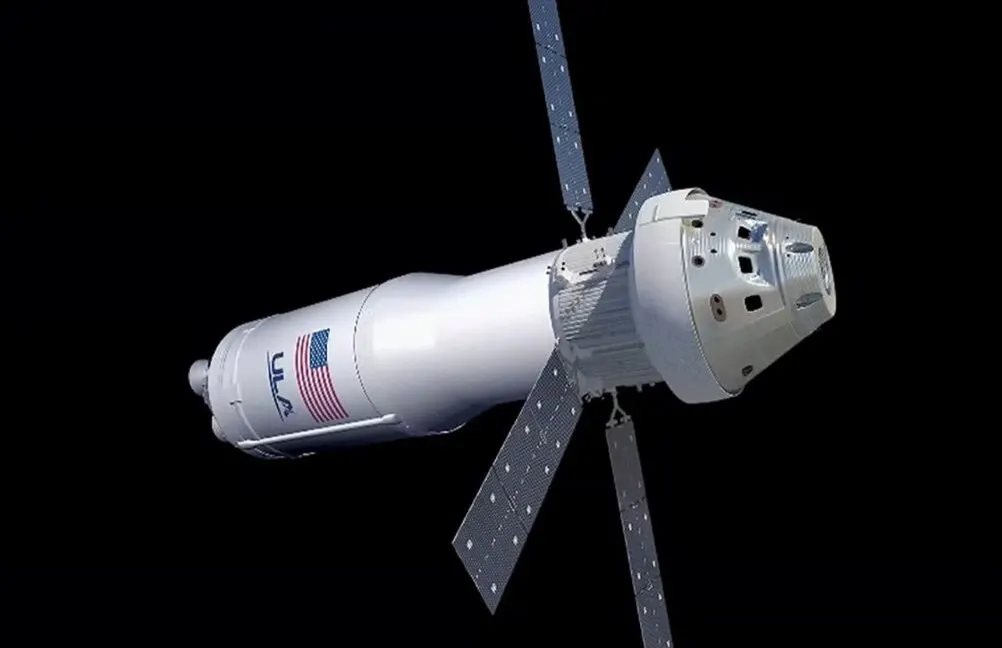
NASA is also working to allow docking in low-lunar orbit, a few hundred km up. Program manager Jeremy Parsons said this would significantly cut the propellant Blue Moon needs and give astronauts faster abort options. To make it possible, NASA is working with United Launch Alliance on an "extended" Centaur V upper stage that, with the Space Launch System core stage, would let Orion reach that orbit.
Orion's service module has lacked the delta-V to reach low-lunar orbit and return to a Pacific splashdown. "Getting Orion to low-Lunar orbit means solving propulsion and spacecraft integration problems that were left unaddressed for far too long," Isaacman said. "Their lives get easier if we can get Orion closer to the Moon, substantially."
More from this day
See all →
WhatsApp Tests Scheduled Messages on iPhone Beta

SpaceX Filing Gives Musk Final Say on Tesla Merger Talks

SEC Names AI 'Super Intelligence' and Tokenization in FY2027 Exam Priorities