Astroteq.ai Places Muon Detector Under Kraków's Wawel Hill
Startup Astroteq.ai has installed a half-square-metre muon detector in Wawel's Dragon's Den to search the hill for hidden voids and tunnels without digging.
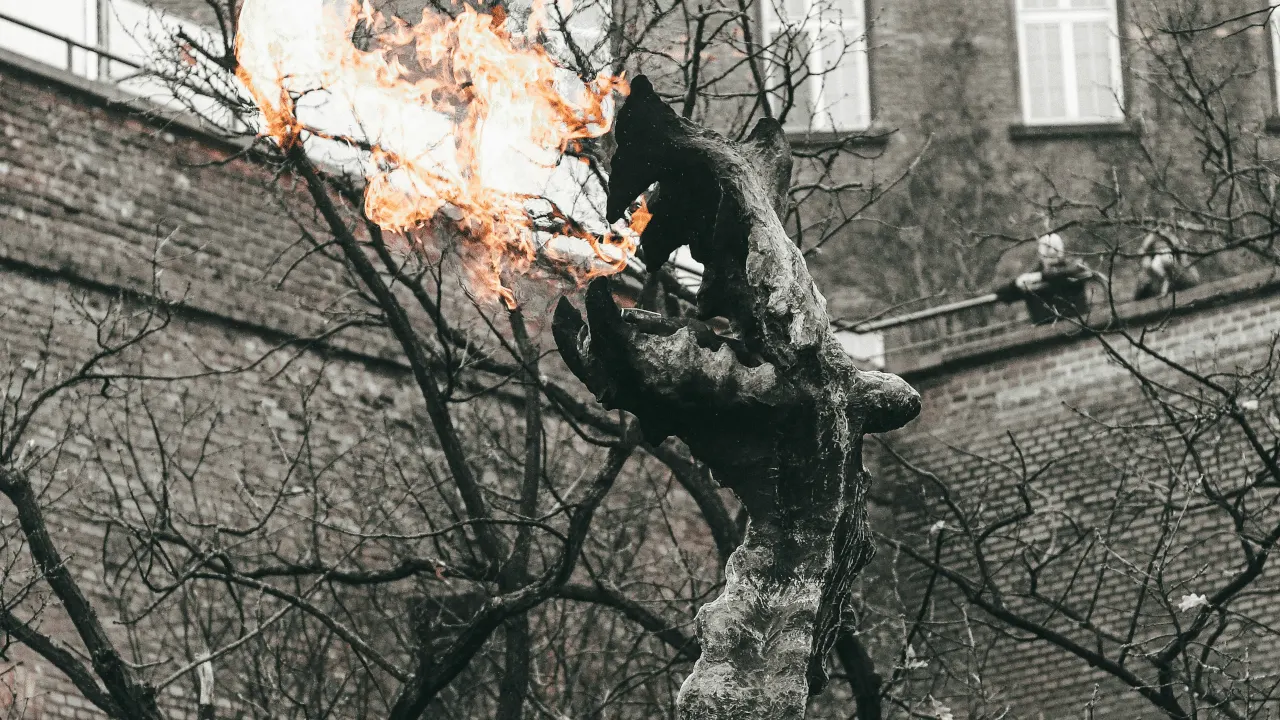
A muon detector with an area of just half a square metre now sits in the underground Dragon's Den beneath Wawel Hill in Kraków. It records particles created in the upper atmosphere and uses them to look inside the limestone rock, in search of previously unknown voids or historical tunnels, without a single shovel of earth being moved.
Behind the deployment is Dr Noemi Zabari, a nuclear physicist and founder and CEO of the Polish startup Astroteq.ai, which emerged from European Space Agency incubation programmes (ESA BIC).
How muography works
The method, known as muon radiography or muography, resembles an X-ray on a macro scale. Muons are elementary particles produced when cosmic radiation collides with atoms in Earth's atmosphere. They travel at close to the speed of light and pass through hundreds of metres of rock, but lose energy depending on the density of the material.
Solid limestone absorbs and scatters more muons, so fewer reach the detector. A void, forgotten corridor or crypt offers less resistance, and the detector registers a denser stream of particles from that direction. The device in the Dragon's Den is passive: it collects data for weeks, counting individual trajectories and gradually building a three-dimensional density profile of the hill.
From earthquake prediction to heritage
Astroteq.ai normally develops earthquake prediction systems based on anomalies in cosmic-ray flux, a concept studied within the international CREDO consortium (Cosmic Ray Extremely Distributed Observatory), initiated by the Institute of Nuclear Physics of the Polish Academy of Sciences in Kraków. At Wawel, the same expertise in building sensitive, rugged detectors was adapted to a cold, damp and hard-to-reach cave.
The approach is already established elsewhere. In 2017 the ScanPyramids team used it to find the Great Void in Khufu's pyramid in Giza, a space at least 30 metres long. Similar detectors monitor volcanoes such as Vesuvius and Etna and check the stability of disused mines and railway tunnels across Europe.
Results will take time. Cosmic particles arrive at a steady but limited rate, so a high-resolution image needs months of exposure. The data will then go to reconstruction algorithms that filter out background noise and generate a density model of the hill. If significant anomalies appear where existing architectural plans show solid rock, conservators and archaeologists will receive precise coordinates for targeted follow-up investigation.
Apps worth a look
 SUMO: the number puzzle
Tap the right tiles, add them up, hit the target. Easy to learn, hard to master. Free, for all ages.
 Dialo: learn languages by speaking
Talk to an AI conversation partner; every sentence comes back corrected and explained in your language. 9 languages, A1 to C2.
 ediviewer: read EDI files like documents
Open EDIFACT and X12 messages, see every segment explained, convert to JSON/XML, export PDF and Excel. Runs locally, no upload.
More from this day
See all →
Samsung Asks UMC for More Display Chip Wafers, Gets Turned Down

Kakao Mobility and Korean Army to Build Defense AI Control System

Hyundai Motor Group Suspends External AI Tools in Core R&D
GMO Internet Admits Risk Analysis Gaps After VPS Breach
More in: Science
See all →
Los Angeles shade balls: 96 million spheres, 11 years on
Rubin Observatory Finds Two Hidden Milky Way Companions

Waste to chemicals: Polish team turns biowaste into raw materials