Rubin Observatory Finds Two Hidden Milky Way Companions
Data from the Vera C. Rubin Observatory revealed the dwarf galaxy Aquarius IV and the star cluster Rubin-GC1, hinting that many more companions of our galaxy remain hidden.
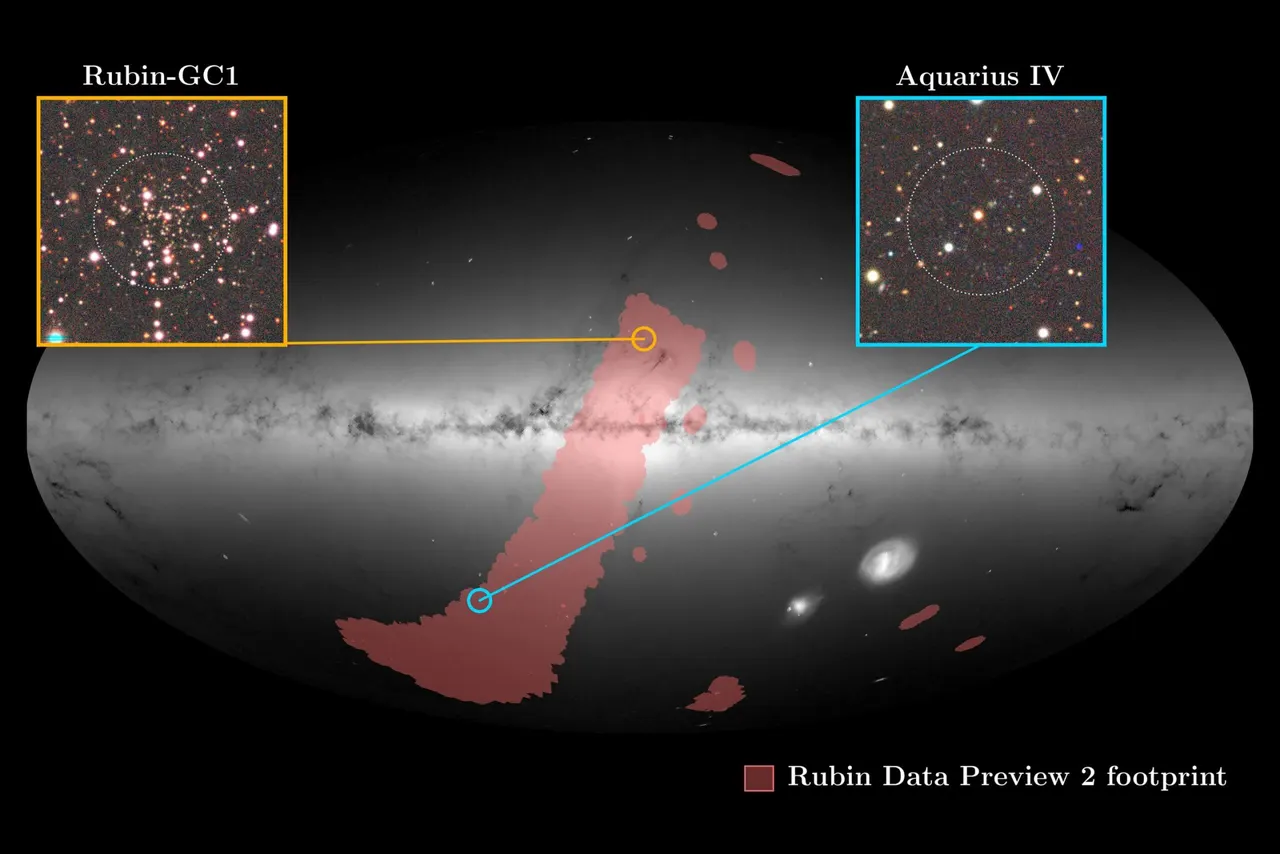
Astronomers analysing data from the Vera C. Rubin Observatory in Chile have identified two extremely faint objects gravitationally bound to the Milky Way: the dwarf galaxy Aquarius IV and a star cluster designated Rubin-GC1.
Aquarius IV lies on the outskirts of our galaxy, about 355,000 light-years from Earth. It is an exceptionally dim dwarf galaxy whose light is hard to tell apart from the cosmic background. Rubin-GC1 sits on the opposite side of the Milky Way, in a region heavily obscured by interstellar dust, which made it particularly difficult to spot.
Many more may be waiting
The discovery also suggests that the census of our galactic neighbourhood is far from complete. Astronomers currently know of around 65 satellite galaxies around the Milky Way, but theoretical predictions say hundreds more could be hidden.
Ultra-faint dwarf galaxies such as Aquarius IV generate the most excitement. They contain relatively few stars, and much of their mass is dark matter. This invisible substance emits no light, yet its gravity shapes the motion of stars and the formation of galaxies. Studying such objects more closely could help scientists understand the nature of dark matter and how structures form in the universe.
A telescope built for the job
The observatory combines the 8.4-metre Simonyi telescope with the world's largest digital camera, at 3.2 gigapixels. It images the southern sky repeatedly, building a constantly updated picture of the universe. The team examined test data collected between April 2025 and January 2026, covering only about 7 percent of the sky planned for the full survey. Even so, it turned up two new objects.
The next step is spectroscopic observation of stars in both structures. That will reveal their velocities, allow researchers to estimate total mass and clarify how they interact with the Milky Way. If the observatory confirms its capabilities during the full sky survey, astronomers could significantly redraw the picture of the galactic neighbourhood in the coming years and better understand how today's galaxies formed.
Apps worth a look
 SUMO: the number puzzle
Tap the right tiles, add them up, hit the target. Easy to learn, hard to master. Free, for all ages.
 Dialo: learn languages by speaking
Talk to an AI conversation partner; every sentence comes back corrected and explained in your language. 9 languages, A1 to C2.
 ediviewer: read EDI files like documents
Open EDIFACT and X12 messages, see every segment explained, convert to JSON/XML, export PDF and Excel. Runs locally, no upload.