European Power Grid's Mysterious 60-Second Pulse Traced to UPS Units
German researchers have explained why grid frequency in Europe dipped every minute: UPS units and battery storage systems run self-tests at nearly the same moment.
For years, operators of European power grids watched an odd pattern: exactly every 60 seconds, grid frequency dipped slightly, as if a huge number of devices were switched on across the continent at once. Nobody could explain the regular pulse. Now researchers in Germany say they have solved it.
According to a study published in Nature Energy, the main culprits are uninterruptible power supplies (UPS) and energy storage systems that run automatic self-tests at almost the same time. The effect is not limited to Europe.
A dip every minute
German transmission operator TenneT had recorded the extremely regular frequency drops for several years, regardless of time of day or weather. The deviations were small and did not threaten supply. Europe's grid runs at a nominal 50 Hz: frequency rises when generation exceeds consumption and falls when demand is higher.
The researchers estimate that a swing of about 3 mHz corresponds to a coordinated change in demand of around 80 MW, roughly the output of a small power plant appearing and disappearing every minute.
Synchronized battery checks
The team led by Dirk Witthaut of Forschungszentrum Jülich, working with the University of Cologne and the Karlsruhe Institute of Technology, analyzed measurements from more than 80 points on the Jülich campus. The pulses showed up mainly in buildings with large UPS installations. Battery management systems run regular health checks that briefly raise power draw, and many devices start them right at the beginning of each minute. One unit is negligible, but thousands add up to a signal visible at high-voltage level.
Similar minute-long oscillations were found on five continents, including North America, Australia, South Korea and South Africa. In Ireland, the amplitude rose from about 3 to 12 mHz between 2016 and 2021, while data centers, which accounted for around 18 percent of national electricity use in 2022, expanded quickly. Heat pumps, air conditioners and smart appliances may behave similarly, though this has not been proven.
A software fix
The dips pose no direct risk of blackouts, but they matter for equipment that balances the grid. Hydropower turbines, for example, slow down and speed up again with each pulse, which may increase mechanical wear.
The scientists say no hardware needs replacing. Software can spread the tests randomly or add small time offsets. The researchers have already informed one manufacturer, whose software update removed the rigid periodicity in one analyzed installation, though it did not fully eliminate the step-like power draw.
Apps worth a look
 SUMO: the number puzzle
Tap the right tiles, add them up, hit the target. Easy to learn, hard to master. Free, for all ages.
 Dialo: learn languages by speaking
Talk to an AI conversation partner; every sentence comes back corrected and explained in your language. 9 languages, A1 to C2.
 ediviewer: read EDI files like documents
Open EDIFACT and X12 messages, see every segment explained, convert to JSON/XML, export PDF and Excel. Runs locally, no upload.
More from this day
See all →
Xavier Niel Slams French Lawmakers Over 5.5-Cent Data Tax

AI-written PR emails in Korean flood newsrooms as outreach goes automated

South Korea's Defense Robot Market Opens, but Standards Lag
Russia's MTS CEO to Visit South Korea After 7 Years to Seek 5G Partners
More in: Science
See all →
ESA-backed JASPER system will warn pilots of GPS spoofing
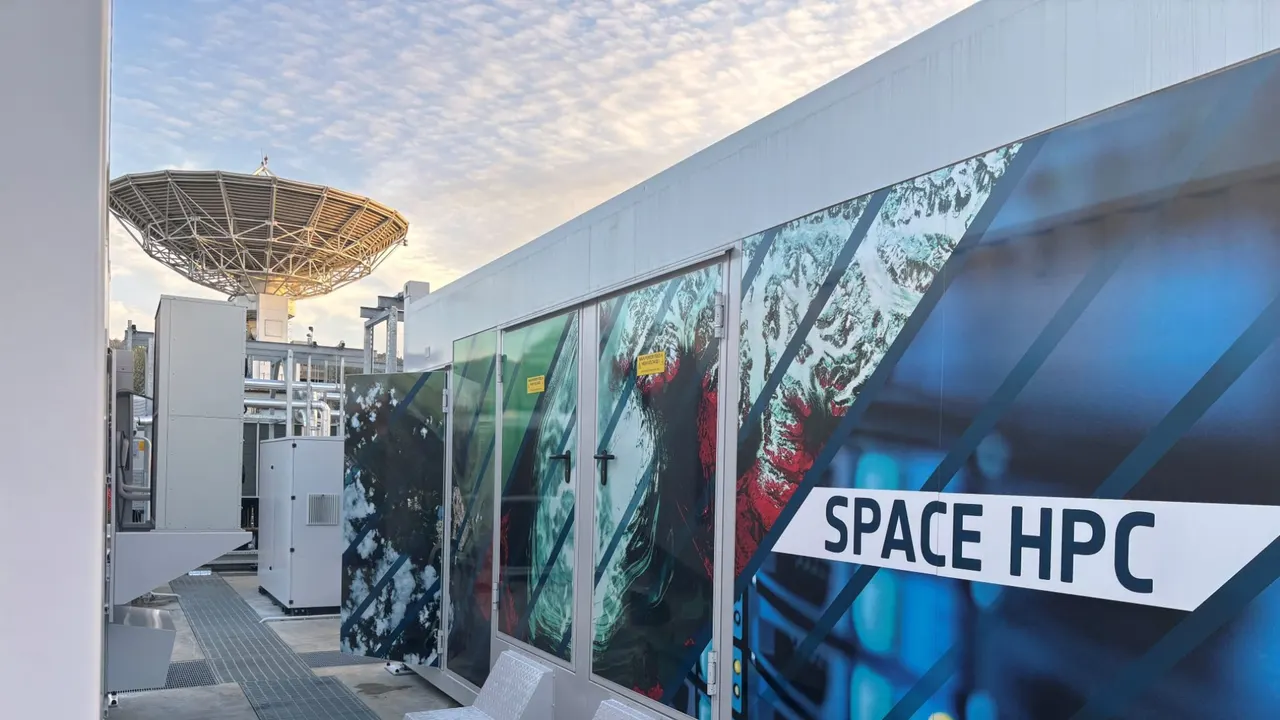
ESA's Space HPC supercomputer packs 5 petaflops for space data

UNEP: US CO2 Emissions Rose 133 Million Tons Under Trump