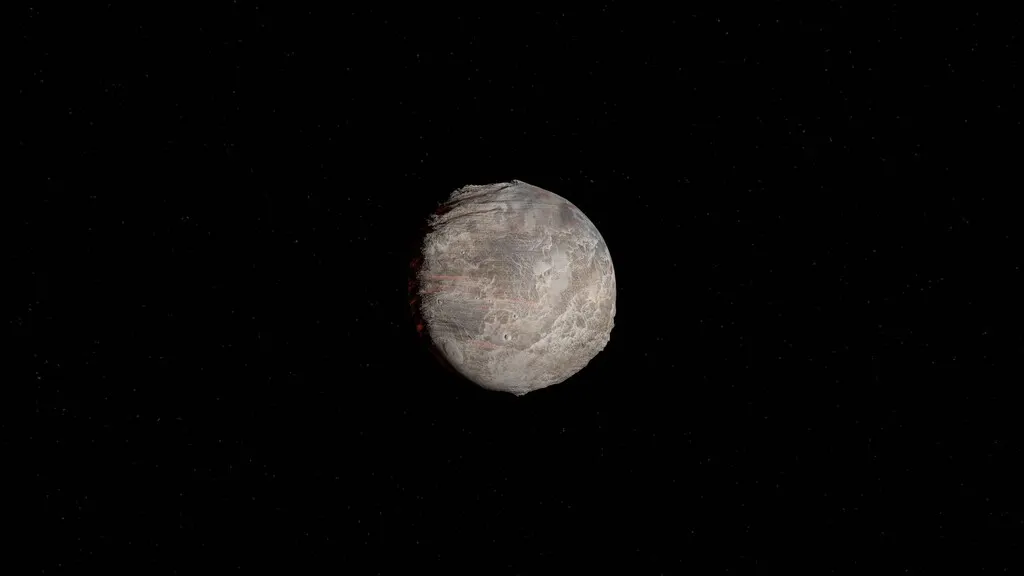
TOI-2535 b: the Jupiter-sized exoplanet that vanished from TESS
Astronomers watched TOI-2535 b, a Jupiter-sized planet, drift to the edge of its star and then stop crossing it. An unseen neighbour is tugging on its orbit.
 SUMO· the number puzzle
 Dialo· learn languages by speaking
 ediviewer· read EDI files like documents
 giftdetect· the right gift in minutes
For seven years, a planet called TOI-2535 b kept crossing the face of its star on schedule. Then it stopped. Astronomers have now watched an exoplanet disappear from view, and they think they know who is responsible: a neighbour nobody can see.
NASA's TESS space telescope began observing TOI-2535 b in 2019. It is a Jupiter-sized planet orbiting an early K dwarf, a small orange star, in the constellation Corvus. In April 2019 it crossed near the centre of the stellar disc, and everything looked normal.
It did not stay normal. The transits, the dips in starlight when a planet passes in front of its star, became erratic. Sometimes the planet arrived up to six hours early, sometimes six hours late. More striking was the path itself, which crept toward the star's edge. Each crossing lasted less time and blocked less light, until between 2025 and March 2026 the transit vanished completely. From Earth, the planet no longer passes in front of its star.
According to the study, this is the first time astronomers have directly seen a confirmed planet around a single star stop transiting over such a short span. The distance between the star's centre and the planet's path changed by about 0.16 per year, the fastest rate ever measured in a system like this.
Why did TOI-2535 b stop transiting?
The team turned to NEID, a spectrograph on the WIYN telescope at Kitt Peak National Observatory in Arizona. The results point to a second planet with a mass at least similar to Saturn's. Its orbit is tilted by at least 5 degrees relative to TOI-2535 b, and because the two are so close, its gravity keeps pulling on the first planet. The orbit wobbles like a spinning top about to fall. The effect is called nodal precession.
Co-author Erik Petigura offers an analogy: if the Moon's orbit were perfectly aligned with Earth's, we would get a solar eclipse every month. Because it is tilted, eclipses are rare. At TOI-2535, the two planets keep changing that tilt over just a few decades.
Has this happened before?
Sort of. Kepler-413b stopped transiting for 800 days, but it orbits two stars, and their pull was the cause. TOI-1518b has a precessing orbit and may stop transiting in a few decades, but there the culprit is its own star's flattened shape. TOI-2535 stands out because another giant planet alone causes the change, in a system with two gas giants on very short orbits.
Apps worth a look
SUMO: the number puzzleTap the right tiles, add them up, hit the target. Easy to learn, hard to master. Free, for all ages.
Dialo: learn languages by speakingTalk to an AI conversation partner; every sentence comes back corrected and explained in your language. 9 languages, A1 to C2.
ediviewer: read EDI files like documentsOpen EDIFACT and X12 messages, see every segment explained, convert to JSON/XML, export PDF and Excel. Runs locally, no upload.
giftdetect: the right gift in minutesPick who it is for, the occasion and their personality. The search engine reads product descriptions from local shops and ranks what fits. Free, no sign-up.
More from this day
See all →
Can you still refuse a Linky meter? What the EU ruling means
New peanut worm species found in Japan's deep sea has saw-toothed hooks

TikTok's For You feed breaks EU rules, Commission says

United Airlines bans outside AI agents from booking flights
More in: Space
See all →
Did comets bring life's building blocks to Earth? Probably not
Astra robot builds a structure in orbit on its own, a first

Starlink Mini 2 Adds a Removable Battery for Off-Grid Internet