New peanut worm species found in Japan's deep sea has saw-toothed hooks
Two new peanut worm species from Japan's deep sea carry tiny hooks lined with saw-like teeth, a shape never seen in the group before. They were hiding in old samples.
 SUMO· the number puzzle
 Dialo· learn languages by speaking
 ediviewer· read EDI files like documents
 giftdetect· the right gift in minutes
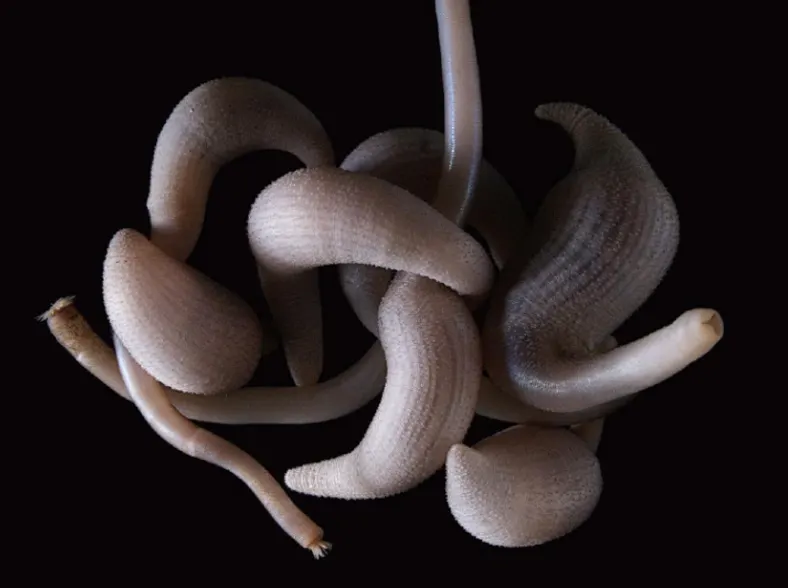
Two newly described deep-sea peanut worms from Japan have a feature nobody had seen in the group before: a tiny hook at the front of the body with a edge like a saw blade.
Peanut worms (hoshimushi in Japanese) are soft, worm-like animals related to earthworms and ragworms. A team from the University of the Ryukyus, the Japan Agency for Marine-Earth Science and Technology (JAMSTEC) and other institutions announced on November 9 that they had identified two new species. They are called Nokogiri-samehada-hoshimushi (the saw-skinned peanut worm) and Myojin-samehada-hoshimushi.
Under magnification, the hook on each worm is covered in rows of fine projections that look like saw teeth. Some peanut worms already have hooks, but this many projections in a row had not been confirmed before. The hooks are thought to help gather food. Why these two species have saw-shaped ones is still unknown.
How were the new peanut worms discovered?
Not on a fresh dive. The team went back to specimens collected between 1999 and 2011 and kept in storage. Differences in body features and DNA showed they were new species.
The saw-hooked worm was found near a hydrothermal vent field off the Ogasawara Islands and around a whale carcass that sank off Nomamisaki in Kagoshima Prefecture. The Myojin species came from a vent field off the Izu Islands and from a spot on the seafloor off the southwest islands where methane seeps out.
Life without sunlight
In the dark deep sea, microbes that live on chemicals such as hydrogen sulfide and methane support the animals around them. Sunken whales and sunken wood create similar oases, scattered across the seabed.
The team also used DNA analysis to estimate when the ancestors of these worms moved onto sunken wood and animal remains: about 109 million years ago, within a wide range of 62 to 162 million years. Whales did not exist then. The researchers say the ancestors may have used sunken wood or the carcasses of marine reptiles such as plesiosaurs, and then spread to vents from there.
Apps worth a look
SUMO: the number puzzleTap the right tiles, add them up, hit the target. Easy to learn, hard to master. Free, for all ages.
Dialo: learn languages by speakingTalk to an AI conversation partner; every sentence comes back corrected and explained in your language. 9 languages, A1 to C2.
ediviewer: read EDI files like documentsOpen EDIFACT and X12 messages, see every segment explained, convert to JSON/XML, export PDF and Excel. Runs locally, no upload.
giftdetect: the right gift in minutesPick who it is for, the occasion and their personality. The search engine reads product descriptions from local shops and ranks what fits. Free, no sign-up.
More from this day
See all →



More in: Science
See all →
Webb spots H3+ 'forbidden' signal predicted 40 years ago
Okinawa rail: frozen sperm grows a full embryo in a bird down to 720

J0008+0128: the invisible object Gaia found that breaks star models