South Korea Plans First Orbital Space Data Center Test in 2028
South Korea's K-Moonshot plan targets a 100 kg space data center test on the Nuri rocket's seventh launch in 2028, with a ton-class platform by 2035.
South Korea has outlined a phased plan to build data centers in orbit by 2035, with a first in-orbit demonstration of a roughly 100 kg unit planned for 2028 on the seventh launch of the Nuri rocket.
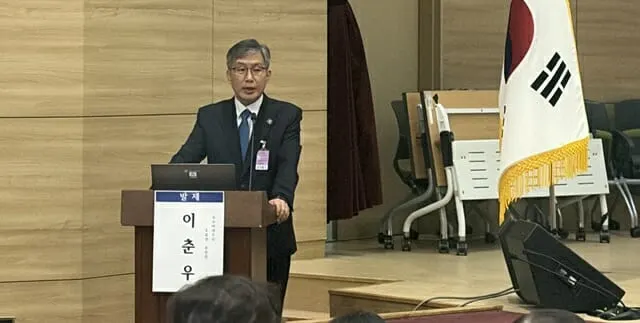
Lee Chun-woo, space mission program director at the K-Moonshot promotion group, presented the strategy on 2 November at the third Space Data Center Forum held in the National Assembly. He said ground facilities face limits including huge power demand, shortages of cooling water, difficulty finding sites, environmental rules and data transmission delays. Space, he argued, offers abundant solar energy and radiative cooling.
Today, Korean satellite observation data is sent to ground stations and then stored and analyzed in terrestrial data centers. The plan would instead collect, store, process and analyze data directly in orbit, cutting the time needed and enabling space-based AI services.
Roadmap and funding
According to the roadmap, a 100 kg-class small unit would be in place by 2029, a 500 kg-class medium unit offering AI services by 2032, and a ton-class large platform for commercial AI services by 2035. Key technologies include high-capacity solar power, radiative thermal control, radiation-hardened AI processors and inter-satellite optical links. Planners want to draw on Korean strengths in AI models, NPUs, high-bandwidth memory and perovskite solar cells.
Lim Jeong-heum of the Korea Aerospace Research Institute proposed a 24-month project from 2027 to 2028 with a total budget of 14 billion won to verify the reliability of domestic AI chips in space. He said ground tests cannot confirm stable power supply, heat dissipation and AI computing in orbit. The Nuri launch scheduled for November 2028 would reach a dawn-dusk sun-synchronous orbit, and flying as a secondary payload would reduce launch costs. Starting development later than 2027 could mean missing that window.
Services and regulation
KT SAT CEO Choi Kyung-il said the value of a space data center ultimately comes from services, and urged early planning of who operates them, how costs are shared and how roles are split with ground facilities. He also stressed that satellite frequency coordination can take years. KT SAT has been working on the internal design since last year and prepared a first orbital registration in the first half of this year.
Lawmaker Lee Ju-hee noted that 2027 budget for space data centers is only 2.1 billion won and pledged to push for more. Korea AeroSpace Administration head Oh Tae-seok said the data center will be a core task in the K-Moonshot roadmap, with support for orbital demonstrations and for domestic firms entering the global supply chain.
Apps worth a look
 SUMO: the number puzzle
Tap the right tiles, add them up, hit the target. Easy to learn, hard to master. Free, for all ages.
 Dialo: learn languages by speaking
Talk to an AI conversation partner; every sentence comes back corrected and explained in your language. 9 languages, A1 to C2.
 ediviewer: read EDI files like documents
Open EDIFACT and X12 messages, see every segment explained, convert to JSON/XML, export PDF and Excel. Runs locally, no upload.
More from this day
See all →Two Point O Capital raises $10 million led by Transition VC
Clinics On Cloud Raises $12.5 Million Series A From Dubai Investors
Google: Orbital AI Data Centers Cost 100 Times More Than Earth