Physicl raises $10M seed to make simulations real for robots
Physicl, founded by nfinite creator Alex de Vigan, has raised $10 million led by Inovia Capital to build high-fidelity 3D simulations for training robots.

 SUMO· the number puzzle
 Dialo· learn languages by speaking
 ediviewer· read EDI files like documents
 giftdetect· the right gift in minutes
Physicl has raised $10 million in seed funding led by Inovia Capital to help robot builders and world model developers train their systems in more realistic simulated environments.
The startup was founded by Alex de Vigan, who spent the past decade running nfinite, a company that let brands and retailers build 3D models of their products for online display. As transformer-based AI shifted that business toward generative imagery, de Vigan saw another use for the team's technology: faithfully rendering 3D spaces. "Something was missing in AI: its ability to understand, interact, and manipulate space and objects," he says.
Targeting the sim-to-real gap
Researchers building physical AI models for tasks such as handling small, varied objects have been frustrated by the results of training on video, and by the cost of collecting data through remote operation. Simulation is seen as a promising alternative, but keeping virtual worlds true to real-world physics has been hard.
De Vigan argues that the pipeline his earlier company built can turn unstructured, incomplete real-world information into a high-fidelity physical representation with correct geometry, materials and physics. Physicl is focusing on post-training models on difficult edge cases.
Its first product, Studio, ships with 10,000 3D environments and 100,000 object assets. Users build scenes to generate synthetic training data for specific problems, for example a robot that struggles to spot a cup on a cluttered counter or when the cup sits in shadow.
Early customer and competition
World model builder SpAItial worked with Physicl as an early customer. Its tool generates 3D simulations from 2D imagery, and its latest model, Echo-3, was released last week. CEO Matthias Niessner, also a robotics professor at the Technical University of Munich, said training such a tool requires high-fidelity synthetic data. He likes the idea of generating data on the fly, with an AI agent detecting what the training run lacks and requesting it automatically.
Physicl wants to be a tooling layer for continuous synthetic data generation rather than just a data supplier. De Vigan imagines customers feeding in trillions of images or millions of hours of lidar data and getting billions of permutations back. He admits the field is crowded: "The space is very young and very blurry sometimes."
Apps worth a look
SUMO: the number puzzleTap the right tiles, add them up, hit the target. Easy to learn, hard to master. Free, for all ages.
Dialo: learn languages by speakingTalk to an AI conversation partner; every sentence comes back corrected and explained in your language. 9 languages, A1 to C2.
ediviewer: read EDI files like documentsOpen EDIFACT and X12 messages, see every segment explained, convert to JSON/XML, export PDF and Excel. Runs locally, no upload.
giftdetect: the right gift in minutesPick who it is for, the occasion and their personality. The search engine reads product descriptions from local shops and ranks what fits. Free, no sign-up.
More from this day
See all →



More in: AI
See all →
Amazon lets users text Alexa to shop, weeks before the holidays
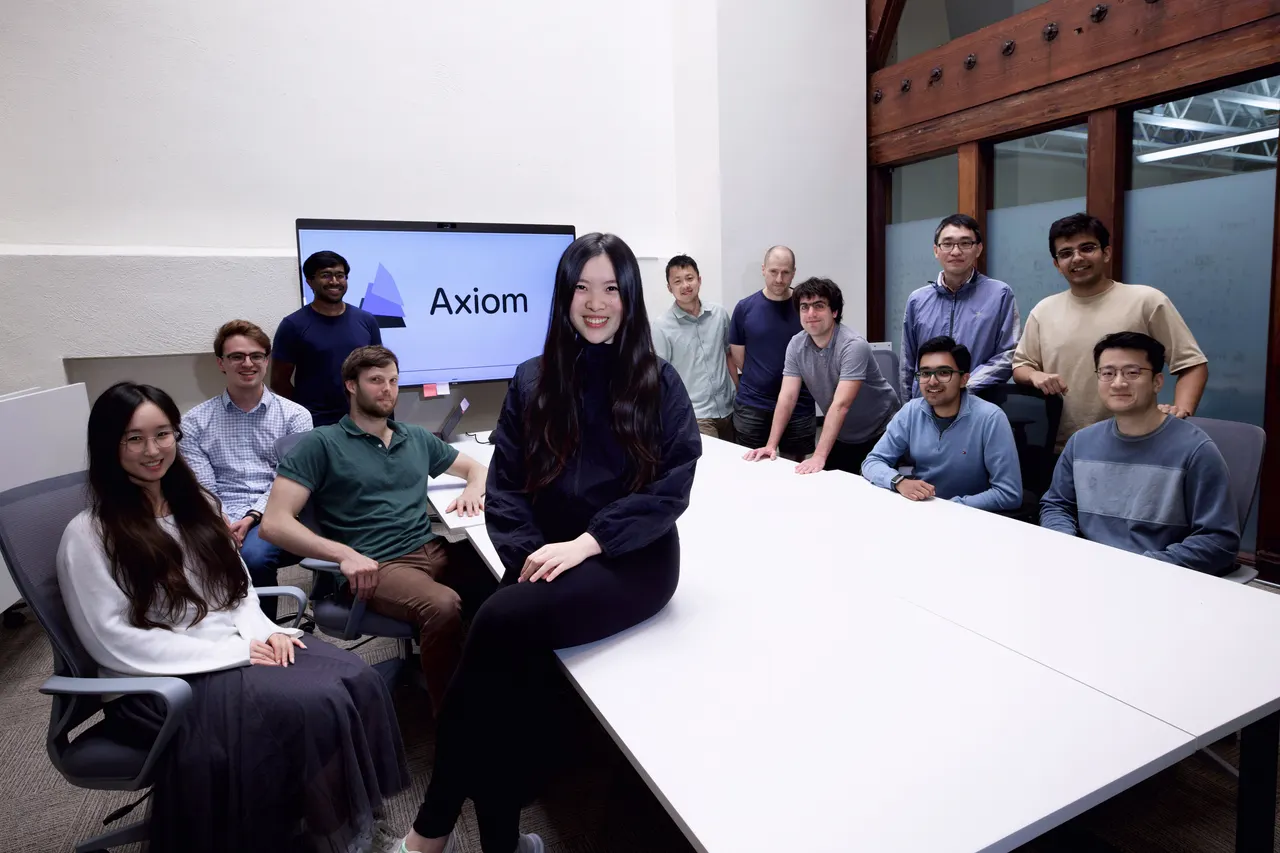
Axiom Math verifies the Stacks Project to curb AI slop in math

DeepSeek V4.1 Flash Arrives in Selectel's Token Factory Catalog