2026 QQ8: Earth's new mini-moon is the size of a person
Earth has had a second moon since April, and nobody noticed. 2026 QQ8 is a rock about 1 to 2 metres wide, and it will be gone by the new year.
 SUMO· the number puzzle
 Dialo· learn languages by speaking
 ediviewer· read EDI files like documents
 giftdetect· the right gift in minutes
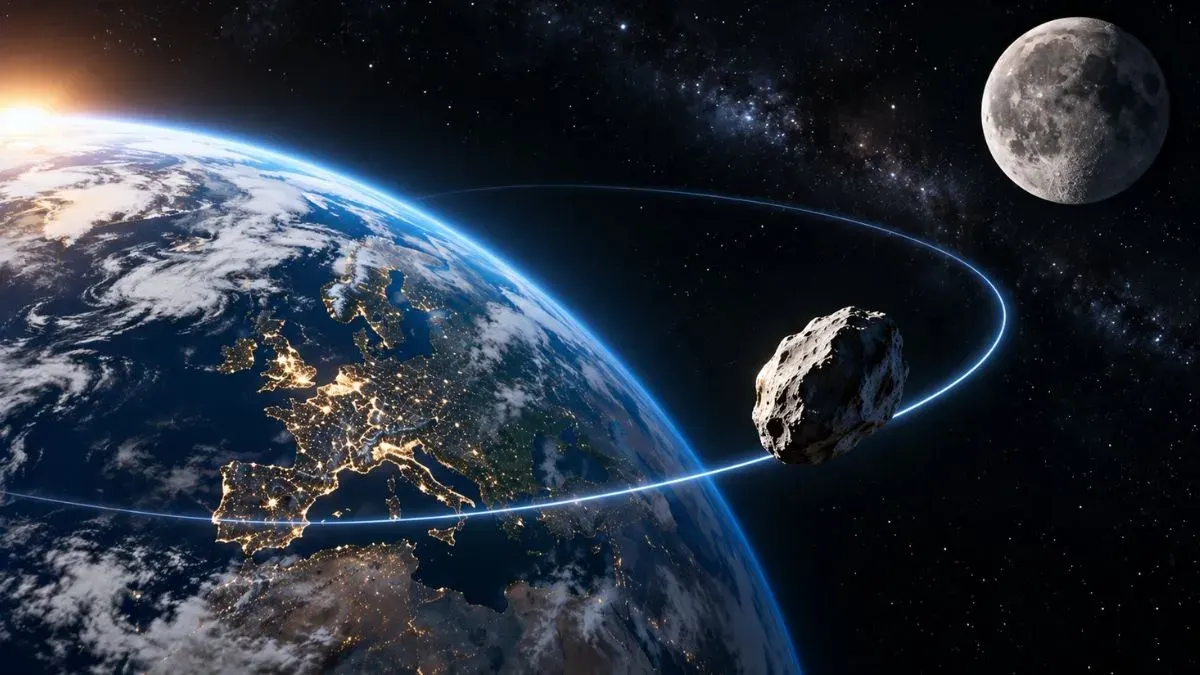
Earth has had a tiny extra moon since late April, and astronomers only worked that out in October. The object is called 2026 QQ8, it is roughly as big as a grown adult, and it leaves at the end of December.
Hungarian astronomer Krisztián Sárneczky spotted it on 20 August under the provisional name Sar2901. At first nobody knew whether it was a small asteroid or a piece of human-made hardware. Follow-up observations, including from the Lowell Discovery Telescope in Arizona and a University of Hawaii telescope, settled it. On 29 October the Minor Planet Center gave it its official designation and declared it a natural object, most likely a small asteroid.
How did Earth capture 2026 QQ8?
The rock mostly orbits the Sun, one lap every 359 days, so it keeps drifting back near us. In April it got close enough to enter Earth's Hill sphere, the region where our planet's gravity can hold small bodies on temporary orbits. Since then it has been bound to Earth.
Its path looks nothing like the Moon's near-circular orbit. It is a messy loop shaped by the pull of Earth, the Sun and the Moon together, and it is not stable. Current calculations say it stays until the end of December, after about 1.5 laps around Earth, then returns to circling the Sun in early 2027. You cannot see it with the naked eye or an amateur telescope.
Rock or rocket part?
That was the hard bit. From hundreds of thousands of kilometres away, a rocket fragment can look like a small asteroid. Astronomers measured how solar radiation pressure pushed on the object. A light, hollow piece of metal reacts differently from a dense rock, and the results pointed to rock.
There is precedent. 2020 SO turned out to be a rocket stage from the 1966 Surveyor 2 mission. For 2026 QQ8, researchers found no link to any known artificial object.
Is it a danger to Earth?
No. Its orbit is well understood. The figure of about 0.0038 astronomical units, or 568,000 km, is the minimum distance between the two orbits, not how far apart the bodies are now. A 1 to 2 metre rock would most likely burn up in the atmosphere anyway.
Its value is scientific: it shows how often Earth grabs small bodies and how long it can hold them. It passed fairly close in 1965, and the next notable approach is expected in 2058, with no capture predicted either time.
Apps worth a look
SUMO: the number puzzleTap the right tiles, add them up, hit the target. Easy to learn, hard to master. Free, for all ages.
Dialo: learn languages by speakingTalk to an AI conversation partner; every sentence comes back corrected and explained in your language. 9 languages, A1 to C2.
ediviewer: read EDI files like documentsOpen EDIFACT and X12 messages, see every segment explained, convert to JSON/XML, export PDF and Excel. Runs locally, no upload.
giftdetect: the right gift in minutesPick who it is for, the occasion and their personality. The search engine reads product descriptions from local shops and ranks what fits. Free, no sign-up.
More from this day
See all →
Foncier Innovant: France's AI tool that spots your garden shed
Can you still refuse a Linky meter? What the EU ruling means
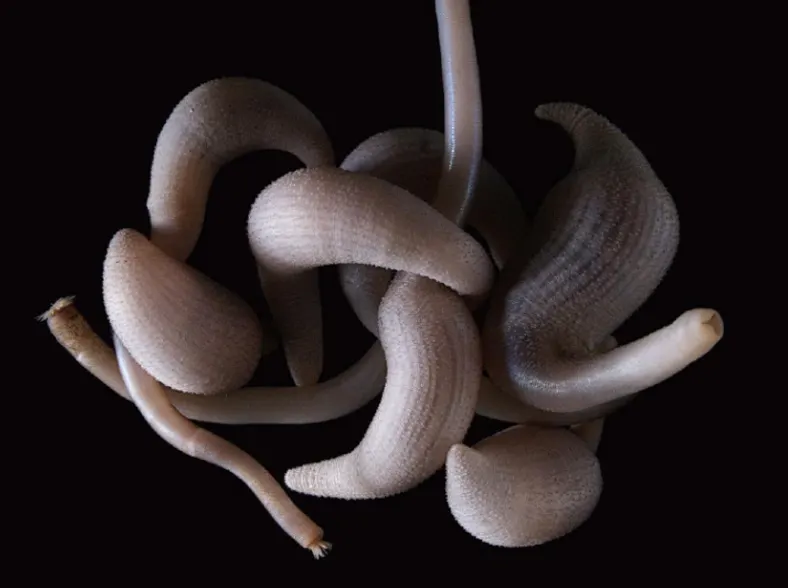
New peanut worm species found in Japan's deep sea has saw-toothed hooks

TikTok's For You feed breaks EU rules, Commission says
More in: Science
See all →
Webb spots H3+ 'forbidden' signal predicted 40 years ago
Okinawa rail: frozen sperm grows a full embryo in a bird down to 720
J0008+0128: the invisible object Gaia found that breaks star models