Shiretoko brown bear drones: NTT tests a one-week risk forecast
In Shiretoko National Park, NTT East and local partners will try to predict brown bear sightings about a week ahead and send a Skydio X10 drone to check the risky spots.
 SUMO· the number puzzle
 Dialo· learn languages by speaking
 ediviewer· read EDI files like documents
 giftdetect· the right gift in minutes
Shiretoko National Park in Hokkaido is testing a brown bear early warning system: a forecast of where bears are likely to show up in about a week, plus a drone to go and look.
NTT East, the town of Shari, the Shiretoko Foundation, NTT ME and NTT e-Drone Technology announced the trial on 26 November. Shiretoko is a UNESCO World Natural Heritage site, and Shari is working to let people and bears coexist there while keeping residents and tourists safe.
Why Shiretoko needs a brown bear drone patrol
The problem is partly people. Visitors sometimes get too close to bears, and some bears have grown used to humans. That means more patrol and watch work for local staff, and when there are too few responders, tourist areas stay closed for longer.
How the brown bear risk forecast works
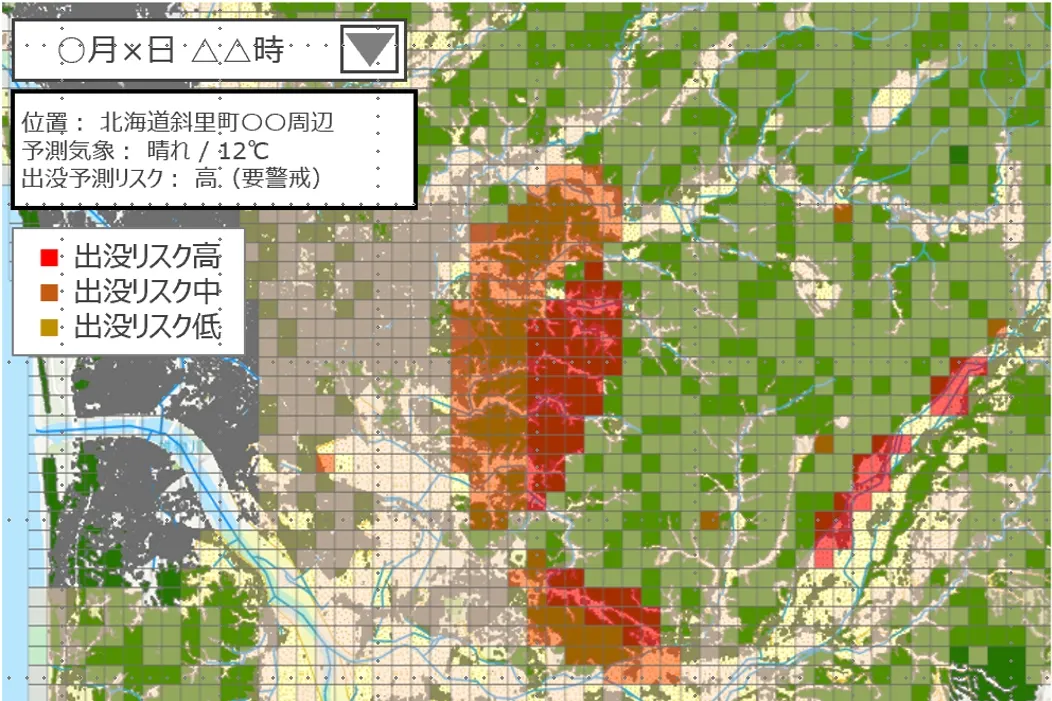
The team will feed past bear sighting records, weather conditions and terrain data into a model. The goal is to visualise sighting risk up to roughly one week ahead. If high-risk areas are known in advance, staff can concentrate their watching and patrols there.
The drone is a Skydio X10. It will fly over the high-risk areas, and the trial will check whether it makes the work safer, lighter and more efficient. Testers will also map where the drone can operate given nature and radio conditions, work out how to combine it with patrols on foot, and check flight conditions that are safe and considerate of surroundings such as wild birds.
Data analysis and model building run from November 2026 to mid-February 2027. From late February into March, the team will produce risk predictions, fly the drones, assess the results and compile findings.
Afterwards, the partners plan to improve safety and efficiency, adapt the method to local conditions and operations, and consider taking it to other regions with the same problem.
It is not the only such effort. NTT Docomo has used AI-linked cameras at base stations in Hokkaido since May to detect bears in real time, and KDDI said on 27 November that its drone and Starlink trial in Hokkaido showed value in speeding up first response.
Apps worth a look
SUMO: the number puzzleTap the right tiles, add them up, hit the target. Easy to learn, hard to master. Free, for all ages.
Dialo: learn languages by speakingTalk to an AI conversation partner; every sentence comes back corrected and explained in your language. 9 languages, A1 to C2.
ediviewer: read EDI files like documentsOpen EDIFACT and X12 messages, see every segment explained, convert to JSON/XML, export PDF and Excel. Runs locally, no upload.
giftdetect: the right gift in minutesPick who it is for, the occasion and their personality. The search engine reads product descriptions from local shops and ranks what fits. Free, no sign-up.
More from this day
See all →
Mars fingerprint rocks on Daedalia Planum puzzle scientists

Yudetaro ends its Birthday Club to avoid holding personal data

FaceStealer scam: fake video calls with a friend's face stole $400M