Shenloong deep-sea worm hides bacteria-filled "dragon balls"
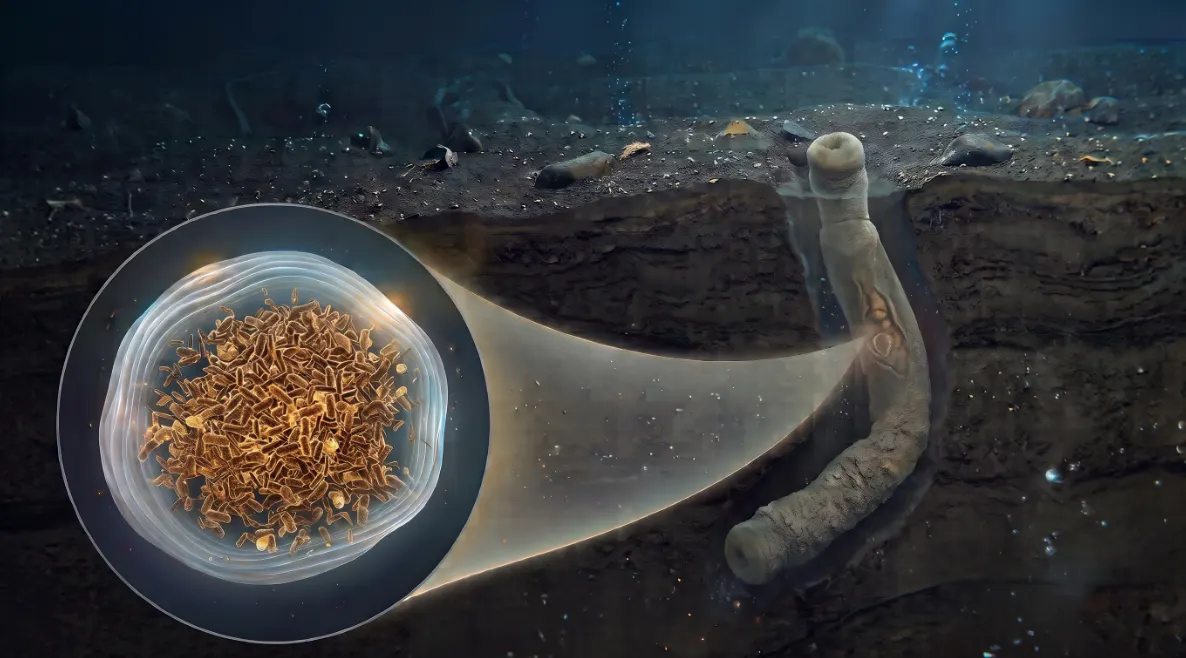
A worm-like deep-sea mollusc named after a dragon carries tiny spheres packed with bacteria. The researchers called them dracosphera, a nod to Dragon Ball.
 SUMO· the number puzzle
 Dialo· learn languages by speaking
 ediviewer· read EDI files like documents
 giftdetect· the right gift in minutes
Yes, scientists really did find "Dragon Balls" inside a deep-sea creature called Shenloong. Not the manga kind, but tiny spheres of bacteria that may help the animal survive with almost no oxygen.
A team including researchers from the Hong Kong University of Science and Technology announced the finding on November 12. The animal is Chaetoderma shenloong. It looks like an earthworm, but it is a mollusc, a relative of snails and octopuses.
Why is the species called Shenloong?
The name comes from Shenlong, the dragon of Chinese mythology, because of its long body and scale-like structures. A 2024 paper also says the dragon from Dragon Ball and the dragons of Dragon Quest helped inspire the name.
What are the dracosphera?
Inside the animal, the team found odd round structures only 10 to 15 micrometres across. Each is wrapped in more than 20 layers of membrane and holds hundreds to thousands of bacteria. The researchers named them dracosphera, which literally means dragon ball. The paper's acknowledgements also pay tribute to Akira Toriyama, the creator of Dragon Ball.
The worm lives at cold seeps, places where methane and hydrogen sulfide leak from the seabed. It burrows tens of centimetres below the surface, where oxygen is scarce. Its bacteria use hydrogen sulfide and similar chemicals to make organic food. Most of its digestive organs, including the gut, have degenerated. Instead it keeps the bacteria in an enlarged digestive gland.
The team suggests the many membrane layers may control how oxygen spreads. That could keep the scarce oxygen flowing to the animal's own cells while still sustaining the bacteria. This is only a hypothesis and still needs testing.
Some specimens came from off Tanegashima in Kagoshima Prefecture, and researchers from Japan's JAMSTEC took part. The team thinks the discovery could help explain how new structures arise and evolve inside cells.
Apps worth a look
SUMO: the number puzzleTap the right tiles, add them up, hit the target. Easy to learn, hard to master. Free, for all ages.
Dialo: learn languages by speakingTalk to an AI conversation partner; every sentence comes back corrected and explained in your language. 9 languages, A1 to C2.
ediviewer: read EDI files like documentsOpen EDIFACT and X12 messages, see every segment explained, convert to JSON/XML, export PDF and Excel. Runs locally, no upload.
giftdetect: the right gift in minutesPick who it is for, the occasion and their personality. The search engine reads product descriptions from local shops and ranks what fits. Free, no sign-up.
More from this day
See all →
Surveillance pricing: how your data can raise what you pay
OpenAI bug suspect Abdulrahman Alfozan and his $14 device

NTT Docomo 5G SA outages: three failures in one month

Big Walk and the IGA: 19 judges refuse to vote for games using AI
More in: Science
See all →
Chernobyl fungus melanin inspires material that breaks down nerve agents

Aral Sea study: the dry seabed has emitted 748 million tonnes of CO₂

Soft robot with no electronics runs 16 km/h on compressed air