Planet X2: a Hidden World Beyond Neptune Could Explain Odd Orbits
A new simulation study suggests an undiscovered planet 1.5 to 2 times Earth's mass could explain the strange orbits of icy bodies far beyond Neptune.
 SUMO· the number puzzle
 Dialo· learn languages by speaking
 ediviewer· read EDI files like documents
 giftdetect· the right gift in minutes
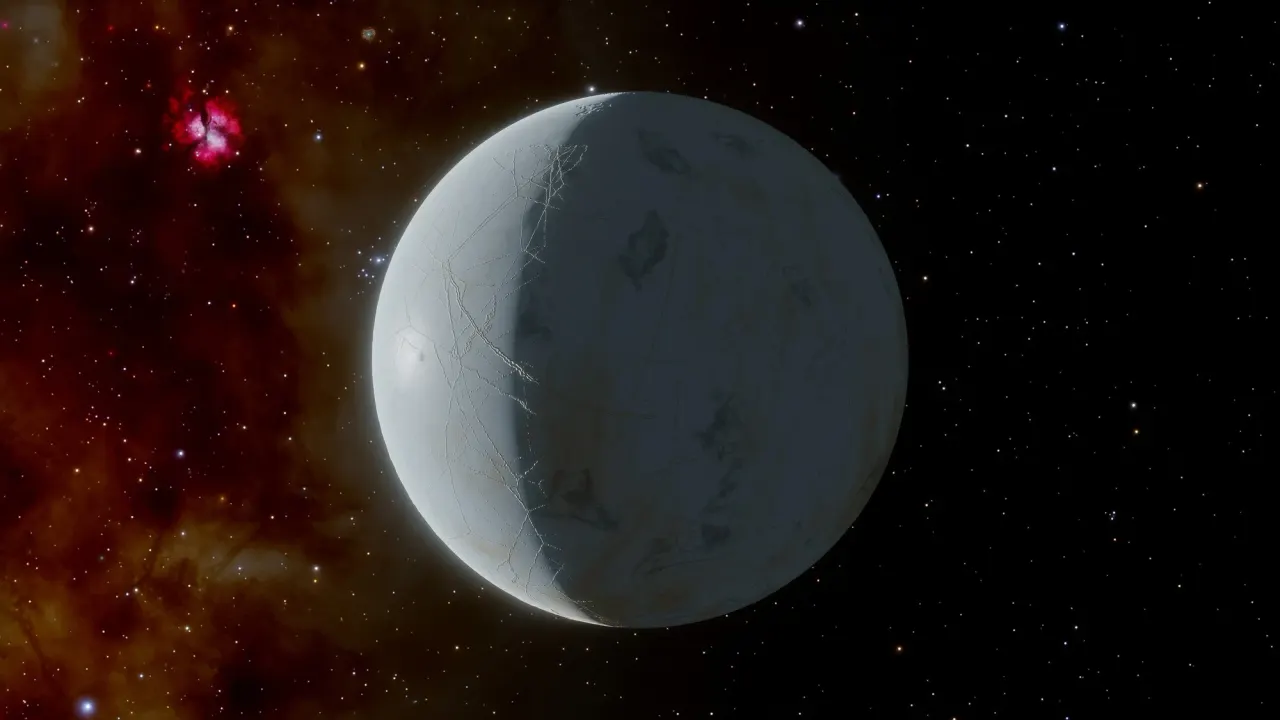
Is there another planet out past Neptune that nobody has spotted yet? A team in Australia thinks it might be there, and they have given it a working name: Planet X2, or PX2.
The study, published in Monthly Notices of the Royal Astronomical Society, was led by Patryk Sofia Lykawka of the University of Southern Queensland. His team used computer simulations covering 4.5 billion years of Solar System history to test whether the gravity of a distant planet could explain some odd orbits seen among icy objects far beyond Neptune.
According to the simulations, PX2 could pull those objects away from Neptune's influence, or tilt their orbits at surprisingly steep angles. The model reproduces several of the unusual patterns astronomers see. Lykawka admits there are still differences between the model and the observations that need closer study.
What is Planet X2, and how does it differ from Planet Nine?
PX2 would be much lighter than the planet in the well-known Planet Nine hypothesis, which suggests a world up to 10 times Earth's mass. The new proposal has 1.5 to 2 Earth masses. Its orbit would be elliptical, with a semi-major axis (a measure of the orbit's size) of roughly 350 to 500 astronomical units. One astronomical unit is the Earth-Sun distance, about 150 million km. Even at its closest, the planet would stay at least 200 units from the Sun.
Why do astronomers suspect something is out there?
Beyond Neptune lies a huge region of icy bodies. Most belong to the Kuiper Belt, in a wide disc 38 to 50 times farther from the Sun than Earth. In the last two decades, though, astronomers have found a growing number of more distant objects on very tilted or stretched orbits that the known planets struggle to explain. Sedna is the best-known example.
The hunt has a long history. Percival Lowell's search for a Planet X helped lead to the discovery of Pluto in 1930, though Pluto later proved too small to explain the movements that started the search.
PX2 is still a hypothesis. But the Vera C. Rubin Observatory's Legacy Survey of Space and Time, a long sky survey now underway, could test it. Professor Jonti Horner, a co-author, calls that exciting: new clues may show whether an unknown planet is still waiting to be found.
Apps worth a look
SUMO: the number puzzleTap the right tiles, add them up, hit the target. Easy to learn, hard to master. Free, for all ages.
Dialo: learn languages by speakingTalk to an AI conversation partner; every sentence comes back corrected and explained in your language. 9 languages, A1 to C2.
ediviewer: read EDI files like documentsOpen EDIFACT and X12 messages, see every segment explained, convert to JSON/XML, export PDF and Excel. Runs locally, no upload.
giftdetect: the right gift in minutesPick who it is for, the occasion and their personality. The search engine reads product descriptions from local shops and ranks what fits. Free, no sign-up.
More from this day
See all →
iOS 27 Impersonation Risk Detection: How to Turn It On

Binding of Isaac: Repentance Plus drops AI music from its GTA-style section

Amber Wallin's GTA 6 voice role stayed secret, even from her husband

Mistral Vibe Pro free for a month for anyone in Europe
More in: Science
See all →
Folding drone squeezes through 15 cm gaps with no extra motor
Milky Way simulation tracks 5.4 trillion particles with AI
Lean, the proof checker behind the Riemann hypothesis claim