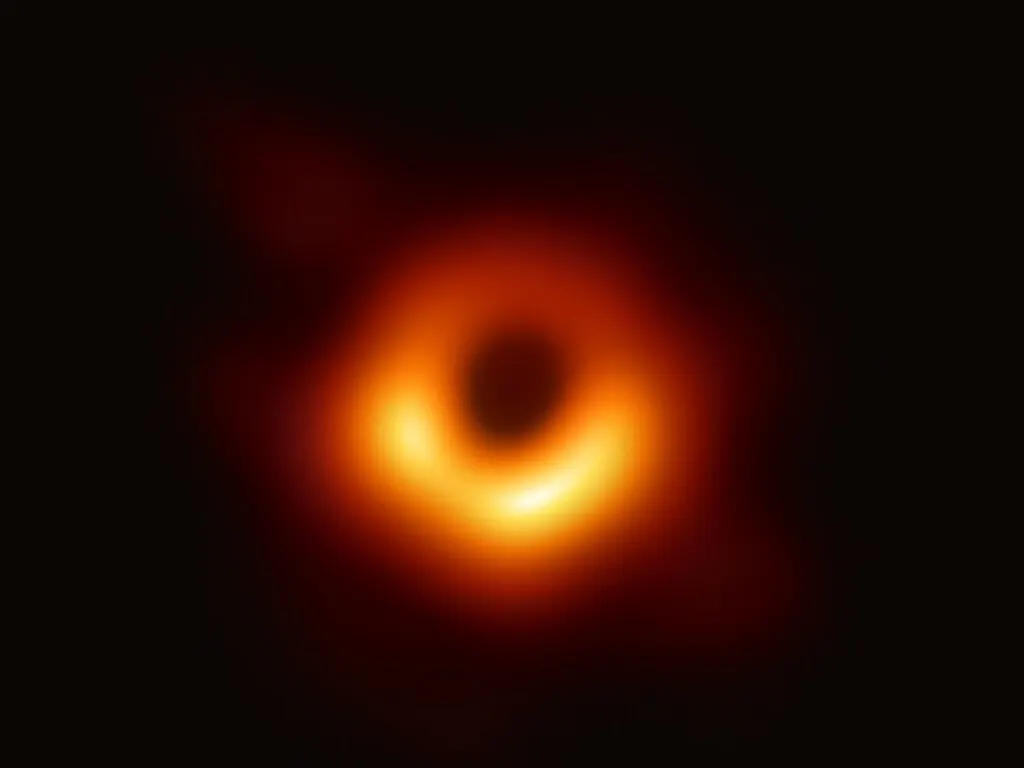
Milky Way simulation tracks 5.4 trillion particles with AI
Japanese researchers simulated the Milky Way down to individual stars, using an AI shortcut for exploding stars and three supercomputers on two continents.
 SUMO· the number puzzle
 Dialo· learn languages by speaking
 ediviewer· read EDI files like documents
 giftdetect· the right gift in minutes
Exploding stars have long been the thing that slows down any computer model of a whole galaxy. A Japanese team has now found a way around that, and the result is a Milky Way simulation with up to 5.4 trillion particles.
Researchers at the Riken institute in Wako and the University of Tokyo presented the work at the supercomputing conference SC26 in Chicago. Their program, called Pheasant, models stars, gas and invisible dark matter at a resolution 1,000 to 10,000 times higher than earlier models of the full galaxy.
How does the AI speed up the Milky Way simulation?
The problem is scale. The Milky Way's disc spans up to 200,000 light years and takes about 200 million years to rotate once. But a supernova changes the gas around it within decades, which forces tiny time steps.
Riken astrophysicist Keiya Hirashima built an AI model to skip that. "My model predicts the gas distribution after 100,000 years," he says. At each explosion, the main program sends the surrounding gas data to the AI and gets back the state after the shock wave has faded. The simulation can then advance in steps of 2,500 years instead of about 30. Training took one day on a single graphics chip.
Three supercomputers, three chip makers
The code was adapted for Intel, AMD and Nvidia hardware and tested on Frontier and Aurora in the US and on Jupiter in Jülich, Germany, which the research centre calls Europe's fastest supercomputer. Jupiter, with nearly 21,000 Nvidia chips, handled 135 billion particles per second. Aurora, with just over 60,000 Intel chips, managed 144 billion. Frontier, with AMD chips and more memory, ran the full 5.4 trillion. Jupiter could compute a billion years with 100 billion particles in 19 days.
What the simulation can't do yet
Astronomers want to trace how chemical elements from dead stars spread through the galaxy and end up in new stars and planets. The results can be checked against data from Gaia and the James Webb Space Telescope, and the AI method could carry over to climate models.
For now it is a technical proof. The 5.4 trillion run covered only ten short test steps. The model starts with a finished galaxy disc and leaves out magnetic fields, radiation, dust formation and black holes. It also can't show how a spiral galaxy forms from the early universe. The project was a finalist for the Gordon Bell Prize but lost to a Chinese team, according to the ACM.
Apps worth a look
SUMO: the number puzzleTap the right tiles, add them up, hit the target. Easy to learn, hard to master. Free, for all ages.
Dialo: learn languages by speakingTalk to an AI conversation partner; every sentence comes back corrected and explained in your language. 9 languages, A1 to C2.
ediviewer: read EDI files like documentsOpen EDIFACT and X12 messages, see every segment explained, convert to JSON/XML, export PDF and Excel. Runs locally, no upload.
giftdetect: the right gift in minutesPick who it is for, the occasion and their personality. The search engine reads product descriptions from local shops and ranks what fits. Free, no sign-up.
More from this day
See all →
Chrome AI agents could get a permission system from Google
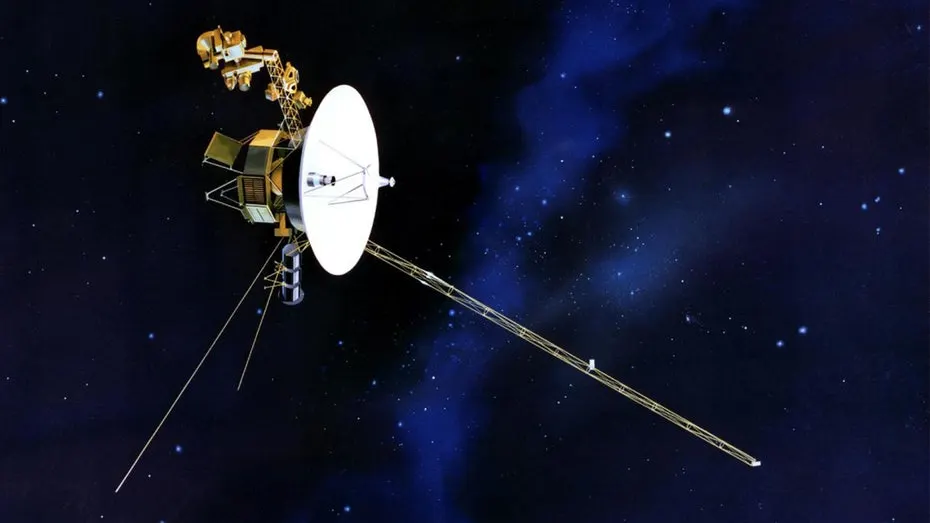
Voyager 1 hits one light-day from Earth, a first for any probe

Upload2Shell: Ghostscript flaw puts many systems at risk

Megaspeed blacklisted by US after Nvidia CEO Jensen Huang link
More in: Science
See all →
Lean, the proof checker behind the Riemann hypothesis claim
LHCb zeptoverse: first sign of a decay that happens once in 10 billion

Underwater volcanic activity found near Challenger Deep