Underwater volcanic activity found near Challenger Deep
Researchers found volcanic rock on the wall of the Mariana Trench, the deepest such rock ever documented in the oceans, in a place where volcanoes are not expected.
 SUMO· the number puzzle
 Dialo· learn languages by speaking
 ediviewer· read EDI files like documents
 giftdetect· the right gift in minutes
Near Challenger Deep, the deepest known point on Earth's surface, researchers have found traces of underwater volcanic activity where almost nobody expected any. The area lies at depths of up to about 10.9 kilometres.
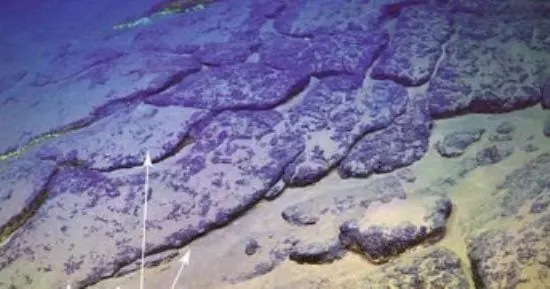
The team used a remotely operated vehicle called Jason/Medea to look at the trench wall. It cannot reach the very bottom of Challenger Deep, since its limit is around 6.5 kilometres. But it could survey the wall of the trench in a zone called the forearc, the strip between the trench and the line of volcanoes tied to the plate movement. Along about 550 kilometres of that zone, the vehicle found thin layers of pyroclastic rock. That is rock formed when volcanic material from lava flows piles up and fuses together. Lead researcher Robert Stern of the University of Texas at Dallas called it the deepest rock of this kind documented in the oceans so far. The results appeared in Frontiers in Earth Science.
Why is volcanic activity near the Mariana Trench a surprise?
The mantle rock in this zone is not hot enough to melt easily, and the pressure at that depth is enormous. Stern said explosive volcanism near ocean trenches is unusual, and the team was surprised by what it found.
That pressure changes how an eruption behaves. It limits how far the gases inside magma can expand. The researchers have not yet pinpointed the eruption sites. They did find evidence that lava ran down slopes for short distances, then kept its heat and fused into very hard rock.
What does it tell us about the Mariana Trench?
The Mariana Trench runs about 2,550 kilometres through the western Pacific, from near southern Japan to Guam. Trenches like it form when one tectonic plate slides under another, a process called subduction.
The study also shows the forearc is being stretched from east to west, but in different ways. Older rocks in the east point to stretching from mechanical forces as plates move. Younger volcanic rocks in the west suggest magma rising from the mantle is pushing and thinning the crust. The researchers say this could help explain how the trench formed and how its structure changed over time.
Apps worth a look
SUMO: the number puzzleTap the right tiles, add them up, hit the target. Easy to learn, hard to master. Free, for all ages.
Dialo: learn languages by speakingTalk to an AI conversation partner; every sentence comes back corrected and explained in your language. 9 languages, A1 to C2.
ediviewer: read EDI files like documentsOpen EDIFACT and X12 messages, see every segment explained, convert to JSON/XML, export PDF and Excel. Runs locally, no upload.
giftdetect: the right gift in minutesPick who it is for, the occasion and their personality. The search engine reads product descriptions from local shops and ranks what fits. Free, no sign-up.
More from this day
See all →
Nvidia China chip sales: US wants to know who was responsible

Riemann hypothesis proof claimed by Anthropic mathematician using Claude

PS5 smokes during GTA 6 stream as Twitch creator steps away

SkyShowtime is shutting down at the end of 2027 in Europe
More in: Science
See all →
M87* black hole photo checked by AI, and Einstein holds up