HSE Expert: Russian Graduates to Leave Universities With AI Twins by 2028
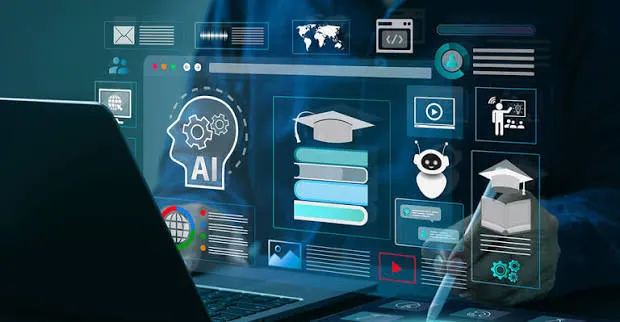
A professor at HSE University predicts that by 2028 Russian universities will graduate students together with personal AI twins trained alongside them throughout their studies.
By 2028, Russian universities will hand over not only a diploma-holding graduate but also that graduate's AI twin, according to Sergei Zverev, professor and head of the School of Communications at the Faculty of Creative Industries of HSE University. He spoke at the "Promoting IT Projects 2.0" meetup held at the MosHub.Skolkovo venue.
Multi-agent learning
Zverev said the familiar model of education will change for good. The new approach rests on the concept of multi-agent learning. Many universities, he noted, are already designing learning environments in which a student creates a personal digital twin on enrollment.
The key idea is that the AI learns together with its owner. In Zverev's words, the twin will think like the student rather than like a generic chatbot that gives everyone the same advice. The student teaches the assistant to solve tasks, checks its results, corrects its mistakes and passes on knowledge, so that in the future the assistant can take over part of the student's work.
Already under way
According to Zverev, Russian universities have started rolling out personal AI agents. He named ITMO, MIPT, Moscow State University, HSE and MISIS among the institutions developing such technologies, along with others.
The professor argued that fighting algorithms is pointless. In his view, the main task for a professional in the age of neural networks is to develop critical thinking and the readiness to solve non-standard problems for which no methods exist yet. He summed it up this way: AI will not replace people, but a person with AI will replace a person without it.
The forecast is Zverev's own projection, and no details were given on how the twins would be assessed, who would own them or how they would be used in hiring. For students and employers, the claim signals a shift in what a university credential may include: not just knowledge in a graduate's head, but a trained digital assistant that reflects their working style.
More from this day
See all →
Jio Platforms Q2 Profit Rises 13.7% to ₹8,387 Crore After Listing

Smylo in Talks to Raise ₹30 Cr to Expand Cat Food Range
Downtown Tech Summit Doha Names Snoonu and Wamda Speakers