Rivian acquires Third Dimension to speed up self-driving work
Rivian has bought UK startup Third Dimension, whose AI turns images and video into realistic 3D worlds, to build better simulators for driver assistance and robotaxis.
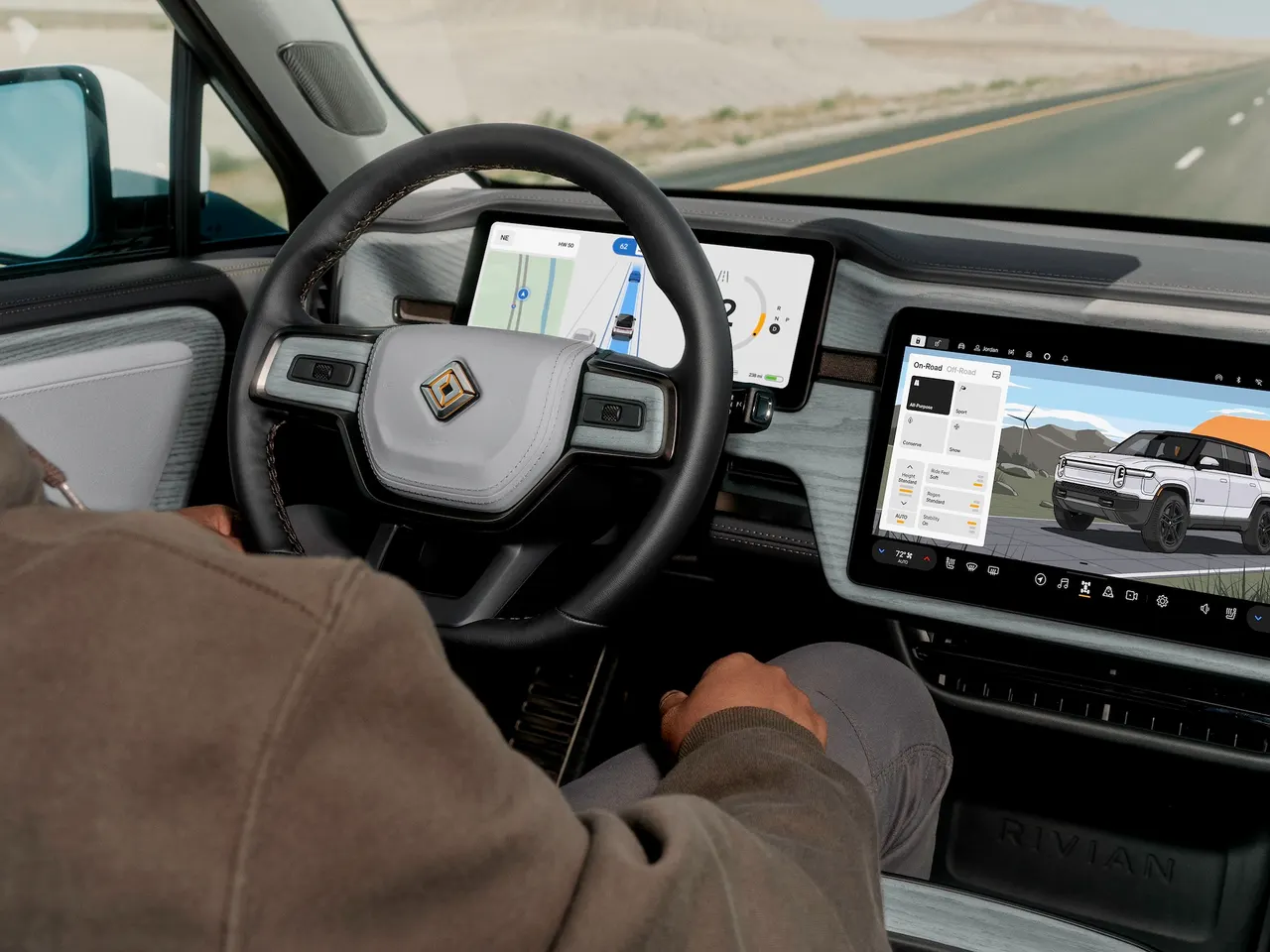
Rivian has acquired Third Dimension, a U.K. startup that uses AI to turn images and videos into lifelike 3D worlds. The EV maker plans to use the technology to speed up its driver-assistance features and the self-driving system for the robotaxis it intends to supply to Uber. Terms of the deal were not disclosed.
Third Dimension's 15-person team, mostly based in the U.K., will join Rivian's autonomy and AI group led by James Philbin. Philbin said the deal also lets Rivian expand its AI hub in London. The startup was founded in 2024 by CEO Tolga Kart and Piotr Sokólski, and raised $7 million in seed funding from investors including Abstract Ventures, MVP, Soma Capital and Solari Capital. Its tool was originally built to accelerate video game development, though the founders also saw uses in defense and autonomous vehicles.
Making real driving scenarios simulatable
Simulation is central to training and validating self-driving systems. Traditional simulators rely on rendering or game engines and often on synthetic data, which can leave a gap between the virtual and the real world, Kart said. Third Dimension's approach starts from real footage instead.
"For us, it's about taking real scenarios, but making them simulatable," Philbin said. Engineers can move cameras, shift other road users and change lighting or weather. Rivian says it receives more than 400,000 sequences per day from customer vehicles, including R1T trucks, R1S SUVs, delivery vans and R2 SUVs, where owners have enabled external camera sharing. The data is aggregated and anonymized.
Philbin said the tech will let Rivian recreate complex conditions without waiting for rare edge cases to occur on the road. It matters most for validation, he said, because the company needs to trust that its simulated results reflect real-world performance.
What comes next
Rivian currently offers Universal Hands-Free driving on highways. By the end of the year it plans to release a version that handles entire drives on surface streets and highways without touching the wheel, though drivers must still supervise. Full autonomy is planned for robotaxi versions of the R2 SUV, which are due on the Uber app in 2028.
More from this day
See all →
SoFi Launches SOFIE, a 4.4% APY FDIC-Insured Tokenized Deposit

Microsoft MAI-Transcribe-2-Streaming Reads Speech Mid-Sentence

Tesla Optimus Deliveries Slip to Late 2027 as Hands Lag