Paco startup to take over BlaBlaCar Bus routes from January
Three entrepreneurs, two of them BlaBlaCar Bus alumni, launch Paco to keep intercity coach lines running after BlaBlaCar ends its bus service in January 2027.
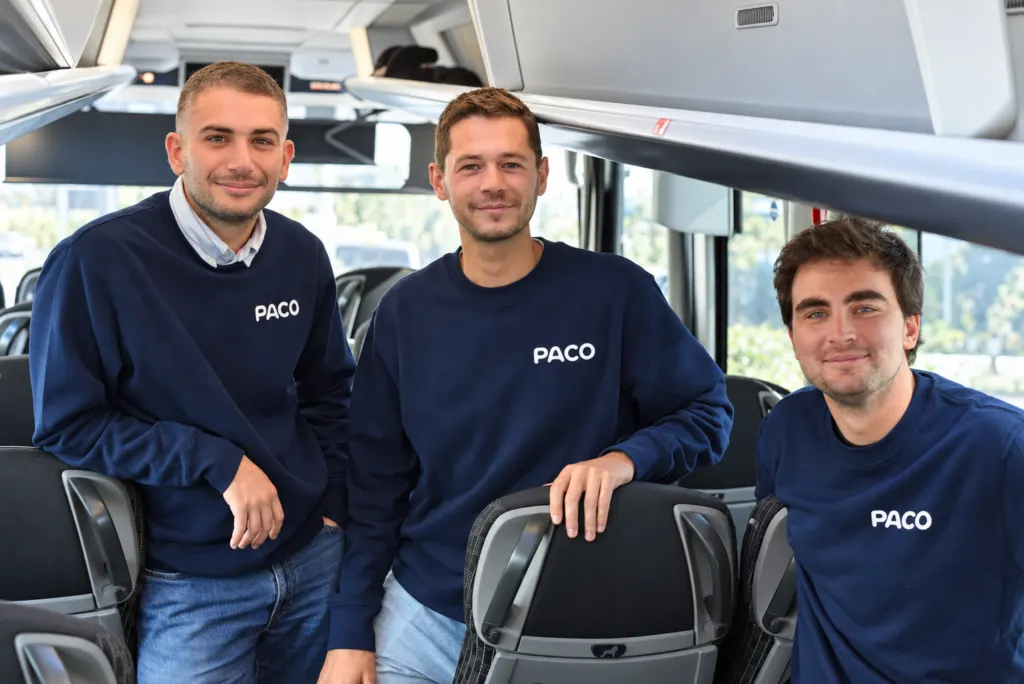
BlaBlaCar Bus will leave the road in January 2027, but not all of its lines will vanish. A trio of entrepreneurs has founded a startup called Paco to build a national network of long-distance coaches. The first tickets are already on sale, and the first trips are scheduled for 15 January, only days after BlaBlaCar Bus stops operating.
BlaBlaCar launched its coach service in 2019, but the business ran at a heavy loss. It covered about fifteen European countries and more than 300 cities, carrying over 6 million passengers a year through 6,000 partner operators. Despite annual revenue of 115 million euros, that was not enough to cover operating costs. The company announced the shutdown on 21 April.
From a premium night bus to a takeover
Arthur Bertrand, who worked at BlaBlaCar Bus, says the news surprised him and that several coach operators contacted him, left in the lurch. He teamed up with Olivio Bugosen, also a BlaBlaCar Bus alumnus, and Louis Carron-Cabaret, former CPTO of pet food brand Japhy. The three had been working on a premium night bus brand, but pivoted to taking over the most profitable BlaBlaCar Bus lines and the most reliable carriers. Paco's slogan is « Le bus en mieux », roughly "the bus, but better". The company was officially created this summer.
Paco positions itself in both B2C and B2B, as a tech solution for coach companies. Its value, Bertrand says, lies in the contracts signed with operators to run lines, while the end customer is the traveller buying a ticket. Prices are meant to match the competition. Three major domestic cross-country lines are already signed, including Rennes–Marseille, close to 1,000 kilometres, and Bordeaux–Nice.
Targets and business model
The founders hope to have about fifteen vehicles for the official launch in January 2027. One line needs two vehicles, which would mean seven or eight lines from the start. The long-term goal is to take over 20% of the BlaBlaCar Bus network, focusing on the most profitable lines, over the first four or five years. Twenty operating lines by December 2027 would be "not bad", Bertrand says. The aim is eventually to link the 50 largest cities in Western Europe and add the original premium night buses.
Paco launches without fundraising. A single bus costs 300,000 euros, so the startup leaves vehicles to the coach operators and earns a commission on each ticket. The founders do not rule out raising funds once the first tickets are sold and the model is proven, and want to avoid leaving the field open to FlixBus.
Apps worth a look
 SUMO: the number puzzle
Tap the right tiles, add them up, hit the target. Easy to learn, hard to master. Free, for all ages.
 Dialo: learn languages by speaking
Talk to an AI conversation partner; every sentence comes back corrected and explained in your language. 9 languages, A1 to C2.
 ediviewer: read EDI files like documents
Open EDIFACT and X12 messages, see every segment explained, convert to JSON/XML, export PDF and Excel. Runs locally, no upload.
More from this day
See all →
Gökçe Law Partnership Earns Raydorf AI-Integrated Certification

Marvell to Acquire Lumentum in $115 Billion All-Stock Deal
BMW to Launch City Driving Assistance in 2027, Starting in Germany

India's SIM-Binding Mandate Offers Little Security, Study Finds
More in: Startups
See all →Spill Games raises Rs 100 crore Series A led by Elevation Capital

AIM Intelligence Takes Runner-Up at Singapore's SLINGSHOT 2026

Granter raises €1.6M to take its AI grant platform across Europe