India's SIM-Binding Mandate Offers Little Security, Study Finds
A new Esya Centre study says India's SIM-binding rule for messaging apps could disrupt users and MSMEs while doing little against phishing, malware and other cyber fraud.
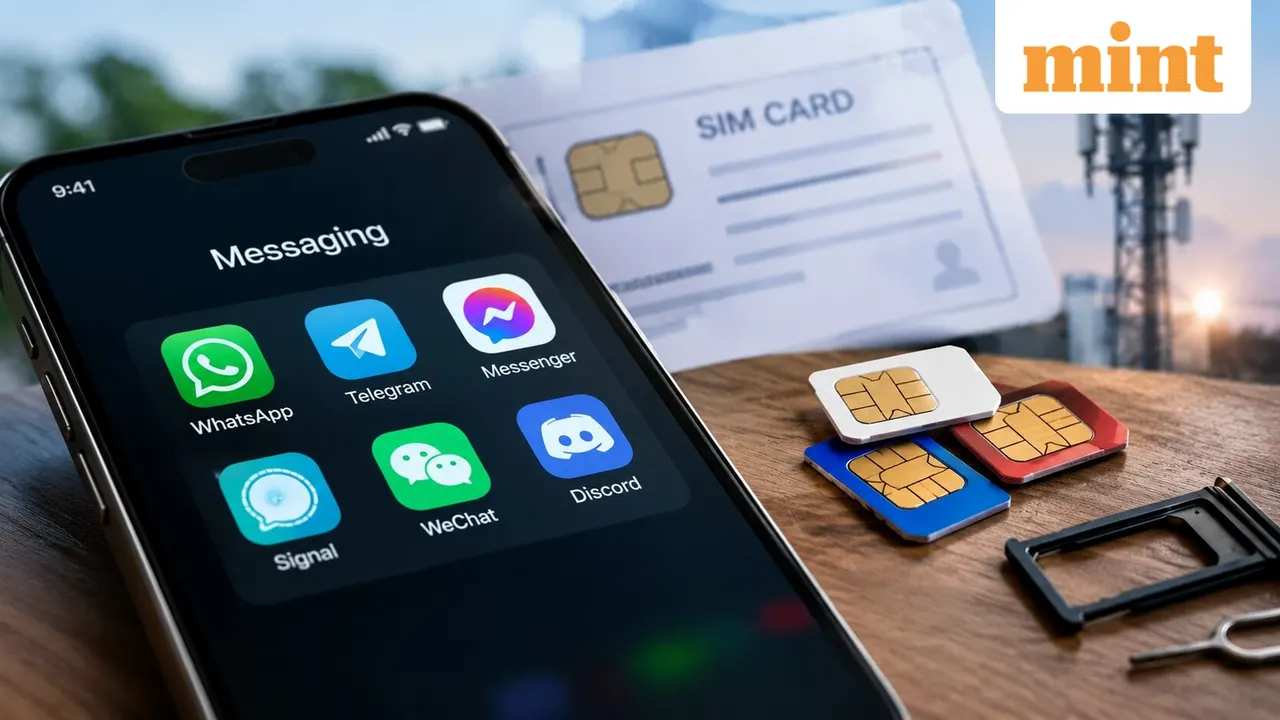
India's plan to tie messaging apps to active SIM cards would disrupt consumers and small businesses while adding little cybersecurity protection, according to a new study by the think tank Esya Centre.
The report, titled "Rethinking India's SIM Binding Mandate: An Empirical Assessment", surveyed 2,033 consumers in 18 cities and 353 businesses in 17 cities. It examines the Department of Telecommunications (DoT) directive on users, companies and digital security.
Disruption for consumers and MSMEs
The DoT announced the directive in November 2025 to link internet-based messaging apps to active SIMs. It also initially required web sessions to log out after every six hours of inactivity, a rule the government later changed to a risk-based approach.
Among consumers, 98.88% said losing messaging access because of an inactive SIM would be inconvenient, and 98% were concerned about losing internet access in emergencies. Some 97.7% of companion-device users said forced logouts would interfere with use. Among international travellers, 67.1% rely on alternative connectivity, while 33% use Indian SIMs with roaming.
Businesses appear even more exposed. In the survey, 92% use companion-device access and 86% share one business number across devices. Some 78% expect moderate or extreme disruption, 83.5% foresee operational delays and errors, and 82% said forced logouts would interrupt work. Further, 76.3% of MSMEs expect high additional costs, with 60.6% citing workplace costs, 58.6% devices and equipment, and 55% staffing.
Doubts over fraud prevention
Although 87.2% of businesses worry about SIM fraud, 81% doubt SIM binding is a worthwhile safeguard, and 59% of consumers question whether it would make messaging safer. The authors note that phishing, social engineering, stolen credentials and malware remain key tools for criminals. About 41% of consumers said they would get a second SIM and 30.3% would buy another device.
The think tank recommends a targeted, risk-based approach: stronger Know Your Customer checks, stricter controls on SIM issuance, better fraud detection and action against mule-account networks. It also urges detailed impact assessments before major rule changes, covering costs for consumers, business and communication reliability, and security benefits.
Apps worth a look
 SUMO: the number puzzle
Tap the right tiles, add them up, hit the target. Easy to learn, hard to master. Free, for all ages.
 Dialo: learn languages by speaking
Talk to an AI conversation partner; every sentence comes back corrected and explained in your language. 9 languages, A1 to C2.
 ediviewer: read EDI files like documents
Open EDIFACT and X12 messages, see every segment explained, convert to JSON/XML, export PDF and Excel. Runs locally, no upload.
More from this day
See all →
Samsung Asks UMC for More Display Chip Wafers, Gets Turned Down

Kakao Mobility and Korean Army to Build Defense AI Control System
Hyundai Motor Group Suspends External AI Tools in Core R&D