Nuclear blast in low Earth orbit could kill 98% of satellites in a week
A simulated 1-megaton blast 500 km over the South Atlantic would knock out about 98% of satellites within a week, and replacements would fly into the same radiation.
 SUMO· the number puzzle
 Dialo· learn languages by speaking
 ediviewer· read EDI files like documents
 giftdetect· the right gift in minutes
One nuclear explosion in low Earth orbit could disable roughly 98% of the satellites up there within a week. That is the result of a new simulation by physicists at the University of Wisconsin-Madison and Princeton University.
There are about 17,776 satellites in low Earth orbit right now. They carry civilian and military infrastructure, from communications to much else we rely on daily. The researchers combined a model of multiple collisions and debris generation with a calculation of how radioactive fission products spread. Then they set off a virtual 1-megaton bomb about 500 km above the South Atlantic. The paper is on the preprint site arXiv and has not yet been peer reviewed.
What would actually destroy the satellites?
Not the X-rays from the initial flash. According to the analysis, the main culprit is electrons released by fission products. Earth's magnetic field traps them and builds an artificial radiation belt, and every satellite passing through is bathed in constant radiation.
Making satellites three times more radiation-tolerant did not save them. In that scenario about 97% of satellite equipment still failed within two weeks.
Why launching replacements would not fix it
New satellites would enter the same radiation belt and suffer the same fate. Dead satellites that can no longer manoeuvre also raise the collision risk. The team expects about 20 satellite collisions in the two years after the blast, around 19 of them in the first year. Without a blast, they expect about one.
Falling satellites bring another problem. The researchers say the concentration of certain metals in the atmosphere could rise sharply, and the effects need further study.
Chantal Cappelletti, an aerospace engineer at the University of Nottingham who was not involved, said it would not cause modern society to collapse at once. But many services we take for granted would be disrupted for a long time, and restoring orbital infrastructure would likely take years.
Has anything like this happened before?
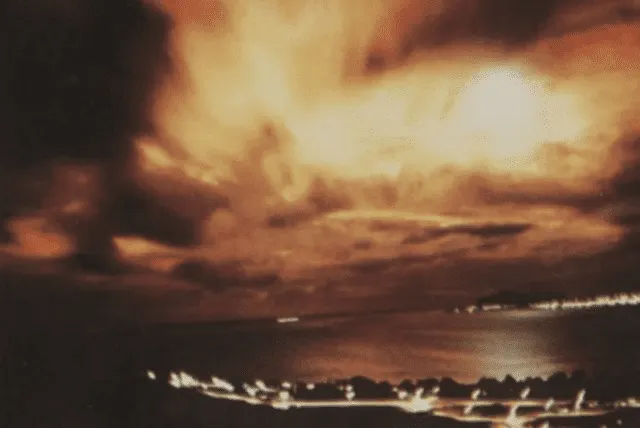
In 1962 the US detonated a 1.4-megaton bomb about 400 km above the Pacific in the Starfish Prime test. Scientists found it created an artificial radiation belt that kept irradiating satellites. The data was declassified in 2006. A 1963 treaty banned nuclear tests in the atmosphere and space.
The authors point to Russia's 2024 veto of a UN Security Council resolution against putting nuclear weapons in orbit, which they say raised concerns that such a weapon could be aimed at orbital infrastructure.
Apps worth a look
SUMO: the number puzzleTap the right tiles, add them up, hit the target. Easy to learn, hard to master. Free, for all ages.
Dialo: learn languages by speakingTalk to an AI conversation partner; every sentence comes back corrected and explained in your language. 9 languages, A1 to C2.
ediviewer: read EDI files like documentsOpen EDIFACT and X12 messages, see every segment explained, convert to JSON/XML, export PDF and Excel. Runs locally, no upload.
giftdetect: the right gift in minutesPick who it is for, the occasion and their personality. The search engine reads product descriptions from local shops and ranks what fits. Free, no sign-up.
More from this day
See all →
Tesla FSD in Europe: France accused of urging a no vote

Korea's exam emergency alert didn't reach some phones. Why?

Kona Card platinum card costs 20 million won in Seoul pop-up

ChatGPT API credits: Pro users get up to $500 a month, with a catch
More in: Science
See all →
Green cloud seen from space off Vancouver Island is herring milt
Seismometers can detect aircraft sonic booms, not just quakes

Eagles killing 57-pound baboons in Chad surprise scientists