NASA Opens $10 Billion Moon Base Contracts to SpaceX, Blue Origin
NASA has expanded its CLPS programme with contracts worth up to $10 billion over 10 years, letting eight firms compete to build up a lunar base mission by mission.
 SUMO· the number puzzle
 Dialo· learn languages by speaking
 ediviewer· read EDI files like documents
 giftdetect· the right gift in minutes
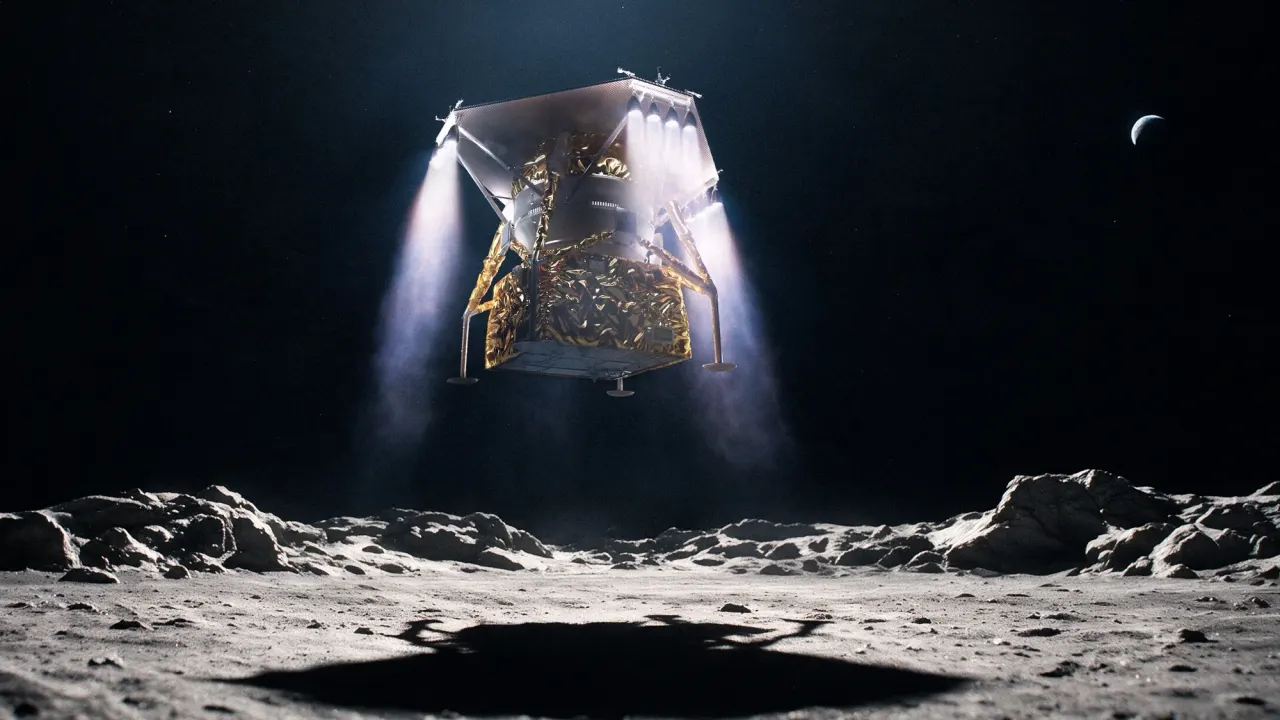
NASA has expanded its Commercial Lunar Payload Services (CLPS) programme with contracting vehicles worth up to $10 billion over ten years. The agency announced the move at the MAX POWER air and space show at Kennedy Space Center in Florida, and it opens the door to the first building blocks of a permanent lunar base.
The figure is a ceiling, not a guaranteed budget. Orders will be awarded as the programme advances, and the companies will compete for each mission. The eligible list includes SpaceX, Blue Origin, Firefly Aerospace, Intuitive Machines, iSpace US, Lockheed Martin Space, Northrop Grumman Space Systems and Voyager Technologies. NASA Administrator Jared Isaacman said the base will grow gradually, mission after mission, so that equipment, power, communications and research gear are already waiting when astronauts return.
A rover for the south pole
One headline mission is the six-wheeled PROMISE rover (Polar Rover for Observation, Mapping, and In-Situ Exploration). It will study the surface and subsurface near the Moon's south pole, where permanently shadowed craters may hold significant water ice. That ice could provide drinking water, oxygen and hydrogen for rocket fuel, reducing what must be shipped from Earth. PROMISE should show where the deposits are, how deep they lie and whether extraction is feasible.
Blue Origin received a $94 million base contract to deliver the rover with its Mark 1 lander. NASA's Jet Propulsion Laboratory will build the vehicle using spare parts and test models from the Curiosity and Perseverance Mars rovers. The 18-month mission is targeted for late 2028.
Transport, communications and power
NASA has also placed six orders worth about $1.3 billion for Earth-Moon and cislunar transport with Arrow Science and Technology, Blue Origin and Impulse Space. They will test navigation systems, cargo-transfer technology and robotic drones that scout landing sites.
SpaceX will run a separate demonstration under its existing lunar logistics contract: in 2028, Starship is to place communications satellites between Earth and the Moon, testing a network for future crewed missions and surface infrastructure. NASA also announced awards tied to power for the planned base, including wireless energy transmission.
Apps worth a look
SUMO: the number puzzleTap the right tiles, add them up, hit the target. Easy to learn, hard to master. Free, for all ages.
Dialo: learn languages by speakingTalk to an AI conversation partner; every sentence comes back corrected and explained in your language. 9 languages, A1 to C2.
ediviewer: read EDI files like documentsOpen EDIFACT and X12 messages, see every segment explained, convert to JSON/XML, export PDF and Excel. Runs locally, no upload.
giftdetect: the right gift in minutesPick who it is for, the occasion and their personality. The search engine reads product descriptions from local shops and ranks what fits. Free, no sign-up.
More from this day
See all →
QuantumDiamonds: Munich Start-up Uses Diamond Sensors to Find Chip Defects

Parloa Deepens OpenAI Partnership With Early Model Access

Paribu Unveils Intelligence AI and Free Terminal at 10-Year Event
Meta Launches Muse Ember, Its Smallest AI Model, for Agents
More in: Space
See all →
Starlink Mini 2 Adds Swappable Battery for 4.5 Hours Off-Grid

Bureau 1440 Tests Satellite Terminal on Nuclear Icebreaker Ural

NASA CHAPEA 2 Crew Exits 3D-Printed Mars Habitat After 378 Days
