Monocam: Transport Minister Backs Nationwide Phone-Detection Cameras
Germany's transport minister Steffen Bilger wants AI cameras that spot drivers holding phones rolled out nationwide. But the federal legal basis is missing.
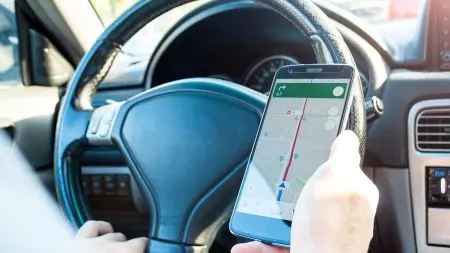
Federal Transport Minister Steffen Bilger (CDU) has come out in favor of introducing so-called phone speed cameras across Germany. These are systems such as the Monocam, which automatically detect drivers holding a smartphone. So far only Rhineland-Palatinate uses the technology in regular operation. A nationwide rollout would require a federal legal basis, which does not currently exist.
How the Monocam works
The camera is mounted high up, for example on a bridge, and photographs passing cars at an angle. Software looks in the driver's area for a phone and a matching hand or arm position. If it finds both, it flags the image as a possible hit. According to Matthias Emmerich, head of the Trier police inspectorate, the software compares images against roughly 20,000 reference pictures and does not learn during operation.
Trained police officers review every hit before a fine is issued. That matters because the law mainly prohibits picking up or holding a device while driving; calls via hands-free systems, built-in systems or Bluetooth headsets are allowed.
Legal doubts and open questions
The legally sensitive point is that the camera first captures all drivers before any suspicion exists. The Higher Regional Court of Koblenz objected in October 2025 to footage recorded before a specific state rule existed. Since March 2025 Rhineland-Palatinate has such a rule, though lawyers dispute whether the state is competent to enact it. A federal law would have to settle deployment locations, data collected, review procedures, deletion periods and legal remedies.
In the 2022 trial in Trier and Mainz, 1,268 violations were recorded. In the first half of 2026, Trier police alone found almost 700. Emmerich said phone use near announced cameras fell by about 70 percent during the trial, though recent trends need re-evaluation. The state bought five cameras for 200,000 euros. Figures on unusable images, discarded hits and successful appeals have not been published, and there is no proof the cameras prevent accidents.
The cost of a nationwide operation is also unclear. Because traffic enforcement is a state responsibility, purchase and running costs would likely fall on police budgets. Whether cameras could eventually stand in towns or on rural roads depends on how a federal law is drafted.
Apps worth a look
 SUMO: the number puzzle
Tap the right tiles, add them up, hit the target. Easy to learn, hard to master. Free, for all ages.
 Dialo: learn languages by speaking
Talk to an AI conversation partner; every sentence comes back corrected and explained in your language. 9 languages, A1 to C2.
 ediviewer: read EDI files like documents
Open EDIFACT and X12 messages, see every segment explained, convert to JSON/XML, export PDF and Excel. Runs locally, no upload.
More from this day
See all →
Hyundai to Launch South Korea's First 13m Hydrogen Coach in 2027

Agoda Keeps Drip Pricing in Korea Despite Government Sanctions

South Korea Eases Rules for Privately Funded Public Software

Motorola moto g06 RAM Boost Tested: Can Storage Stand In for Memory?
More in: Other
See all →
Rafale B374 Delivered to DGA as Flying Lab for the F5 Standard

Australian officer boards Spain's Álvaro de Bazán, finds a twin of HMAS Sydney

Plug-In Solar: Western Australia Follows Germany's Balcony Rules