Australian officer boards Spain's Álvaro de Bazán, finds a twin of HMAS Sydney
During the Pacific Dragon exercise, an officer from the destroyer HMAS Sydney found that the Spanish frigate Álvaro de Bazán shares his own ship's design.
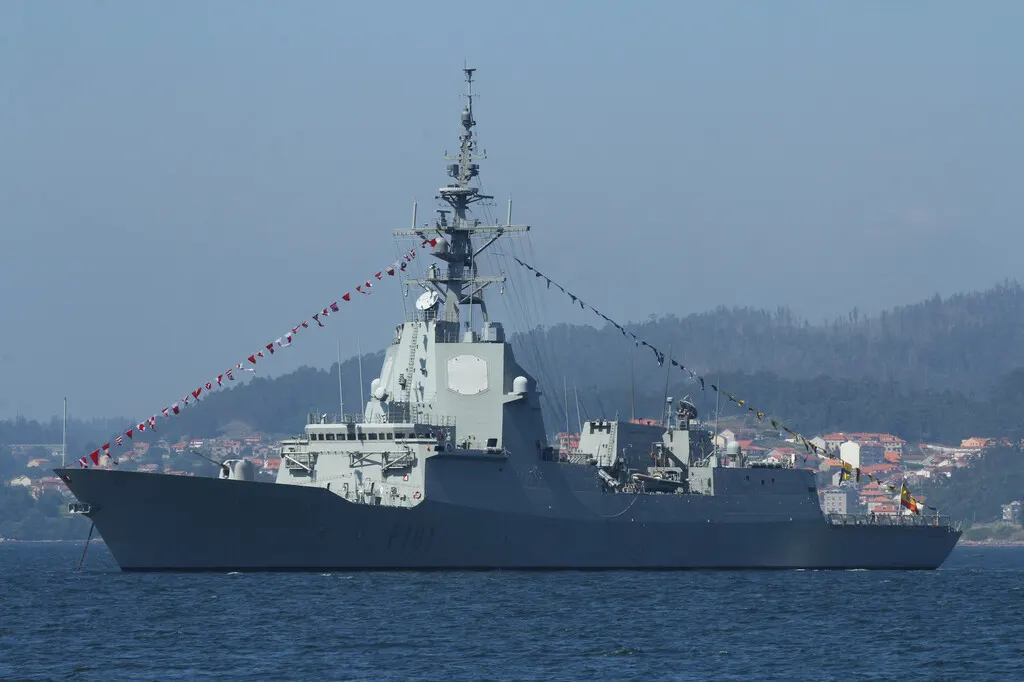
Lieutenant Nicholas Newton, a surface warfare officer on the Australian destroyer HMAS Sydney, got a surprise when he boarded the Spanish frigate Álvaro de Bazán: it was, he said, the same ship as his own, frame by frame.
Newton joined the Spanish vessel during Pacific Dragon, a multinational exercise focused on air and missile defence. He worked as an operations officer within the US command team embarked on the ship. He told Navy News, the Royal Australian Navy's official publication, that the resemblance was striking, all the more so because Australia classes its ship as a destroyer while Spain calls the Álvaro de Bazán a frigate.
A Spanish design behind the Hobart class
The explanation lies in Spain's F-100 frigates, designed and built by Navantia in Ferrol. The Álvaro de Bazán was the first of the family. Australia used that architecture as the basis for its three Hobart-class destroyers: HMAS Hobart, HMAS Brisbane and HMAS Sydney. Navantia took part in the design and provided technical support, while construction took place in Australia through an industrial programme involving ASC, Raytheon and the Australian government. Sydney, the third and last unit, entered service on 18 May 2020.
A shared structure does not mean identical equipment, because Australia adapted the design to its own operational requirements. Both classes use the Aegis combat system, which links radar data with weapons to detect and counter air threats. Sydney also carries anti-ship missiles, torpedoes, sonar, naval artillery and can operate helicopters. Newton noted differences in the Spanish crew's daily routines and procedures, and praised the atmosphere on board, with barbecues on the flight deck, music and warm hospitality.
A hurricane and seven ships
The stay also became a test of international coordination. Once the main missile-defence drills were finished, the participating ships had to leave the area ahead of a hurricane with winds of up to 121 km/h. Seven ships needed fuel before they could move away safely. Newton helped coordinate the movements and refuelling from the Álvaro de Bazán, while the US logistics ship USNS Washington Chambers supplied fuel. All seven vessels reached safer waters before the storm arrived.
The episode shows how far a naval programme created for Spain's navy has travelled, and how Spanish shipbuilding in Ferrol underpins part of Australia's naval air defence.
Apps worth a look
 SUMO: the number puzzle
Tap the right tiles, add them up, hit the target. Easy to learn, hard to master. Free, for all ages.
 Dialo: learn languages by speaking
Talk to an AI conversation partner; every sentence comes back corrected and explained in your language. 9 languages, A1 to C2.
 ediviewer: read EDI files like documents
Open EDIFACT and X12 messages, see every segment explained, convert to JSON/XML, export PDF and Excel. Runs locally, no upload.
More from this day
See all →
Celes Raises $5M Series A Led by SP Ventures for Retail AI

WhatsApp AI Agent Instinct Went Silent After a Payment Error

HYBE Confirms Data Breach Hitting Former Staff and Partners

Ex-Korea Startup Forum chief Choi Sung-jin joins Cols Dynamics
More in: Other
See all →
Plug-In Solar: Western Australia Follows Germany's Balcony Rules
Ukraine Unveils Gerbera 2 Drone Like the One Found in Poland

KT Halts New 3G Sign-Ups After SK Telecom, Nearing Shutdown