MIT's 1.29 g four-winged robot flies without outside cameras
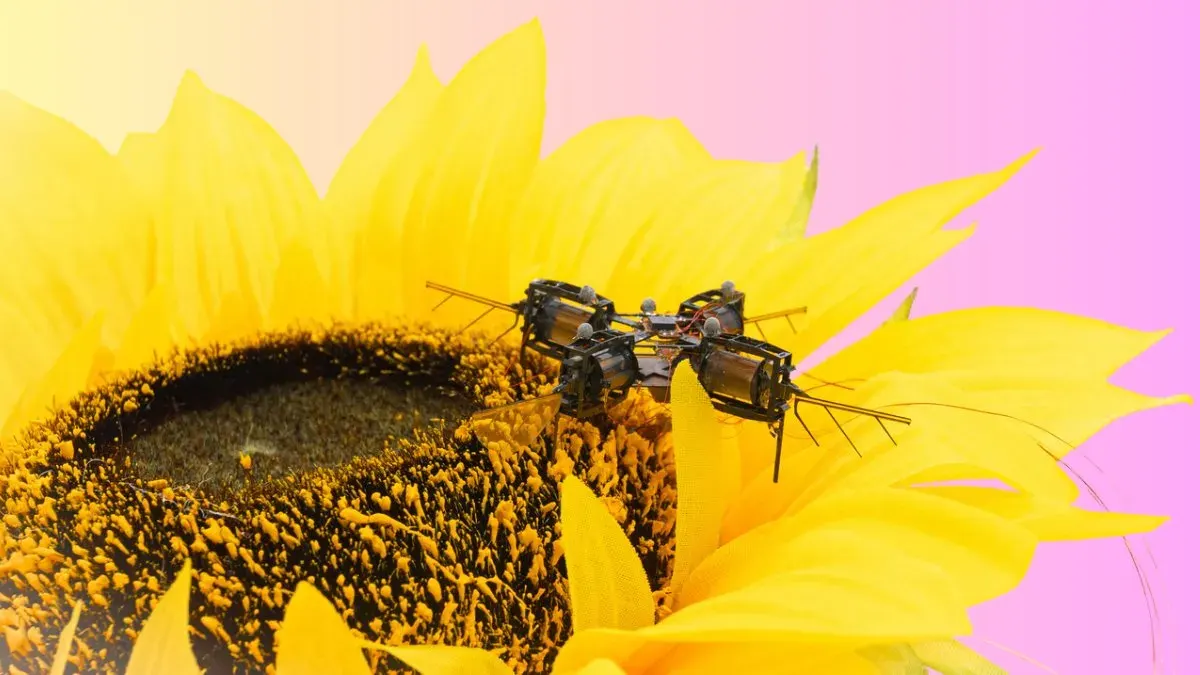
MIT's four-winged robot weighs less than a paperclip and now carries its own sensors and computer. It flew past plants and landed on a sunflower.
 SUMO· the number puzzle
 Dialo· learn languages by speaking
 ediviewer· read EDI files like documents
 giftdetect· the right gift in minutes
A flying robot from MIT weighs 1.29 grams, has four wings and has landed on a sunflower without any camera system watching it. The trick is not the flying. It is that the robot now works out where it is by itself.
MIT has built insect-sized robots for years. Earlier versions could hover for minutes and even do flips. But they needed a lab full of cameras to know their position, with an external computer turning the images into flight commands. Take the robot out of that space and it lost precise control. Putting the electronics on board was hard, because every extra milligram loads the wings.
So the team first made the robot stronger. They enlarged the artificial muscles that drive the wings by 50 percent, which raised net lift by 46 percent. The robot reached a lift-to-weight ratio of 1.9, enough to carry extra hardware.
How does the robot navigate without cameras?
The navigation and computing package weighs 244 mg. It holds three sensors and a microcontroller. An inertial sensor tracks orientation, an optical flow sensor watches how the ground moves beneath the robot, and a time-of-flight sensor measures height using light. The microcontroller estimates position and corrects the flight path continuously. All of it sits on a fibreglass base that dampens vibration from the wings.
The researchers found that frequent updates beat slower, more exact calculations, even if each single measurement was a little less precise. Position error averaged about 4 cm. The results appear in Science Robotics, and the authors say this is the first time sensing and control computing has been integrated on board a flying machine this small.
What can it not do yet?
In a 30-second flight outside the lab's camera system, the robot moved between plants, avoided obstacles and landed on a sunflower. A person still picked the target points with a joystick. The robot cannot recognise obstacles or plan a route, and it is still tethered to an external power supply. The electronics use about 6 percent of total energy. The rest goes mainly to the muscles.
Next come lower power use, a tiny camera for spotting objects, and batteries to cut the cable. The team sees possible uses in pollinating crops, inspecting hard-to-reach industrial sites and search and rescue. Practical use is still a long way off.
Apps worth a look
SUMO: the number puzzleTap the right tiles, add them up, hit the target. Easy to learn, hard to master. Free, for all ages.
Dialo: learn languages by speakingTalk to an AI conversation partner; every sentence comes back corrected and explained in your language. 9 languages, A1 to C2.
ediviewer: read EDI files like documentsOpen EDIFACT and X12 messages, see every segment explained, convert to JSON/XML, export PDF and Excel. Runs locally, no upload.
giftdetect: the right gift in minutesPick who it is for, the occasion and their personality. The search engine reads product descriptions from local shops and ranks what fits. Free, no sign-up.
More from this day
See all →
Apple Intelligence: South Korea targets Apple over iPhone 16 ads

Anthropic denies training Claude to sabotage user work

Baltic Sea cyanobacteria blooms may affect cloud formation