Unitree G1 robot dances Awa Odori for 9.7 minutes from one video
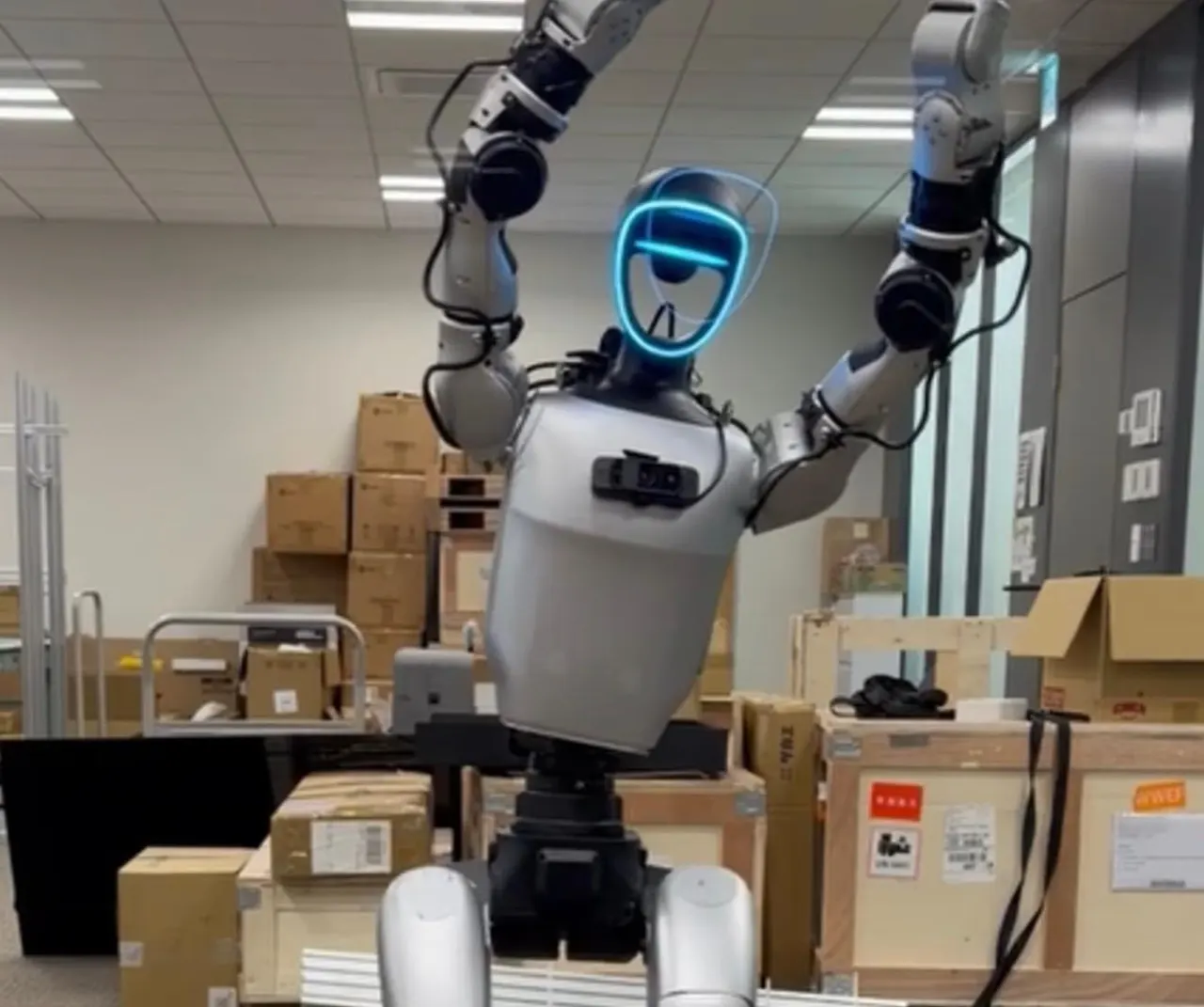
A researcher taught an off-the-shelf Unitree G1 humanoid to dance Japan's Awa Odori, arms overhead and no safety rope, using one ordinary video as reference.
 SUMO· the number puzzle
 Dialo· learn languages by speaking
 ediviewer· read EDI files like documents
 giftdetect· the right gift in minutes
A humanoid robot has danced the Awa Odori, Tokushima's famous summer folk dance, for 9.7 minutes without a safety rope. Its only teacher was a single video.
Hesham Shehata, a researcher at the Tokyo AI company Arithmer, describes the work in a preprint posted to arXiv on 8 November 2026. His robot was the commercially available Unitree G1 EDU. There was no motion-capture suit and no studio.
Why is Awa Odori so hard for a humanoid robot?
Shehata calls it close to the worst case for an off-the-shelf humanoid. Dancers keep both arms above their heads for long stretches, which raises the body's centre of gravity and shrinks the margin before a fall. The robot can't just replay a recording either. It has to rebalance its whole body with every joint movement, and it repeatedly stands on one leg with its arms up, so small errors pile up.
How the Unitree G1 learned the dance
The reference was one public video, shot with a single camera, of a professional dancer performing the women's dance (onna odori). Shehata estimated the dancer's body shape and movement in 3D and remapped it onto the G1's proportions and joints. He then trained the robot with reinforcement learning in simulation and loaded the resulting model onto the real machine.
The training ran on a single NVIDIA RTX 5070, a card of the kind found in gaming PCs.
The biggest gains came from editing the reference motion itself: limiting leg movement and travel, and adding a closing pose so the dance ends cleanly. Each edit took about ten lines of script and roughly two hours of extra GPU training. The robot, which first fell after about 10 seconds, went on to manage 22 and then 43 seconds.
On a hard floor it completed the 43-second routine three times in a row without a rope, though it lost balance at the very end and a person caught it. A 46-second version with the closing pose finished with no help, and the robot switched automatically to walking mode. By chaining the reference motion together, it kept dancing for 9.7 minutes, again with no rope.
The wider field is moving too. JAL Ground Service and GMO AI & Robotics Trading are testing humanoids for ground support at Haneda Airport, and Beijing has held a humanoid robot sports games since 2025. Some festivals in Japan struggle to find enough people to carry on, so robot dancers may one day fill gaps. It would feel a little soulless, admittedly.
Apps worth a look
SUMO: the number puzzleTap the right tiles, add them up, hit the target. Easy to learn, hard to master. Free, for all ages.
Dialo: learn languages by speakingTalk to an AI conversation partner; every sentence comes back corrected and explained in your language. 9 languages, A1 to C2.
ediviewer: read EDI files like documentsOpen EDIFACT and X12 messages, see every segment explained, convert to JSON/XML, export PDF and Excel. Runs locally, no upload.
giftdetect: the right gift in minutesPick who it is for, the occasion and their personality. The search engine reads product descriptions from local shops and ranks what fits. Free, no sign-up.
More from this day
See all →
Apple Intelligence: South Korea targets Apple over iPhone 16 ads

Anthropic denies training Claude to sabotage user work

Baltic Sea cyanobacteria blooms may affect cloud formation