TESS exoplanet data hid 181 new planet candidates in old scans
NASA's TESS telescope had already recorded 181 unknown planet candidates. Nobody spotted them until researchers took a second look at fainter stars.
 SUMO· the number puzzle
 Dialo· learn languages by speaking
 ediviewer· read EDI files like documents
 giftdetect· the right gift in minutes
Sometimes the discovery is already sitting on the hard drive. Researchers who re-examined data from NASA's TESS space telescope found 181 new exoplanet candidates, and two of them have already passed statistical validation.
TESS, the Transiting Exoplanet Survey Satellite, launched in 2018. It hunts for planets by watching for tiny, regular dips in a star's brightness, the sign of a planet crossing in front of it. Many earlier searches focused on bright stars, which are easier to measure precisely and easier to follow up from Earth. Fainter stars got less attention.
A team led by Matthew Lastovka of the University of Maryland and NASA Goddard picked 639,736 stars in three patches of sky. They used a tool called tess-phomo to get cleaner brightness measurements of faint stars from full-frame images. Algorithms then flagged 47,823 possible transit signals. Most were noise, binary stars imitating planets or other false alarms. That left 262 candidates, of which 81 were already known.
What are the two validated planets?
TIC 220432308 b has a radius of about 2.26 Earths and circles its star in 3.33 days, at roughly 6.7 million km. TIC 219893931 b is about 3.03 Earths wide, with a 6.41-day year and an orbit of around 10.6 million km. They receive about 1,048 and 410 times more radiation than Earth, so neither is a place to look for life. Validation also isn't the same as independent confirmation by a second method.
A more intriguing unconfirmed candidate is TIC 198079261.01. It is roughly Earth-sized and orbits a tiny star about 12 percent the radius of the Sun, once every 2.82 days. The signal could still have another origin.
Why does this matter for ULTRASAT?
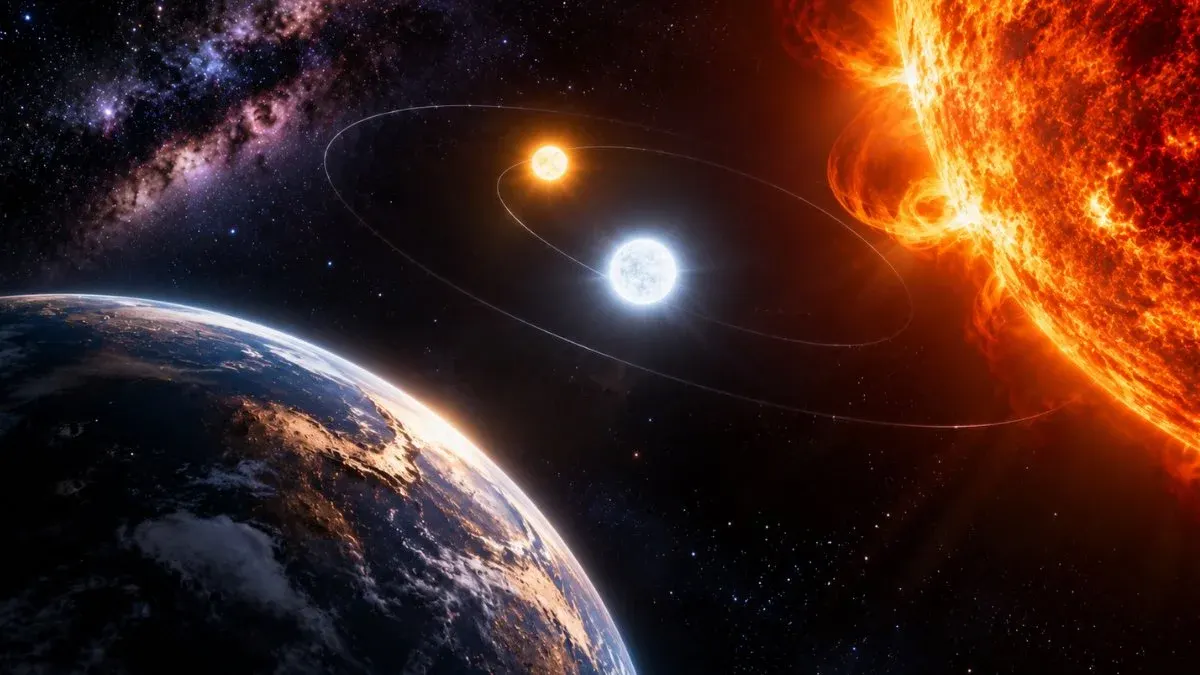
The real goal was preparing for ULTRASAT, a near-ultraviolet telescope led by the Israel Space Agency with NASA and other partners. Its launch is planned for 2028. Comparing visible and ultraviolet light during a transit can show whether a planet is losing its atmosphere. The team found 113 objects, 30 of them new, that should give ULTRASAT a strong enough signal. The two validated planets probably won't be among them.
The search covered only about 1.5 percent of the sky.
Apps worth a look
SUMO: the number puzzleTap the right tiles, add them up, hit the target. Easy to learn, hard to master. Free, for all ages.
Dialo: learn languages by speakingTalk to an AI conversation partner; every sentence comes back corrected and explained in your language. 9 languages, A1 to C2.
ediviewer: read EDI files like documentsOpen EDIFACT and X12 messages, see every segment explained, convert to JSON/XML, export PDF and Excel. Runs locally, no upload.
giftdetect: the right gift in minutesPick who it is for, the occasion and their personality. The search engine reads product descriptions from local shops and ranks what fits. Free, no sign-up.
More from this day
See all →
Apple Intelligence: South Korea targets Apple over iPhone 16 ads

Anthropic denies training Claude to sabotage user work

Baltic Sea cyanobacteria blooms may affect cloud formation