Kuiper Belt dust in Earth's stratosphere reveals heavy water
Twelve specks of dust caught by a NASA high-altitude plane came from beyond Neptune. Inside them, scientists found clues to a heavy-oxygen water reservoir.
 SUMO· the number puzzle
 Dialo· learn languages by speaking
 ediviewer· read EDI files like documents
 giftdetect· the right gift in minutes
Twelve tiny grains of Kuiper Belt dust, collected from Earth's stratosphere, are giving scientists a rare look at water from the edge of the solar system. And it is not ordinary water.
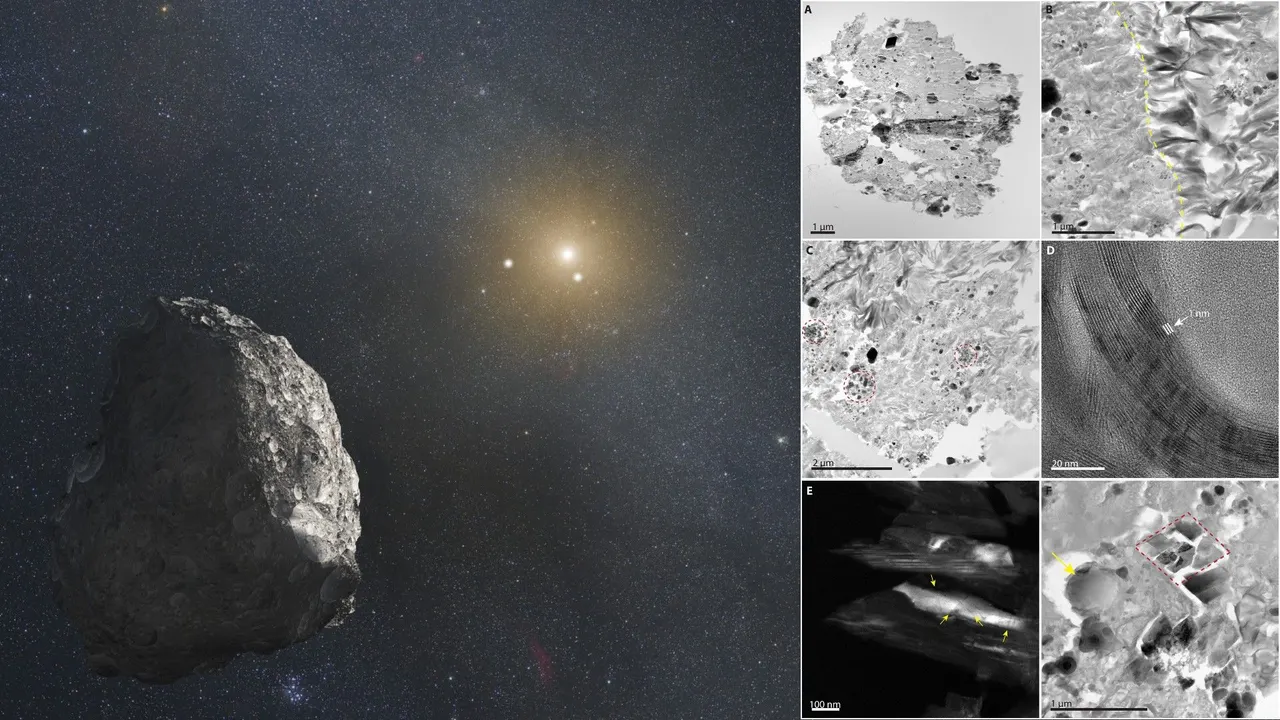
NASA's high-altitude ER-2 research aircraft picked up the grains, each smaller than a millimetre. A team led by NASA's Lindsay Keller found that they had interacted with water rich in heavy oxygen isotopes. The results were published on 11 November in Science Advances.
What is heavy oxygen water?
Most people know "heavy water" as water with heavy hydrogen, such as deuterium. This is a different thing. Ordinary oxygen has 8 protons and 8 neutrons (oxygen-16), but some atoms carry 9 or 10 neutrons, making oxygen-17 and oxygen-18. Water built with those heavier atoms is what the grains point to.
Hints had existed before. One carbonaceous chondrite meteorite and comet 67P/Churyumov–Gerasimenko showed minerals formed with such water. NASA's Genesis mission, which brought back solar wind particles, found the sun has proportionally more light oxygen than Earth and most meteorites, suggesting heavy oxygen grows more common farther out.
How did the dust get here?
The Kuiper Belt is far too distant to sample easily, so the dust came to us. Poynting–Robertson drag, in which dust absorbs sunlight and re-radiates the heat, slows grains and lets them spiral inward. These twelve were intercepted by Earth and were small and slow enough to survive entry. Tracks left by energetic solar particles identified them as Kuiper Belt material.
Using electron microscopy at Johnson Space Center and an ion microprobe at UCLA, the team found hydrated clay minerals. They formed in the cold, 4.5 billion years ago, when heavy-oxygen water met iron-nickel and sulfide-rich silicates. The team set an upper limit: an oxygen-18 to oxygen-16 ratio 15% higher than in Earth's oceans.
Most meteorites contain little heavy oxygen, so something kept it from drifting inward. The researchers write that the reservoir was probably isolated by Saturn, or by Saturn together with the ice giants. That makes the planets part of the chemistry story, not just its result.
Apps worth a look
SUMO: the number puzzleTap the right tiles, add them up, hit the target. Easy to learn, hard to master. Free, for all ages.
Dialo: learn languages by speakingTalk to an AI conversation partner; every sentence comes back corrected and explained in your language. 9 languages, A1 to C2.
ediviewer: read EDI files like documentsOpen EDIFACT and X12 messages, see every segment explained, convert to JSON/XML, export PDF and Excel. Runs locally, no upload.
giftdetect: the right gift in minutesPick who it is for, the occasion and their personality. The search engine reads product descriptions from local shops and ranks what fits. Free, no sign-up.
More from this day
See all →
Justin Sun calls for WLFI token to be delisted from exchanges

YouTube Home feed redesign adds a Like button under every video

Acer Googlebook 14 boot loop fixed: just start setup again