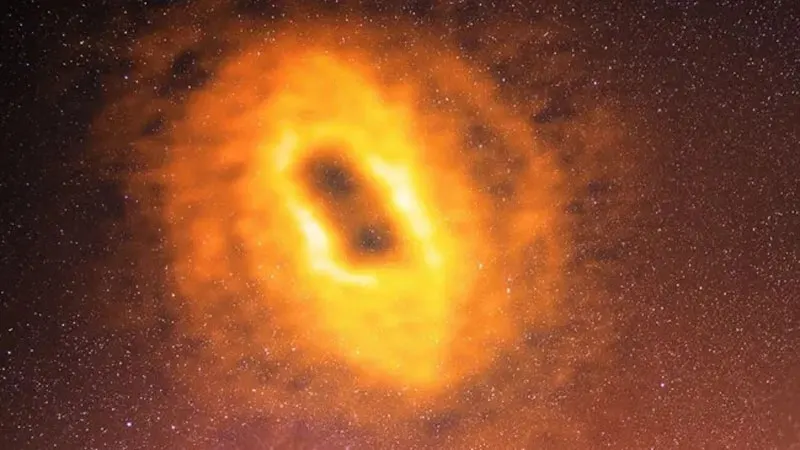
IRAS 06530-0213: astronomers see a dying star's last heartbeat
ALMA has caught the final thermonuclear pulse of a Sun-like star about 12,000 light-years away. Until now, this moment existed only in computer models.
 SUMO· the number puzzle
 Dialo· learn languages by speaking
 ediviewer· read EDI files like documents
 giftdetect· the right gift in minutes
Astronomers have, for the first time, directly observed the last thermonuclear flare of a dying star similar in mass to the Sun. The researchers call it the star's "last heartbeat". Until now, nobody had seen it outside of theoretical models.
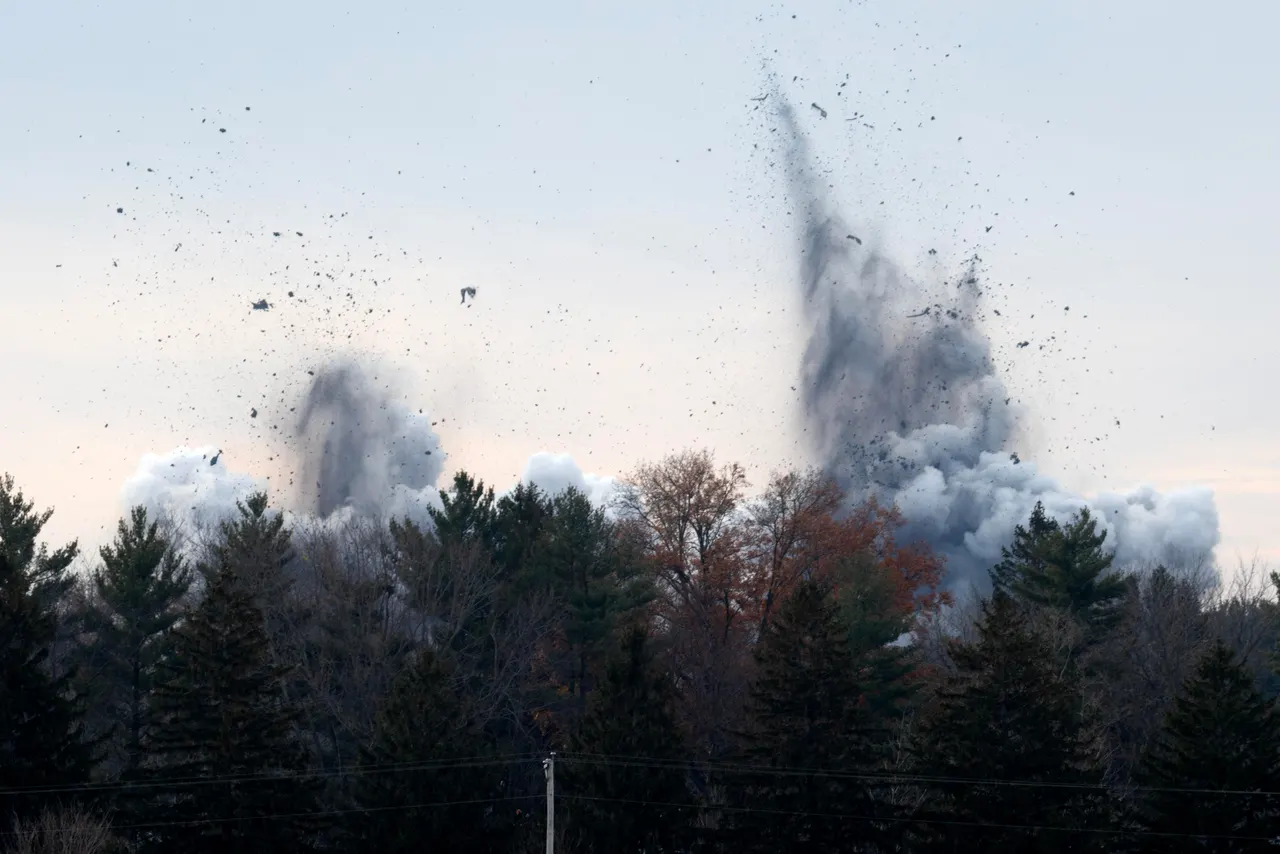
The star is IRAS 06530-0213, about 12,000 light-years from Earth in the constellation Monoceros. Using the ALMA radio telescope, the team found a large shell of molecular gas around a young bipolar nebula, a nebula with two lobes. The shape of that shell, the authors say, still carries the mark of a thermal pulse: a brief surge of nuclear reactions in the star's outer layers that threw material into space.
What is a thermal pulse?
After a star swells into a red giant, hydrogen and helium layers in its outer envelope periodically ignite and blow matter outward. Those are thermal pulses. After the last one, not enough material is left to keep the reactions going. Most of the envelope drifts away, the core becomes a white dwarf, and the leftover layers start forming a planetary nebula. ALMA caught that moment: the shock wave of the final pulse and the first stage of the nebula.
What the data show
The gas shell is about half a light-year across. From its expansion speed, astronomers estimate the material was ejected roughly 6,500 years ago. About 2,000 years after the flare, mass loss was still fairly low, then it rose sharply over the next thousand years. That built arc-shaped gas structures around the central nebula, which hint at a companion star stirring things up as it orbits.
The young bipolar nebula itself is under 700 years old, a blink in stellar terms. ALMA found no compact dust disc near the star, which is usually linked to binary interaction. The authors suggest such a disc may have existed briefly and vanished once jets formed, perhaps while the dying star was feeding on its partner.
There was one surprise. The ejected gas is rich in rare isotopes carbon-13, oxygen-17 and nitrogen-15, in ratios that standard models of stellar nucleosynthesis do not predict. That mechanism needs refining. For now, the observation lets theory be compared with reality for at least one Sun-like dying star.
Apps worth a look
SUMO: the number puzzleTap the right tiles, add them up, hit the target. Easy to learn, hard to master. Free, for all ages.
Dialo: learn languages by speakingTalk to an AI conversation partner; every sentence comes back corrected and explained in your language. 9 languages, A1 to C2.
ediviewer: read EDI files like documentsOpen EDIFACT and X12 messages, see every segment explained, convert to JSON/XML, export PDF and Excel. Runs locally, no upload.
giftdetect: the right gift in minutesPick who it is for, the occasion and their personality. The search engine reads product descriptions from local shops and ranks what fits. Free, no sign-up.
More from this day
See all →
1Password breach: customer names and emails exposed via GitHub

Huawei found guilty in US trial over stolen tech and fraud

Exoprimal shutdown: Capcom will switch off servers in 2027

Polaris: the AI an engineer built to research her own cancer
More in: Science
See all →
Atom-sized black holes could blow up stars from the inside
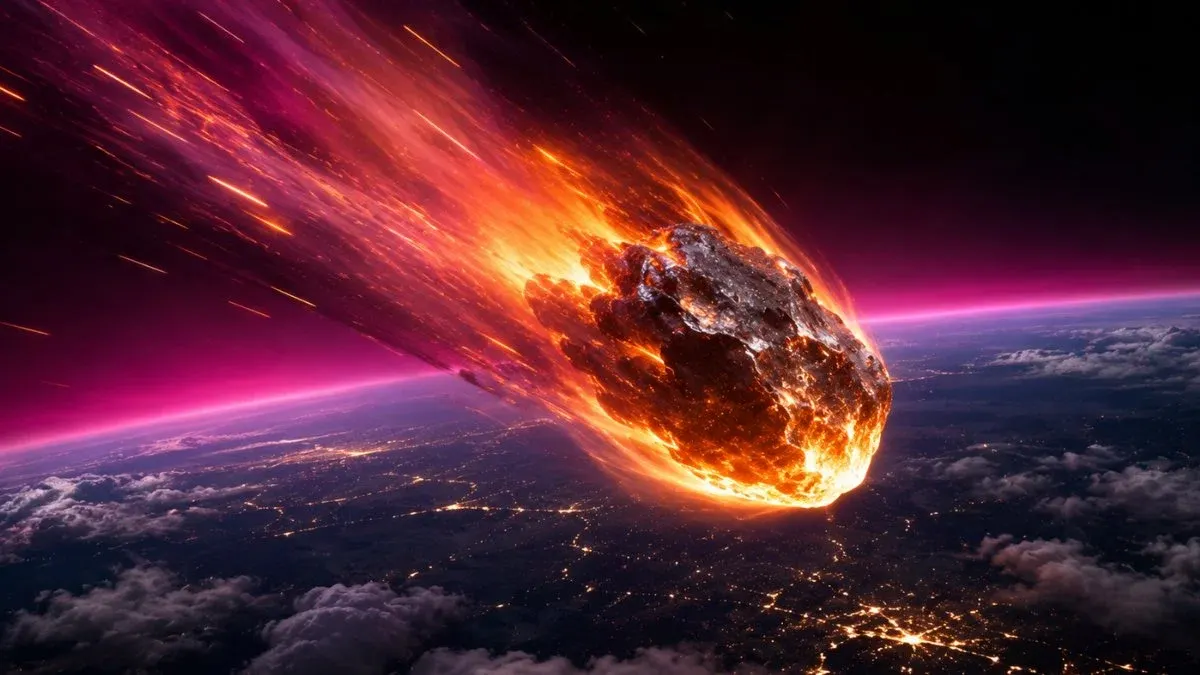
Zadzim meteorite: iron rock hit air at 47,000 km/h and survived
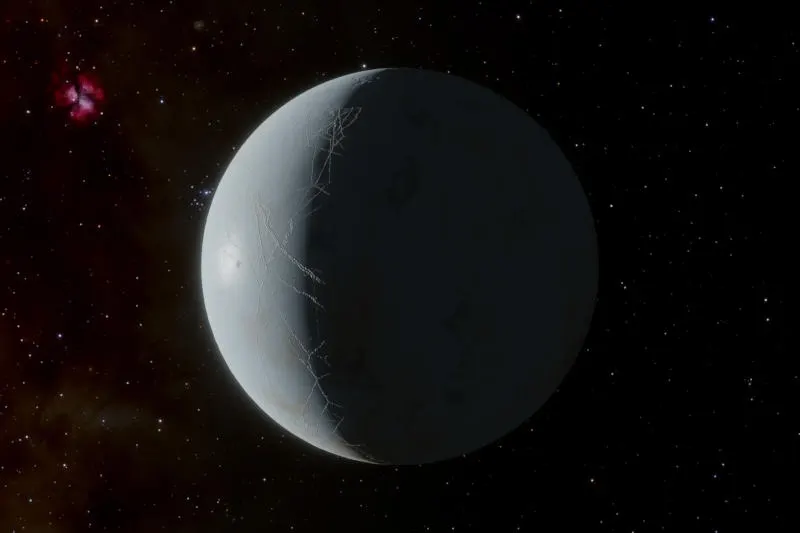
Planet X2: Simulations Hint at a Super-Earth Beyond Neptune