Zadzim meteorite: iron rock hit air at 47,000 km/h and survived
A 2.9 kg iron meteorite found near Łódź lost 85% of its mass in the air yet never broke apart. Researchers now say why bigger iron rocks survive better.
 SUMO· the number puzzle
 Dialo· learn languages by speaking
 ediviewer· read EDI files like documents
 giftdetect· the right gift in minutes
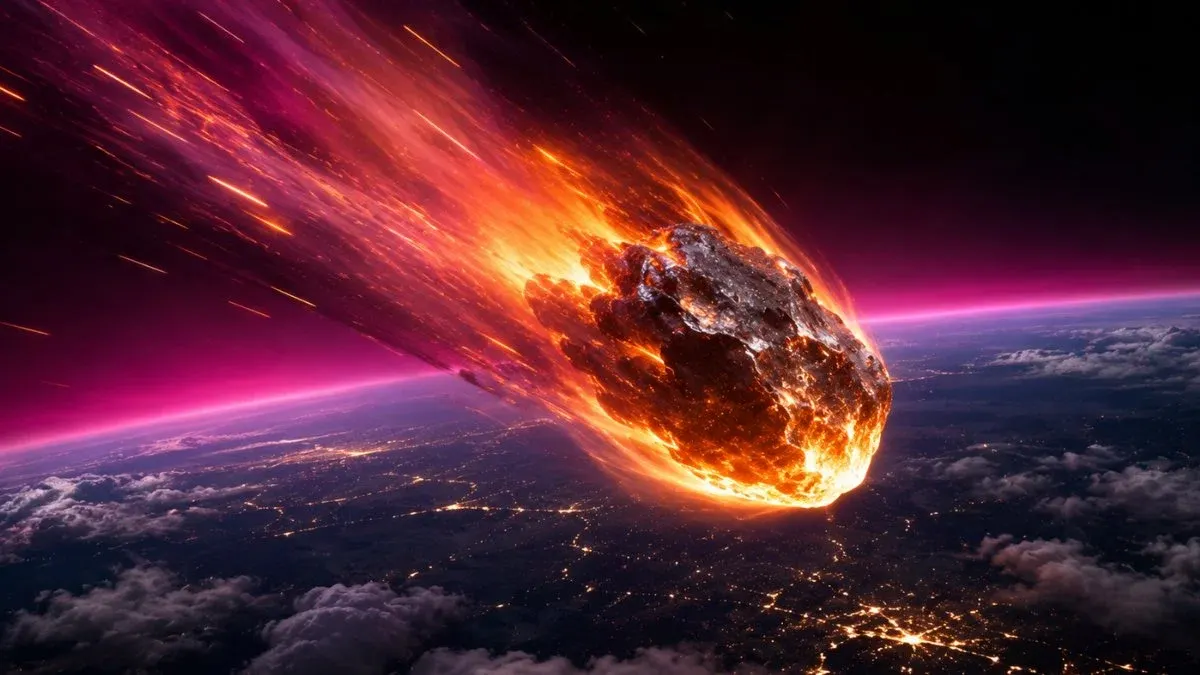
A lump of iron that slammed into the atmosphere at more than 47,000 km/h, lost most of its mass and still landed in one piece. That is the story of the Zadzim meteorite, found about 40 km west of Łódź in Poland, and scientists have now worked out how it pulled it off.
On 17 April, shortly before 20:54, a very bright fireball crossed the sky over central Poland. Cameras of the Polish Skytinel network and the European Fireball Network recorded it, which allowed the team to reconstruct its path and guess where it came down. The 2.9 kg iron meteorite turned up about 40 cm underground, covered in a melted crust and frozen streaks of metal.
A Polish-Czech team led by Jiří Borovička of the Czech Academy of Sciences' Astronomical Institute, with Mateusz Żmija from Skytinel, has now analysed the flight. They used camera footage and radiometer data measuring sky brightness 5,000 times a second.
How big was the Zadzim meteoroid before it hit the atmosphere?
According to the calculations, it weighed about 19 kg and was equivalent to a sphere 17 cm across. It entered at 13.1 km/s, started glowing around 85 km up, and its visible flight ended 13.7 km above the ground. About 85% of its mass burned away, but no larger fragments broke off. It withstood dynamic pressure of 5.2 MPa, more than 50 times normal air pressure at sea level.
Why do bigger iron meteoroids survive better?
Stony meteoroids mostly die by fragmentation: breaking up exposes more surface to hot gas and speeds things along. Iron ones mainly lose material through ablation, where the surface melts and tiny droplets are blown off and vaporise.
The team compared Zadzim with seven other iron meteoroids from 2.5 to 13 cm. Small ones lost material far faster. Their ablation coefficient reached about 1 kg/MJ, against no more than 0.08 kg/MJ for Zadzim. The likely reason is iron's high thermal conductivity: heat spreads through a small lump quickly, so it can melt away before reaching the lower atmosphere. A larger body keeps a cooler interior during those few seconds. That does not mean every iron rock over 10 cm survives, since speed, entry angle and structure matter, and the heat-conduction idea still needs theoretical and lab confirmation.
The fireball was also about three times more efficient at turning energy into light than models for stony bodies predict. At 15 km/s the team estimates about 15% for iron versus 5% for large stony ones. Use the wrong model and you misjudge the original mass, and how much material reaches the ground. The study has been accepted by Astronomy & Astrophysics.
Apps worth a look
SUMO: the number puzzleTap the right tiles, add them up, hit the target. Easy to learn, hard to master. Free, for all ages.
Dialo: learn languages by speakingTalk to an AI conversation partner; every sentence comes back corrected and explained in your language. 9 languages, A1 to C2.
ediviewer: read EDI files like documentsOpen EDIFACT and X12 messages, see every segment explained, convert to JSON/XML, export PDF and Excel. Runs locally, no upload.
giftdetect: the right gift in minutesPick who it is for, the occasion and their personality. The search engine reads product descriptions from local shops and ranks what fits. Free, no sign-up.
More from this day
See all →
Sarvam Token Factory: India's IT Secretary Defends Chinese Models

Fold2Unfold: foldable phone trick hides your PIN from onlookers

WhatsApp scheduled messages: send up to 14 days later

Meta Muse blocked on Amazon: talks to let the AI agent buy again
More in: Science
See all →
Planet X2: Simulations Hint at a Super-Earth Beyond Neptune
Iowa lead azide detonation: EPA finds zero airborne lead

Why coffee makes you poop: 50 people swallowed a SmartPill