HPE Spaceborne Computer-4 to Bring Supercomputing to the Moon
HPE's Spaceborne Computer-4, a 1.2 kg fanless system, will process data directly on the lunar surface instead of relying on Earth-bound bandwidth.
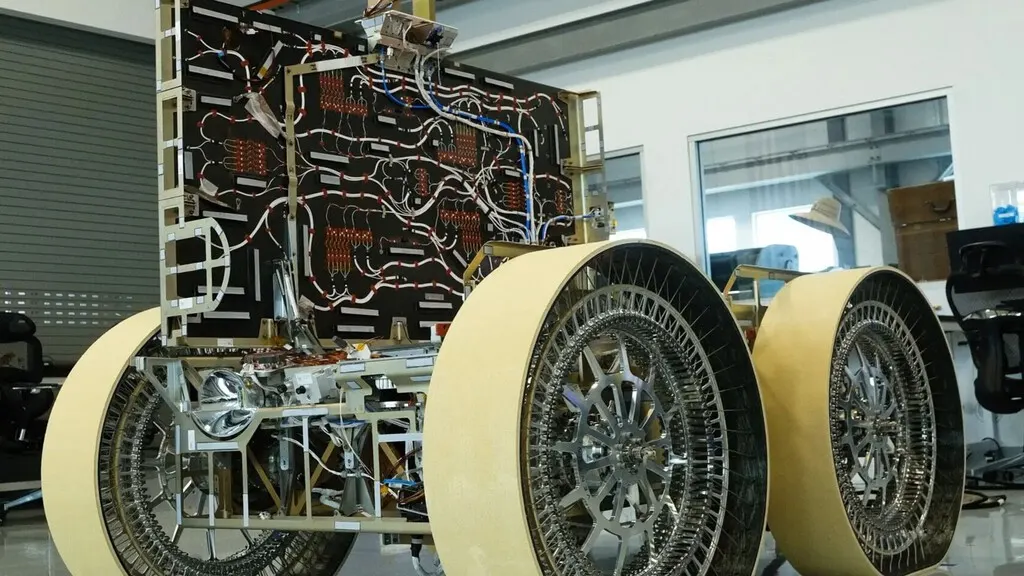
HPE has developed Spaceborne Computer-4, a high-performance computing system designed to run directly on the Moon. The goal is to remove a long-standing limit of uncrewed missions: samples and data usually have to be sent to Earth for analysis, which makes missions heavily dependent on available bandwidth.
Fanless, lightweight hardware
The complete unit weighs 1.2 kg and is a self-contained module with a low-power CPU and GPU. It has no fans, a deliberate choice: on the Moon, the more moving parts a system has, the more likely something gets damaged by hazards such as dust. Storage comes from Kioxia solid-state drives, which keep data in flash memory chips with no moving parts.
What it will test
Once on the surface, the system will run benchmarks under lunar conditions. It will also run language models using retrieval-augmented generation (RAG), which consult documents before answering, and test a LiDAR data-processing system for mapping and navigation. In addition, it will deploy and manage several applications to check whether that can be done reliably on the Moon.
The mission also carries NASA AI experiments. One is FLUID, a federated learning system that coordinates three neural networks trained on data from Earth, the Moon and the International Space Station. A language model tuned to search and interpret documents on board will be tested as well. Deloitte contributes Silent Shield, a cybersecurity system that detects anomalous activity and intrusions in near real time.
Launch plan
The equipment flies under NASA's CLPS programme as part of Astrolab's FLIP rover, which will travel aboard Voyager Technologies' Griffin-1 lander. If all goes well, launch is planned for late 2026, with a landing near the lunar south pole.
If the tests succeed, the technology could serve uncrewed missions and, later, inhabited lunar bases. Astronauts would have their own local processing systems, so information would flow much faster than over a permanent link to Earth.
Apps worth a look
 SUMO: the number puzzle
Tap the right tiles, add them up, hit the target. Easy to learn, hard to master. Free, for all ages.
 Dialo: learn languages by speaking
Talk to an AI conversation partner; every sentence comes back corrected and explained in your language. 9 languages, A1 to C2.
 ediviewer: read EDI files like documents
Open EDIFACT and X12 messages, see every segment explained, convert to JSON/XML, export PDF and Excel. Runs locally, no upload.
More from this day
See all →
San Francisco's AI Boom Turns First Dates Into Job Interviews

Meta, TikTok and X Lose High Court Challenge Against Ofcom

Two Point O raises $10 million led by Transition Venture Capital

Why Gulf shops buy software but still keep the paper notebook
More in: Space
See all →
NASA Competition Model 2.0 Cuts Science Mission Selection Time
Launch Shortage: Quilty Space Sees 150 Missing Rocket Flights
NASA asks industry how to save Hubble before it re-enters