Why Gulf shops buy software but still keep the paper notebook
Many small Gulf businesses pay for inventory and sales tools yet still log everything on paper. Octabiz's co-founder says that gap is the market's real opportunity.
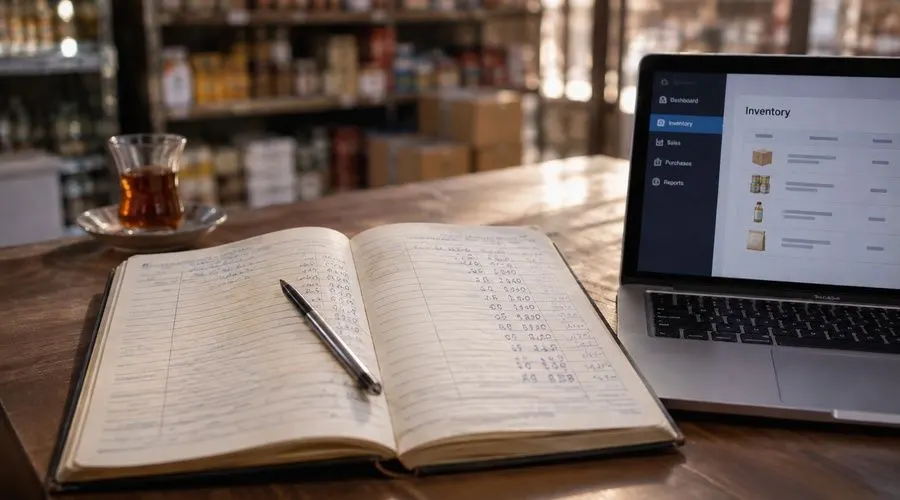
Small shops across Oman, and in parts of the UAE, Qatar, Kuwait and Bahrain, often still record sales and incoming stock by hand in a notebook, even after buying software. That is the observation of Matthew Truth, co-founder and product lead at Octabiz, who argues that paying for a tool in the Gulf does not mean people use it.
According to Truth, the gap between purchase and use is the real opportunity, and most of the market overlooks it. The notebook wins on three counts: it needs no training, the writer trusts what they can see and own, and it does one clear job that is easy to look back through.
Adoption is the second job
Truth says much of the software sold in the region follows a familiar path of building a product, running ads and closing the deal. That gets the tool bought, not used. In his view, a company has two jobs: developing the product and building the habit of using it. Many Octabiz customers had already tried similar products, and implementation, observation and a simpler path made the difference.
Inventory is a case in point. The chain from ordering to buying, entering stock and accounting for it is hard in most systems. Cutting it to the fewest steps lets even an untrained shop worker use the tool.
Co-founder Omid Pirdehi spent eight to 10 hours a day inside one customer's shop, studying paper records and the staff's WhatsApp notes, and entering many products himself. The team now tests every feature by asking whether a user can follow the path without extra cognitive load. If not, the feature waits.
Trust first, then AI
To replace the notebook, Truth says software must make data entry simple, whether through a dashboard or an AI chat; keep information reachable from phone, laptop or tablet; and return data exactly as entered. Trust takes time, he says, and the loyalty it creates is hard for competitors to buy.
Once the data is reliable, AI can support decisions. His example: an owner asks which date to put on a cheque, and the assistant checks past sales. If the 15th is usually the biggest sales day, the 16th is safer because the money will be in the bank.
His advice to founders is to treat the notebook as the benchmark, and to judge a product not by how many businesses bought it but by how many still open the notebook.
Apps worth a look
 SUMO: the number puzzle
Tap the right tiles, add them up, hit the target. Easy to learn, hard to master. Free, for all ages.
 Dialo: learn languages by speaking
Talk to an AI conversation partner; every sentence comes back corrected and explained in your language. 9 languages, A1 to C2.
 ediviewer: read EDI files like documents
Open EDIFACT and X12 messages, see every segment explained, convert to JSON/XML, export PDF and Excel. Runs locally, no upload.
More from this day
See all →
NIL Technology Launches metaEye, a Camera Smaller Than Rice

XREAL AURA Android XR Glasses Open for Orders in Japan
GMO Trust Login Leak Exposes 45,030 Users via Logo Storage

Anthropic's Claude Tested With Six Drug Developers on Antibodies
More in: Startups
See all →
Two Point O raises $10 million led by Transition Venture Capital

African creators lack infrastructure to turn audiences into income

Meesho Bets on Advertising and Lending as Logistics Gains Land