France orders IRIS spy satellites from Airbus and Thales
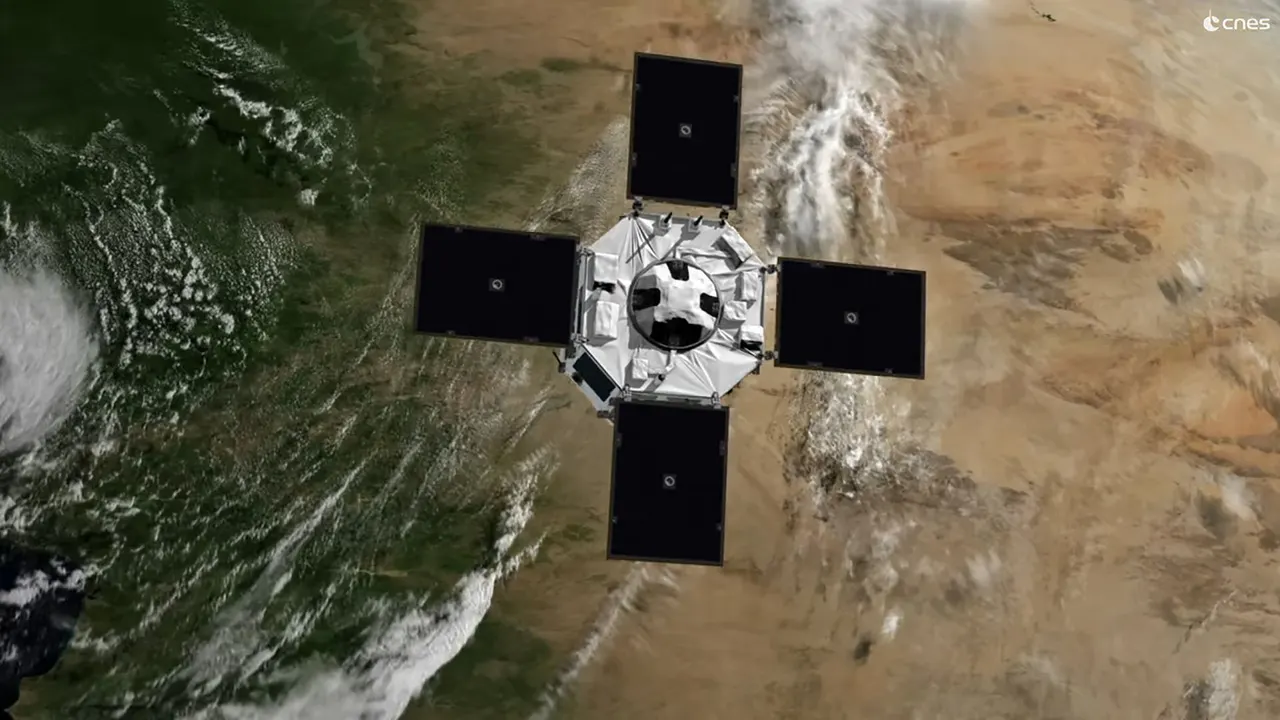
France's defence procurement agency has ordered two IRIS military observation satellites from Airbus and Thales Alenia Space in a contract worth over €1.5 billion.
 SUMO· the number puzzle
 Dialo· learn languages by speaking
 ediviewer· read EDI files like documents
 giftdetect· the right gift in minutes
France has moved its next-generation reconnaissance satellites from study to production. On 5 November, the Direction générale de l'armement (DGA) awarded Airbus Defence and Space and Thales Alenia Space the contract to build IRIS, two military optical observation satellites. The DGA announced it on Monday 9 November. Airbus puts the value at more than €1.5 billion for the whole group of companies.
IRIS stands for « instruments de renseignement et d'imagerie spatiale ». It is run by the armed forces ministry and is unrelated to the European IRIS² constellation, despite the similar name. According to the DGA, it will image any point on the globe in extremely high resolution, day and night, in visible light and infrared. It will also observe objects in orbit to monitor space and identify threats there.
Fewer satellites, better performance
IRIS will have two satellites, against three for the current Composante spatiale optique (CSO), launched in December 2018, December 2020 and March 2025. The DGA promises better performance and faster delivery of images to forces in the field and to the government, while taking over all CSO missions. A third satellite could be added later, as happened with CSO through a partnership with Germany, but nothing has been announced.
The contract covers design, manufacturing and testing, plus the ground stations that control the satellites and receive imagery, and operations in orbit until the end of the 2030s. Airbus will supply both platforms, much of the first satellite's optical instrument and the ground facilities. Thales Alenia Space will develop the new-generation instrument for the second satellite and key parts of the first one's. The Space Command in Toulouse will operate the system.
A later start than planned
The first satellite is due in service around 2033. The programme entered preparation in July 2019, with an initial target of a first satellite before the end of 2030. The updated military programming law, promulgated on 16 August 2026, pushed the target for both satellites to 2035. It also added €3.9 billion to military space spending for 2026-2030, 65% more than planned. The CSO satellites will therefore have to keep up the mission for at least seven more years.
Apps worth a look
SUMO: the number puzzleTap the right tiles, add them up, hit the target. Easy to learn, hard to master. Free, for all ages.
Dialo: learn languages by speakingTalk to an AI conversation partner; every sentence comes back corrected and explained in your language. 9 languages, A1 to C2.
ediviewer: read EDI files like documentsOpen EDIFACT and X12 messages, see every segment explained, convert to JSON/XML, export PDF and Excel. Runs locally, no upload.
giftdetect: the right gift in minutesPick who it is for, the occasion and their personality. The search engine reads product descriptions from local shops and ranks what fits. Free, no sign-up.
More from this day
See all →
Orange Launches Orange IAs, One App for ChatGPT, Claude and Gemini
France Blames Iran's Shahid Kaveh for Supermarket Fridge Hack

Boston Dynamics Puts Wheels on Atlas, Lands a 360-Degree Jump
Nvidia Study: Summarizing Context Keeps AI Agent Performance
More in: Space
See all →
Argo Space: Ex-SpaceX Brothers Build Water-Powered Spacecraft

NTT, Mitsubishi Electric and Three Others Study Mega-Constellation

Webb's Little Red Dots may hide primordial black holes