Nvidia Study: Summarizing Context Keeps AI Agent Performance
Nvidia researchers report that periodically summarizing a conversation preserves most AI agent performance, challenging the need for ever-longer context windows.
 SUMO· the number puzzle
 Dialo· learn languages by speaking
 ediviewer· read EDI files like documents
 giftdetect· the right gift in minutes
Nvidia researchers say AI agents can keep most of their performance even when the conversation is periodically summarized and shortened mid-task. In a paper posted to arXiv on November 3, twelve authors argue that the push for ever-longer context windows may be less necessary than assumed.
Context is the amount of conversation and material a model considers at once. The team found that generating tokens gets more expensive as context grows. According to the abstract, the gap can reach 7x for recent open-weight models. Serving at 256K context instead of 16K raised the cost per generated token 3.6x for Z.ai's GLM 5.2, 5.6x for Moonshot AI's Kimi K2.6 and 7x for Alibaba's Qwen3 Coder Next.
What the tests showed
The researchers had agents summarize their history once it hit a set length, then continue working. They used mainly Anthropic's Claude Opus 4.5 and OpenAI's GPT 5.6 Sol across six long-task benchmarks, including SWE-bench Verified, Terminal-Bench 2.1, FRAMES and BFCLv3. Across 22 settings that varied the total context limit and the summarization trigger, no more than five fell more than 2 points below baseline.
In a setup where the agent takes one action per turn and passes along only a compressed task state, Claude Opus 4.5 scored 70.0 and then 70.2 on SWE-bench Verified, while GPT 5.6 Sol slipped from 84.4 to 82.4. On the 1,600-question LOONG benchmark, giving Claude Opus 4.5 all documents scored 70.1 on average with 38.9% fully correct. Selecting and summarizing relevant parts within 16,000 tokens lifted that to 79.3 and 53.4%.
Caveats
Results were not uniform. In an appendix, Qwen3 Coder Next with summarization at 16K saw its SWE-bench success rate drop from 53.0% to 3.6%, which the paper calls a catastrophic collapse.
The authors also propose a "Semantic State Space Model", trained to read a natural-language task state, act, then rewrite it. It remains a concept, not trained or evaluated in this paper. The abstract states that the findings question the need for long-context language models.
Apps worth a look
SUMO: the number puzzleTap the right tiles, add them up, hit the target. Easy to learn, hard to master. Free, for all ages.
Dialo: learn languages by speakingTalk to an AI conversation partner; every sentence comes back corrected and explained in your language. 9 languages, A1 to C2.
ediviewer: read EDI files like documentsOpen EDIFACT and X12 messages, see every segment explained, convert to JSON/XML, export PDF and Excel. Runs locally, no upload.
giftdetect: the right gift in minutesPick who it is for, the occasion and their personality. The search engine reads product descriptions from local shops and ranks what fits. Free, no sign-up.
More from this day
See all →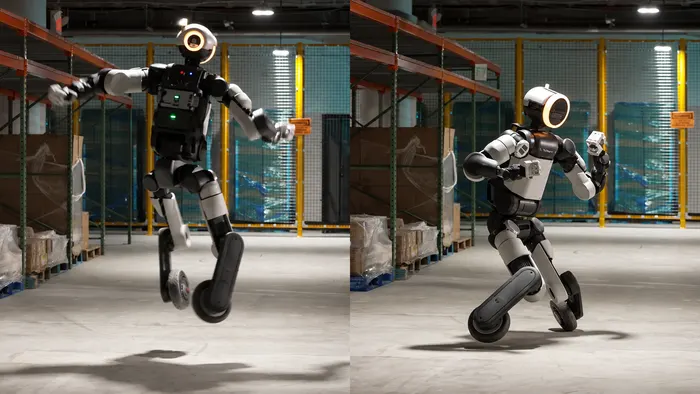
Boston Dynamics Puts Wheels on Atlas, Lands a 360-Degree Jump

Korea's Financial Security Institute Hit by Hack, Data Leaked

AI Reverse Engineering Boom: REA Tool Mods Smart TVs and Apps