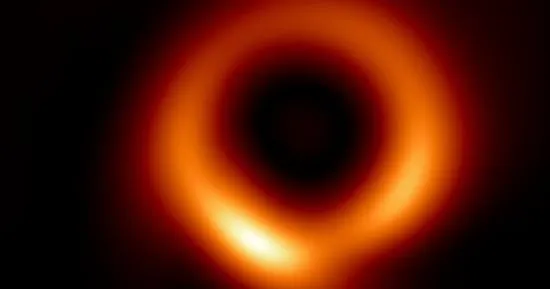
First black hole image confirmed by independent AI analysis
An Australian team re-ran the raw Event Horizon Telescope data with machine learning and got almost the same M87* ring, without telling the model what to expect.
 SUMO· the number puzzle
 Dialo· learn languages by speaking
 ediviewer· read EDI files like documents
 giftdetect· the right gift in minutes
Is the first picture of a black hole real? An independent team says yes. Australian researchers rebuilt the image from scratch using AI and ended up with a picture almost identical to the one the world saw in 2019.
The original image came from the Event Horizon Telescope (EHT), a worldwide network of radio telescopes. It shows the supermassive black hole at the centre of the galaxy Messier 87, about 55 million light years away. The black hole, known as M87*, weighs roughly 6.5 billion times as much as the Sun. Some later studies had questioned how accurate the final shape was, since combining data from telescopes spread across the planet can pick up technical errors and distortion from Earth's atmosphere.
Samuel Lai of Australia's CSIRO led a small team that built a new technique called GenDIReCT, based on machine learning. Lai compared imaging such a distant object to photographing a doughnut on the Moon from your back garden. The model was not told in advance what shape to expect, yet it recovered the bright ring around the dark shadow. Lai calls it the first truly independent check of the EHT image.
How did they photograph a black hole 55 million light years away?
The EHT links radio telescopes around the world so they act like a single dish the size of Earth. The method is called Very Long Baseline Interferometry. It gives enormous sharpness, but huge distances, weather differences and equipment errors can distort the data. The Australian team's fix was to combine measurements from groups of three telescopes rather than pairs, which cut calibration errors while keeping the real shape of the object.
Why it matters for Einstein
Einstein's general relativity, published in 1915, says mass bends spacetime and that gravity comes from that bending. It also predicts black holes and a ring of hot, bright plasma around a central shadow. The study, published in Nature, measures the ring at about 42.2 microarcseconds across, give or take 1.5, which fits earlier mass estimates.
Laurent Loinard, director of the EHT collaboration, said independent verification is essential for a discovery of this size. The researchers also say the same methods could help with medical imaging and earthquake mapping.
Apps worth a look
SUMO: the number puzzleTap the right tiles, add them up, hit the target. Easy to learn, hard to master. Free, for all ages.
Dialo: learn languages by speakingTalk to an AI conversation partner; every sentence comes back corrected and explained in your language. 9 languages, A1 to C2.
ediviewer: read EDI files like documentsOpen EDIFACT and X12 messages, see every segment explained, convert to JSON/XML, export PDF and Excel. Runs locally, no upload.
giftdetect: the right gift in minutesPick who it is for, the occasion and their personality. The search engine reads product descriptions from local shops and ranks what fits. Free, no sign-up.
More from this day
See all →
Starlink cell tower for rooftops: SpaceX plans 2027 launch

Apple's Mac AI agent would use your computer for you by 2027

Leaving Google Photos: how to move your memories and skip the fee

Android sideloading gets harder from January 2027: what changes
More in: Science
See all →
Hayabusa2 drops asteroid 1998 KY26 after last thruster fails
SN 2026ahvu: a supernova caught early that may break the models
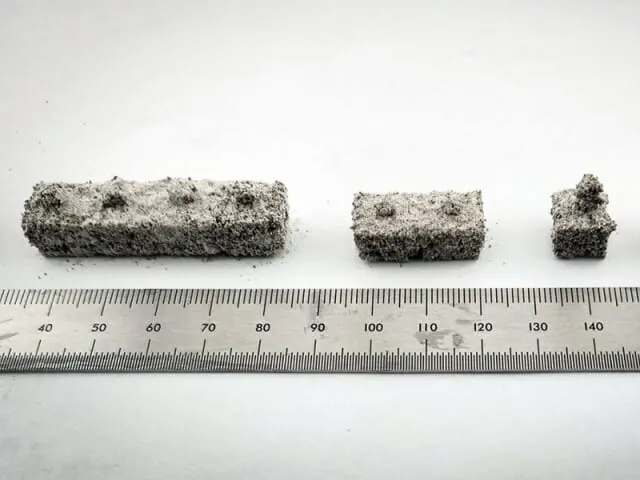
Moon dust 3D-printed into Lego-style blocks, no glue needed