SN 2026ahvu: a supernova caught early that may break the models
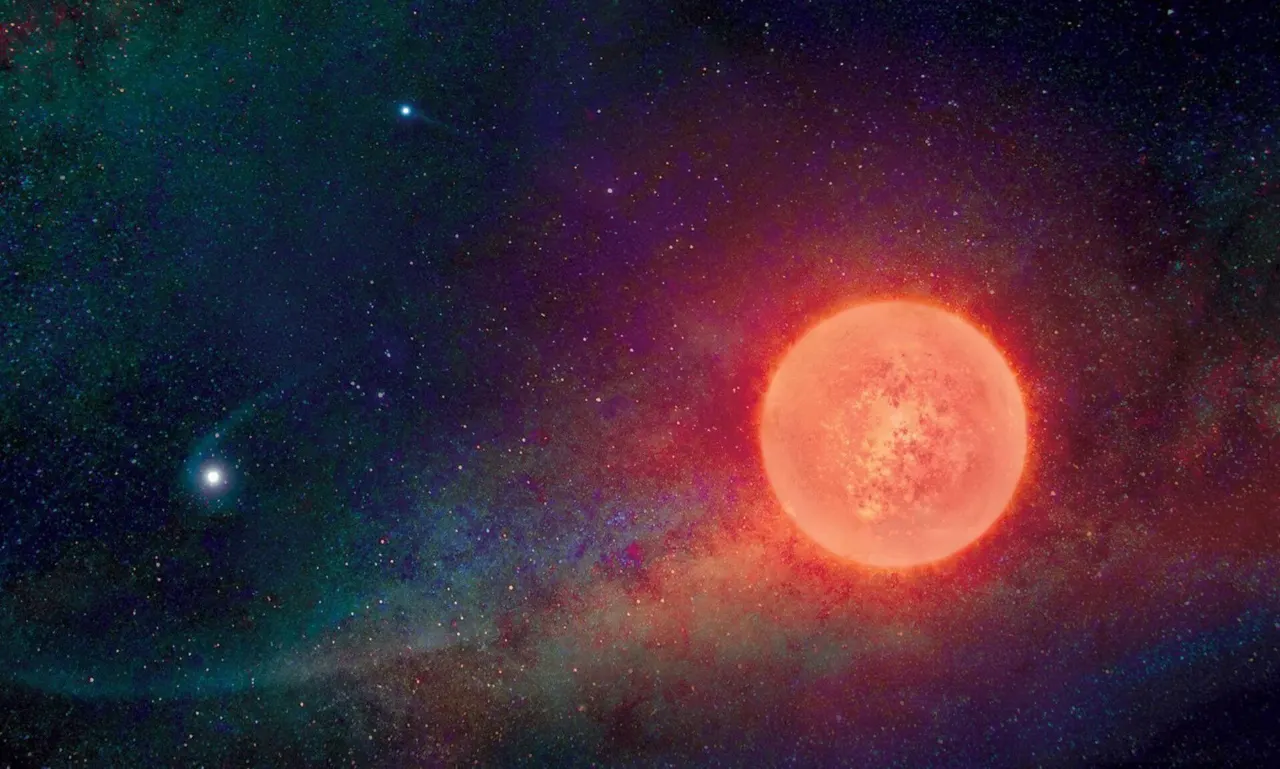
An asteroid warning system spotted supernova SN 2026ahvu before its peak. Nearby star clusters hint that the exploding star may have been far younger than models allow.
 SUMO· the number puzzle
 Dialo· learn languages by speaking
 ediviewer· read EDI files like documents
 giftdetect· the right gift in minutes
Most supernovae in distant galaxies are noticed only once they are already fading. SN 2026ahvu is different: it was caught while still getting brighter, and it may be much younger than theory says such an explosion should be.
On 2 November 2026, the automated sky survey ATLAS registered a new stellar explosion in NGC 1433, a barred spiral galaxy about 50 million light-years away. ATLAS was built as an early-warning system for asteroids, but it also picks up short-lived flashes in the sky. Software called Virtual Research Assistant, developed by Héloïse Stevance at the University of Oxford, sorted the data stream automatically and triggered follow-up observations in South Africa. A team around Wynn Jacobson-Galán at Caltech classified it one day later, using the Keck Observatory in Hawaii, as a young Type Ia supernova. Astronomers expect the peak between 18 and 23 November.
Why could SN 2026ahvu be a problem for physics?
A Type Ia supernova happens when a white dwarf, the dense remnant of a burned-out star, pulls matter off a companion until a runaway nuclear reaction tears it apart. Common models say this takes hundreds of millions to several billion years.
A group of 33 researchers around Sumit K. Sarbadhicary of Johns Hopkins University checked old Hubble and James Webb images. A single white dwarf is too faint to see from 50 million light-years, but two star clusters sit right next to the explosion site, one about 37 million years old and one about 95 million. If the star came from either, less than 100 million years passed from birth to explosion. The study is a preprint without peer review, and since the star system itself is not visible in the archive images, the link is unconfirmed.
Why does the distance to NGC 1433 matter?
Past studies put the galaxy anywhere from about 30 to 62 million light-years away. Type Ia supernovae peak at nearly the same brightness, so astronomers use them as standard candles, like a light bulb of known wattage. That only works if the peak is measured, and dust in the galaxy can still skew the result.
Where can you watch it?
NGC 1433 lies in the constellation Horologium, about 47 degrees south of the celestial equator. From mid and high northern latitudes it never rises. Following it requires observatories in South America, southern Africa, Australia, or far-southern northern sites such as Hawaii.
Apps worth a look
SUMO: the number puzzleTap the right tiles, add them up, hit the target. Easy to learn, hard to master. Free, for all ages.
Dialo: learn languages by speakingTalk to an AI conversation partner; every sentence comes back corrected and explained in your language. 9 languages, A1 to C2.
ediviewer: read EDI files like documentsOpen EDIFACT and X12 messages, see every segment explained, convert to JSON/XML, export PDF and Excel. Runs locally, no upload.
giftdetect: the right gift in minutesPick who it is for, the occasion and their personality. The search engine reads product descriptions from local shops and ranks what fits. Free, no sign-up.
More from this day
See all →



More in: Science
See all →
Moon dust 3D-printed into Lego-style blocks, no glue needed

Iwo Jima volcano eruption: new land has fused with the island

Why a song gets stuck in your head: scientists investigate