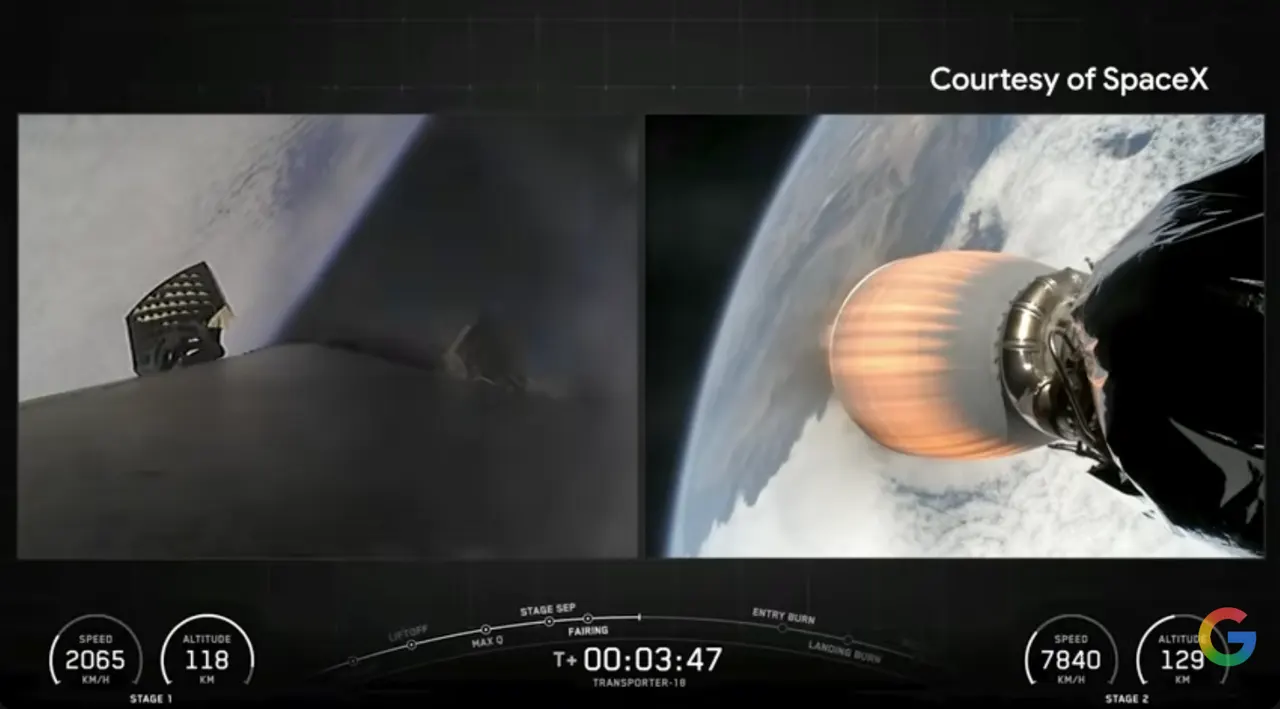
China Unveils Crewed Moon Landing Plan With Two Long March-10 Rockets
China has detailed its first crewed lunar landing: two Long March-10 launches, an orbital docking and a touchdown before 2030, putting it just behind NASA's Artemis.

 SUMO· the number puzzle
 Dialo· learn languages by speaking
 ediviewer· read EDI files like documents
 giftdetect· the right gift in minutes
China has laid out the full architecture of the mission meant to put its astronauts on the Moon before 2030. Presented on 31 October at a human spaceflight conference in Beijing, the plan relies on two launches followed by a docking in lunar orbit, said Wang Xiang, deputy chief designer of China's crewed space programme.
Two rockets, three astronauts
Two heavy Long March-10 rockets will lift off separately from Wenchang on Hainan island. The first sends the Lanyue lander, a vehicle of nearly 26 tonnes able to carry two people and a 200-kilogram rover, toward the Moon. The second carries the Mengzhou spacecraft with three astronauts. After the two dock in lunar orbit, two crew members move into Lanyue for the descent while the third stays aboard Mengzhou. The lander then lifts off again, rejoins the spacecraft, and the crew returns to Earth in Mengzhou.
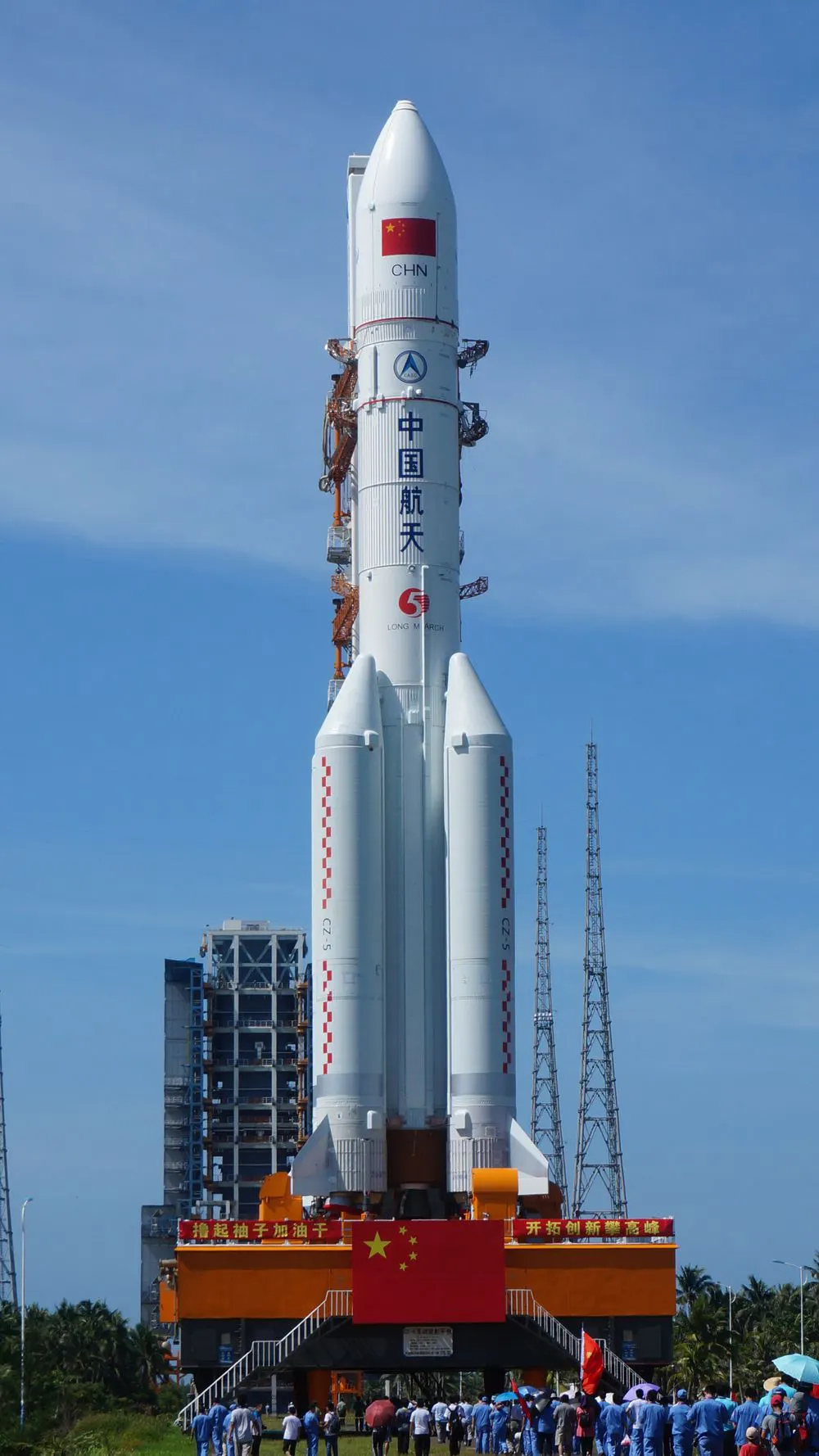
The LM-10 stands 92.5 metres tall and weighs about 2,189 tonnes at liftoff, with capacity to send more than 27 tonnes to the Moon. Presentation documents circulated since the conference suggest a test sequence: an uncrewed Mengzhou to the Tiangong station in early 2027, a first full LM-10 flight with an empty Lanyue in 2028, and a dress rehearsal with automatic docking above the Moon in 2029. Beijing has not officially confirmed those years.
No crewed lunar flyby, unlike Artemis
China has already run ground and pad tests. On 6 August 2025 a Lanyue unit completed a landing and takeoff on simulated lunar soil in Hebei province, and on 11 February 2026 a first-stage-only LM-10 let a Mengzhou capsule test an emergency ejection and make China's first splashdown of a crew-capable capsule. Still, neither the rocket, the spacecraft nor the lander has flown in final form.
In the US, Artemis II completed a crewed lunar flyby in April 2026. Artemis III in 2027 is to rehearse dockings in low Earth orbit with SpaceX and Blue Origin test landers, and a landing is targeted for 2028 with Artemis IV. China's plan skips a crewed circumlunar flight, instead verifying as much as possible in low orbit and flying hardware uncrewed first.
For the first time since the Apollo era, two crewed landing programmes are aiming at dates this close: 2028 for Washington, no later than late 2029 for Beijing. Both remain exposed to delays, and 2027 looks decisive, with Orion's docking tests and the first orbital attempts of the LM-10 family.
Apps worth a look
SUMO: the number puzzleTap the right tiles, add them up, hit the target. Easy to learn, hard to master. Free, for all ages.
Dialo: learn languages by speakingTalk to an AI conversation partner; every sentence comes back corrected and explained in your language. 9 languages, A1 to C2.
ediviewer: read EDI files like documentsOpen EDIFACT and X12 messages, see every segment explained, convert to JSON/XML, export PDF and Excel. Runs locally, no upload.
giftdetect: the right gift in minutesPick who it is for, the occasion and their personality. The search engine reads product descriptions from local shops and ranks what fits. Free, no sign-up.
More from this day
See all →
Drax plans £20bn AI data centre at UK's largest power station

Sort A Brick Turns Used LEGO Into Refurbished Sets at Scale

Carousell live-selling GMV jumps about 6x after regional rollout
Hardt Hyperloop secures multi-million-euro funding after bankruptcy
More in: Space
See all →
Google's Suncatcher Satellite Sends First AI Output From Orbit

ERMIS-3: Greek Nanosatellite Makes First Laser Link to Earth
China Outlines Crewed Moon Landing Plan, First Try Set for 2028