Google's Suncatcher Satellite Sends First AI Output From Orbit
Google's prototype orbital data center has generated its first data in space: a haiku written by the Gemma 4 model, sent to Earth three weeks after launch.
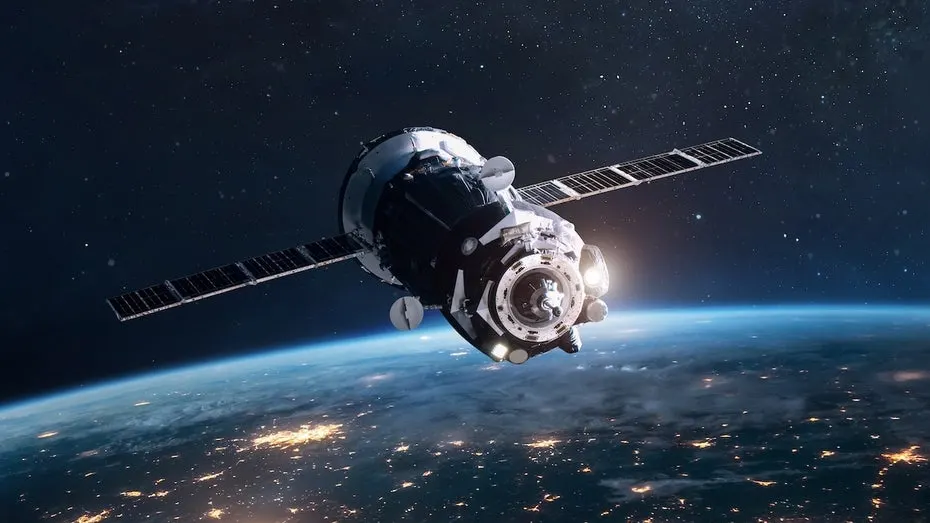
Google's prototype for a miniature data center in space has produced its first output. Roughly three weeks after launching on a SpaceX Falcon 9, the satellite generated data and transmitted it to Earth: a three-line poem about space.
According to Google, the three weeks were spent commissioning the satellite. Engineers powered up the AI accelerators and the remaining hardware and ran initial machine-learning tests. Then ground teams sent the first command, asking the preinstalled DeepMind model Gemma 4 to write a haiku about being in orbit.
What Suncatcher is meant to prove
The satellite is part of Google's research project Suncatcher, which examines whether space could one day host scalable infrastructure for machine learning. It carries four Tensor Processing Units (TPUs) and solar panels that deliver up to one kilowatt.
That power is also the limit. Because of the chips' energy demand, only one TPU can run at a time, and only in short intervals of about 15 minutes. Continuous operation would overload the satellite's power supply and cooling, Google says.
If the onboard TPUs prove themselves, Google plans to launch two more satellites in 2027 that can generate more power. In the longer term, several satellites are meant to form a connected orbital computing network.
A crowded race for orbital compute
Google is not alone. In January, SpaceX filed an application with the US Federal Communications Commission to put up to one million data centers into Earth orbit. US startup Starcloud launched a satellite with an Nvidia chip last winter and aims to operate orbital data centers as large as terrestrial ones by 2030.
Supporters argue that the AI boom is straining power grids and raising water demand for cooling on Earth, while excess heat in space could be released into the cold vacuum. Critics counter that the carbon footprint of orbital facilities could exceed that of ground-based ones once manufacturing, launch and disposal are counted.
Apps worth a look
 SUMO: the number puzzle
Tap the right tiles, add them up, hit the target. Easy to learn, hard to master. Free, for all ages.
 Dialo: learn languages by speaking
Talk to an AI conversation partner; every sentence comes back corrected and explained in your language. 9 languages, A1 to C2.
 ediviewer: read EDI files like documents
Open EDIFACT and X12 messages, see every segment explained, convert to JSON/XML, export PDF and Excel. Runs locally, no upload.
More from this day
See all →
Yandex and Bork launch Station Bork smart speaker for 78,000 rubles

Neoclouds: Musk Predicts Failures, Nvidia's Huang Disagrees

Internxt Black Friday: 87% Off Cloud Storage With VPN Included

Granter raises €1.6M to take its AI EU-funding tool across Europe
More in: Space
See all →
ERMIS-3: Greek Nanosatellite Makes First Laser Link to Earth
China Outlines Crewed Moon Landing Plan, First Try Set for 2028
Google's Gemma 4 Writes a Haiku in Orbit for Project Suncatcher