Poland's CBK PAN space lab: from huts to a probe bound for Jupiter
Polish engineers once cooled their Warsaw huts with buckets of water. Now their instruments fly to Jupiter, and they want to lead missions of their own.

 SUMO· the number puzzle
 Dialo· learn languages by speaking
 ediviewer· read EDI files like documents
 giftdetect· the right gift in minutes
Polish engineers once worked in huts so hot that someone had to hose them down with water. Fifty years later, instruments built by the same institute are on their way to Jupiter. The Space Research Centre of the Polish Academy of Sciences, known as CBK PAN, has just turned 50.
The centre was founded on 29 September 1976. Its first engineers worked in huts in Warsaw's Wola district, and on hot days the buildings had to be sprayed with water to bring the temperature down. There they learned to design equipment that survives a rocket launch and then keeps working in space. Early projects ran under the Soviet-led Interkosmos programme, and Polish devices later flew on the Mir space station. Around the turn of the millennium the institute moved closer to European Space Agency (ESA) projects.
At an anniversary conference on 24 November at the Copernicus Science Centre in Warsaw, the team said Polish groups have sent around 100 scientific instruments into space over five decades.
What Polish instruments have flown so far
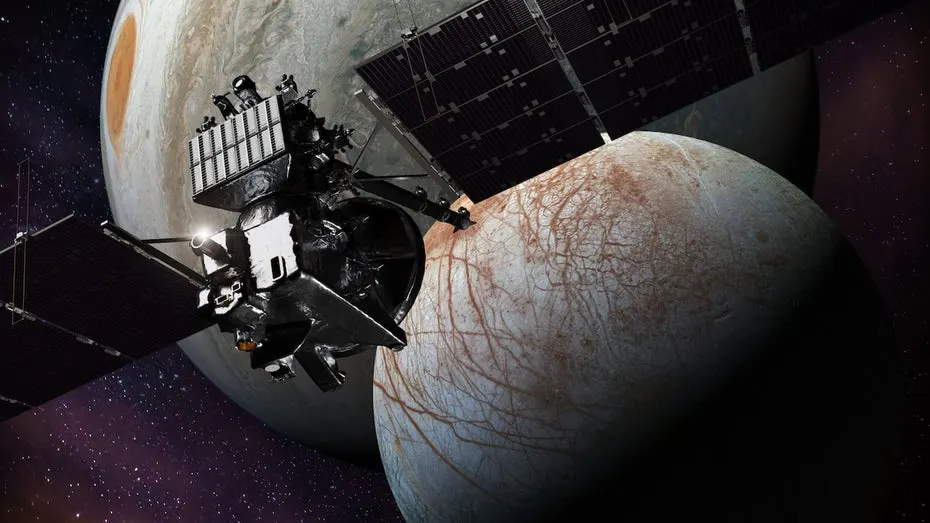
The MUPUS penetrator, built at CBK PAN, reached the surface of comet 67P/Churyumov-Gerasimenko in 2014 with the Philae lander. Polish teams also contributed to Cassini-Huygens, Mars Express, Venus Express and the Herschel space telescope. Right now they are aboard the JUICE probe, which is due to reach Jupiter in July 2031. Polish engineers worked on parts of the mechanical structure and the main computer of the RPWI instrument, which will study radio and plasma waves around Jupiter and its moons.
Closer to home, the Polish GLOWS photometer sits on NASA's IMAP probe, about 1.5 million km from Earth. In January it recorded the effects of a powerful solar flare.
Will Poland lead its own space mission?
That is the goal. CBK PAN director Piotr Orleański says the next step should be missions where Polish researchers lead, choosing the science, designing the satellites and organising the observations. Poland's first scientific satellites, Lem and Heweliusz, joined the BRITE constellation in 2013 and 2014 to track changes in star brightness.
Two ideas are on the table: measuring hydrogen and deuterium in comets, linked to Jagiellonian University, and a satellite to study light pollution. Both are proposals, not approved missions with launch dates.
Meanwhile, the institute keeps building for others. Its DFP-B2 instrument, the first finished flight instrument for ESA's Comet Interceptor, completed testing in May. The probe is planned for launch around the turn of 2028 and 2029. On 19 November ESA also selected Plasma Observatory, seven satellites studying plasma near Earth, with CBK PAN specialists involved in the science concept. Launch is expected at the end of the 2030s.
Apps worth a look
SUMO: the number puzzleTap the right tiles, add them up, hit the target. Easy to learn, hard to master. Free, for all ages.
Dialo: learn languages by speakingTalk to an AI conversation partner; every sentence comes back corrected and explained in your language. 9 languages, A1 to C2.
ediviewer: read EDI files like documentsOpen EDIFACT and X12 messages, see every segment explained, convert to JSON/XML, export PDF and Excel. Runs locally, no upload.
giftdetect: the right gift in minutesPick who it is for, the occasion and their personality. The search engine reads product descriptions from local shops and ranks what fits. Free, no sign-up.
More from this day
See all →
How many satellites are in the night sky? About 710 over a UK town

The Sun's heliotail: 14 years of NASA IBEX data show it changes

iPhone satellite icon: what it means and when it appears