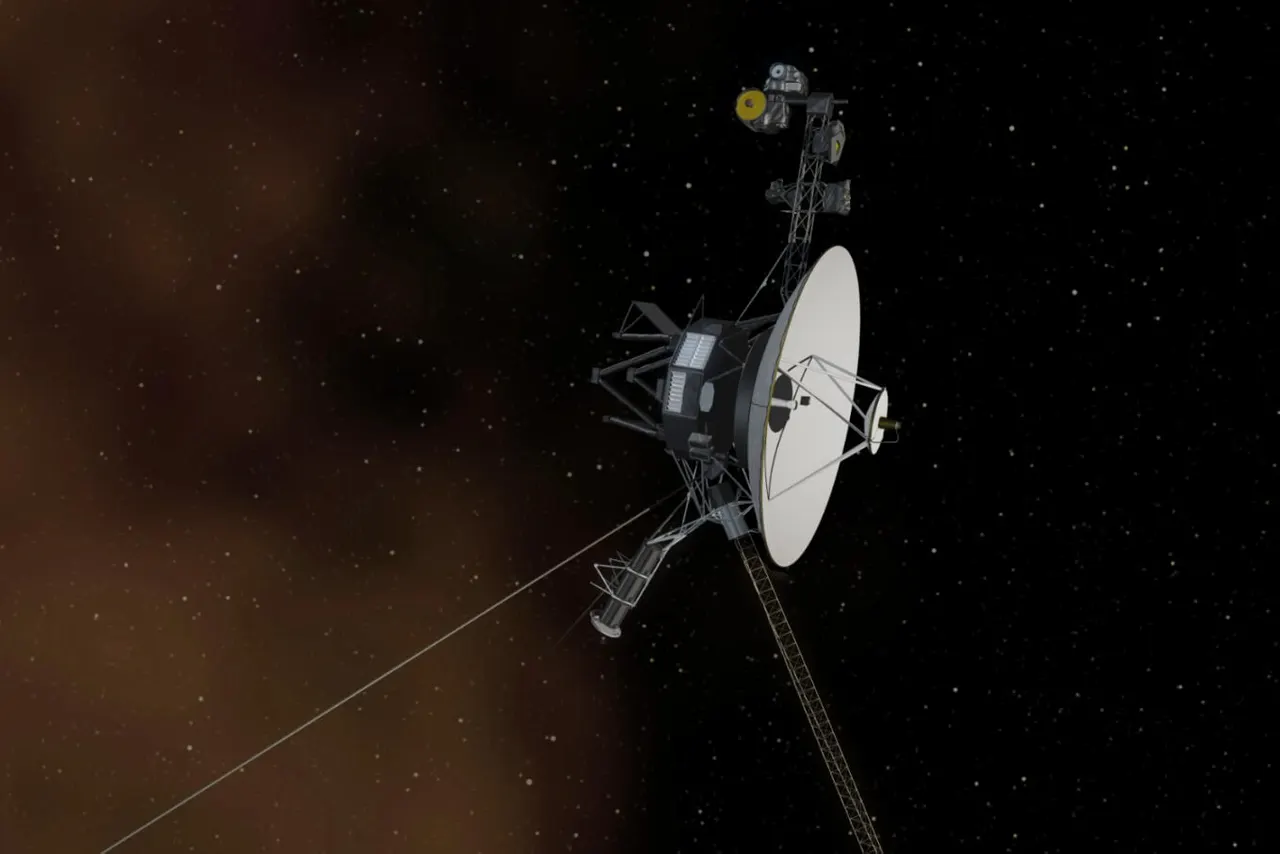
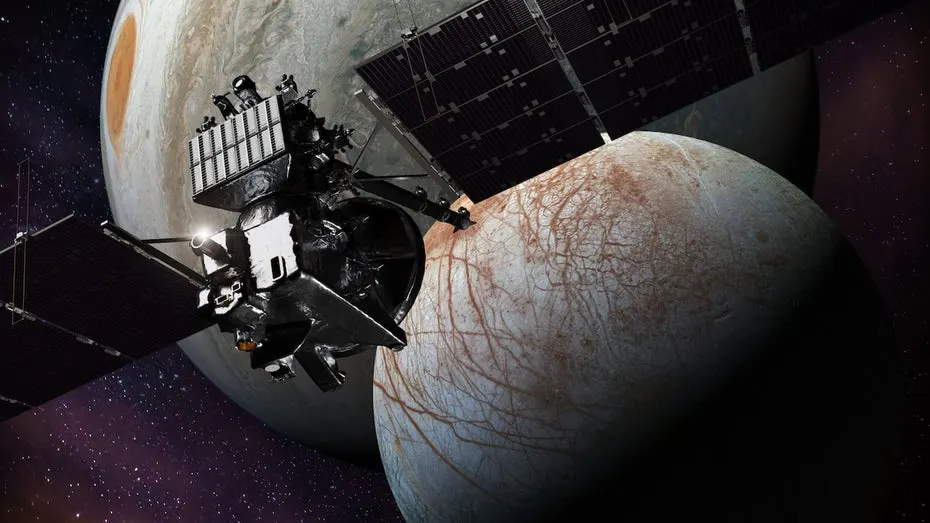
Europa Clipper flies past Earth on 3 December to gain speed
NASA's Europa Clipper skims past Earth at about 3,140 km on 3 December, borrowing speed for Jupiter and testing all nine instruments. Amateur telescopes may catch it.
 SUMO· the number puzzle
 Dialo· learn languages by speaking
 ediviewer· read EDI files like documents
 giftdetect· the right gift in minutes
NASA's Europa Clipper probe is coming home for a visit. On 3 December 2026 at 21:14 Central European Time it passes Earth, and it will use our planet as a slingshot and as a test lab at the same time.
The spacecraft launched in October 2024 and weighed a little over six tonnes, about 45 percent of that fuel. The team wants to keep almost all of it for the moment of arrival at Jupiter in April 2030, when the probe has to brake hard. So the mission borrows speed from planets instead. On 1 March 2025 it flew past Mars at 884 kilometres altitude, which slowed it relative to the Sun and bent its path back toward Earth.
Over West Africa it will come within roughly 3,140 to 3,450 kilometres of the surface. That is about eight times higher than the International Space Station. Observers in Africa and southern Europe might spot it with small amateur telescopes.
How does the Earth flyby speed up Europa Clipper?
Because Earth itself moves around the Sun, its gravity drags the probe along and accelerates it without burning fuel. Project scientist Robert Pappalardo describes it as dropping into Earth's gravity funnel, following the curve and shooting back out.
What is being tested during the flyby?
Engineers will switch on all nine science instruments. The magnetometer matters most. At Europa it is meant to detect whether a salty ocean under the ice reacts to Jupiter's shifting magnetic field. But more than 300 magnetic sources on the spacecraft, from valves to solar wings, disturb the readings, so the team calibrates against Earth's well-known field.
A thermal camera images Earth every eight hours to practise finding warm spots. Europa sits between minus 130 and minus 220 degrees Celsius, so warmer areas could point to water or vapour plumes. An infrared instrument and an ultraviolet sensor get a workout too.
The probe is not hunting for life. Scientist Kate Craft says it looks for a habitable environment, not life itself. After the flyby it coasts for over three years. At Jupiter it will make 49 close passes of Europa and end its mission by crashing into Jupiter, Callisto or Ganymede, so no Earth microbes reach the ocean.
Apps worth a look
SUMO: the number puzzleTap the right tiles, add them up, hit the target. Easy to learn, hard to master. Free, for all ages.
Dialo: learn languages by speakingTalk to an AI conversation partner; every sentence comes back corrected and explained in your language. 9 languages, A1 to C2.
ediviewer: read EDI files like documentsOpen EDIFACT and X12 messages, see every segment explained, convert to JSON/XML, export PDF and Excel. Runs locally, no upload.
giftdetect: the right gift in minutesPick who it is for, the occasion and their personality. The search engine reads product descriptions from local shops and ranks what fits. Free, no sign-up.
More from this day
See all →
Gemini for Mac can now run your computer, and Google is in a hurry

Air Force Cloud One hack: what we know about the breach

WhatsApp for iPhone is testing a navigation bar without text labels

Durov warns iPhone hacking risk: just opening a website may do it
More in: Space
See all →
Iran reportedly used Starlink to run drone operations against U.S.

Ohalo III: NASA's Space Crop Rig Is Headed to the ISS
LUPEX moon rover: Japan and India hunt lunar water for fuel