Welopō’ai: the triple star system 28 light-years away that shouldn’t exist
Astronomers hunting for planets near a red dwarf found a second white dwarf instead. The result, Welopō’ai, is a triple star system one of them says should not exist.
 SUMO· the number puzzle
 Dialo· learn languages by speaking
 ediviewer· read EDI files like documents
 giftdetect· the right gift in minutes
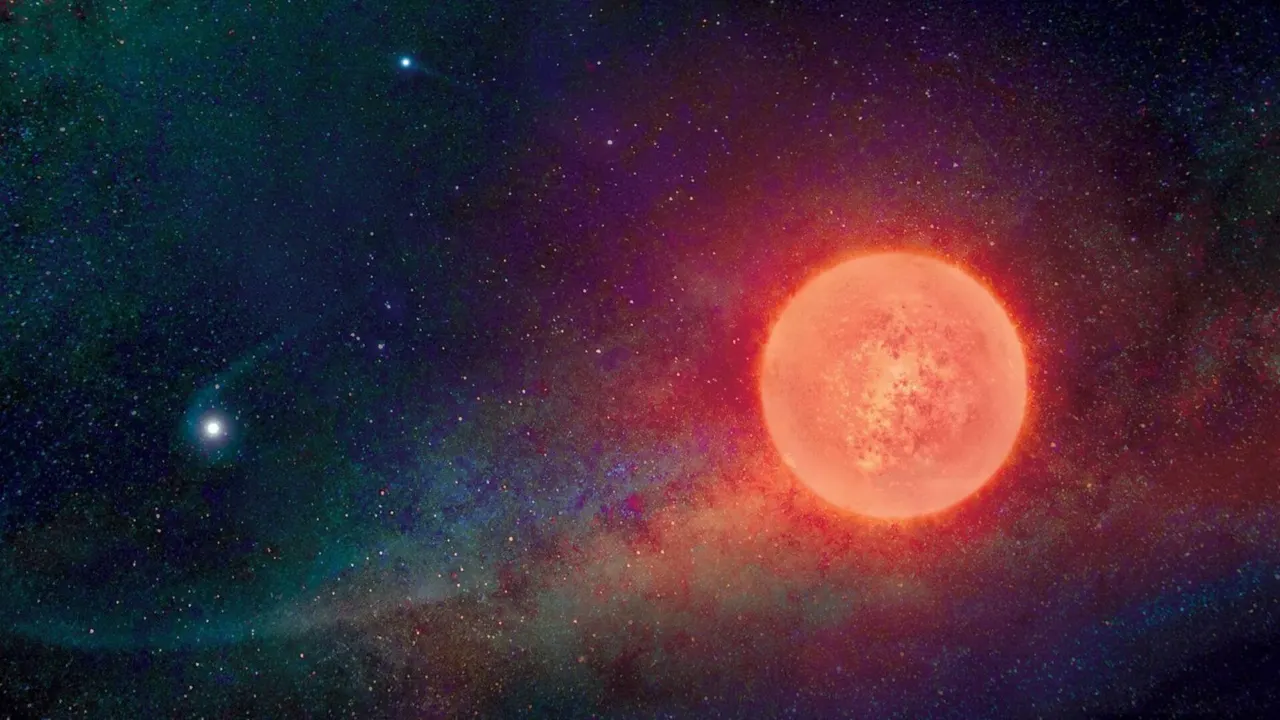
Astronomers went looking for planets and found a puzzle instead. Welopō’ai, a triple star system just 28 light-years from Earth, holds one dim red dwarf and two white dwarfs, and one of the researchers says it "should not exist."
The team at the Trottier Institute for Research on Exoplanets, part of the Université de Montréal, was searching for planets around the red dwarf. The red dwarf and one white dwarf were already known. Further observations revealed a second white dwarf nobody had spotted before. "We were actually looking for planets," said Étienne Artigau, who led the work. "Instead, we found something more surprising."
The researchers say no similar system is known within at least 100 light-years. The name combines two Hawaiian words and means "a path of family traits."
What is Welopō’ai?
It is a gravitationally bound trio of stars. Multiple-star systems are common in the galaxy, and Alpha Centauri, about 4.37 light-years away, is the best-known triple. Welopō’ai is unusual because of its mix: a red dwarf, a small and long-lived star, plus two white dwarfs, the cores left behind by dead stars.
Why should it not exist?
A white dwarf is what remains when a star of roughly the Sun's mass reaches the end of its life. It sheds its outer layers, and the core shrinks to an inert object about as wide as Earth. Its mass is generally between half and two-thirds of the Sun's.
So Welopō’ai was once a system of two sun-like stars and a red dwarf. Both sun-like stars have died. The red dwarf is still going, because its low mass means it burns through its hydrogen far more slowly.
Co-author Patrick Dufour, who specialises in white dwarfs, says there is no clear explanation for how the system ended up this way. Working out the history of the three stars is what drives the team's next steps. The researchers add that Welopō’ai could also shed light on the stellar evolution that sets how massive a white dwarf should be.
Apps worth a look
SUMO: the number puzzleTap the right tiles, add them up, hit the target. Easy to learn, hard to master. Free, for all ages.
Dialo: learn languages by speakingTalk to an AI conversation partner; every sentence comes back corrected and explained in your language. 9 languages, A1 to C2.
ediviewer: read EDI files like documentsOpen EDIFACT and X12 messages, see every segment explained, convert to JSON/XML, export PDF and Excel. Runs locally, no upload.
giftdetect: the right gift in minutesPick who it is for, the occasion and their personality. The search engine reads product descriptions from local shops and ranks what fits. Free, no sign-up.
More from this day
See all →
Cleverbridge data breach: attackers got credit card data

Spotify down: users logged out and unable to sign in worldwide

GTA 6 Vice City Easter egg: how to unlock the hidden PS2 zone

Tencent Hy-MT3 translation models cover 102 languages and run locally
More in: Science
See all →
Sea pigs: bacteria found living inside the skin of deep-sea creatures
Shenloong deep-sea worm hides bacteria-filled "dragon balls"

Chernobyl fungus melanin inspires material that breaks down nerve agents