Sea pigs: bacteria found living inside the skin of deep-sea creatures
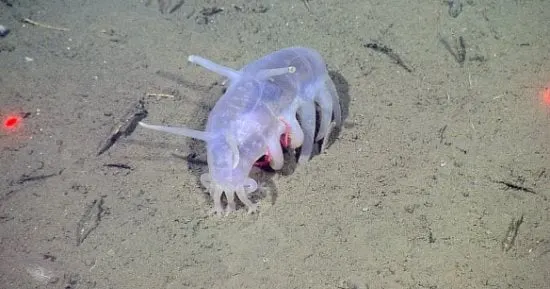
Researchers at the University of Tokyo found bacteria living in layers of the body wall of sea pigs, squishy sea cucumbers that crawl along the deep ocean floor.
 SUMO· the number puzzle
 Dialo· learn languages by speaking
 ediviewer· read EDI files like documents
 giftdetect· the right gift in minutes
Sea pigs look like pink blobs on legs, and it turns out they carry passengers. A study from the University of Tokyo has found bacteria living inside the layers of their skin, and nobody yet knows exactly what the bacteria do there.
Sea pigs are a type of sea cucumber. They have soft, jelly-like bodies and lots of tube feet, which they use to crawl across the deep seafloor. They collect dead organic matter and swallow it with tentacles around their mouths.
What are sea pigs and why do they matter?
Despite their odd looks, they do real work in the ecosystem. They help recycle organic material and nutrients, and some species give other animals shelter from predators. Sea cucumbers also make up more than 90% of the biomass of large animals on the seafloor in some parts of the deep ocean, so understanding what lives on and in them matters for understanding those habitats.
What did the researchers find in sea pig skin?
The team reports that the bacteria settle in layers within the body wall. The same thing happens in other echinoderms, the group of marine invertebrates that includes sea cucumbers and starfish. But little is known about who these bacteria are, what their genes look like, or where exactly they sit in the tissue of deep-sea animals.
Yu Yoshida, a doctoral student at the University of Tokyo and lead author of the study, said work that combines identifying the bacteria, analysing their genomes and locating them inside the host's tissues is still scarce, especially for deep-sea species.
Do the bacteria protect sea pigs from disease?
Nobody knows yet. One idea is that the bacteria help defend against pathogens, but that still needs more research to prove.
Yoshida said the team wants to understand why these bacteria spread so widely and take over parts of the body wall, what their large surface proteins do, how they compete with other bacteria, and how they affect the host. The answers could show how bacteria colonise animal bodies and adapt to life inside a host, here in one of the least explored places on Earth.
Apps worth a look
SUMO: the number puzzleTap the right tiles, add them up, hit the target. Easy to learn, hard to master. Free, for all ages.
Dialo: learn languages by speakingTalk to an AI conversation partner; every sentence comes back corrected and explained in your language. 9 languages, A1 to C2.
ediviewer: read EDI files like documentsOpen EDIFACT and X12 messages, see every segment explained, convert to JSON/XML, export PDF and Excel. Runs locally, no upload.
giftdetect: the right gift in minutesPick who it is for, the occasion and their personality. The search engine reads product descriptions from local shops and ranks what fits. Free, no sign-up.
More from this day
See all →
GTA 6 Vice City Easter egg: how to unlock the hidden PS2 zone

Tencent Hy-MT3 translation models cover 102 languages and run locally

Jensen Huang reinstated as Nvidia CEO after security review

Australia's digital duty of care law lets people sue big tech
More in: Science
See all →
Shenloong deep-sea worm hides bacteria-filled "dragon balls"
Chernobyl fungus melanin inspires material that breaks down nerve agents

Aral Sea study: the dry seabed has emitted 748 million tonnes of CO₂