Trump Proclaims 'American Declaration of Freedom in Space'
President Trump has issued a proclamation declaring space open to all humanity and asserting Americans' right to develop and settle the solar system under U.S. law.
 SUMO· the number puzzle
 Dialo· learn languages by speaking
 ediviewer· read EDI files like documents
 giftdetect· the right gift in minutes
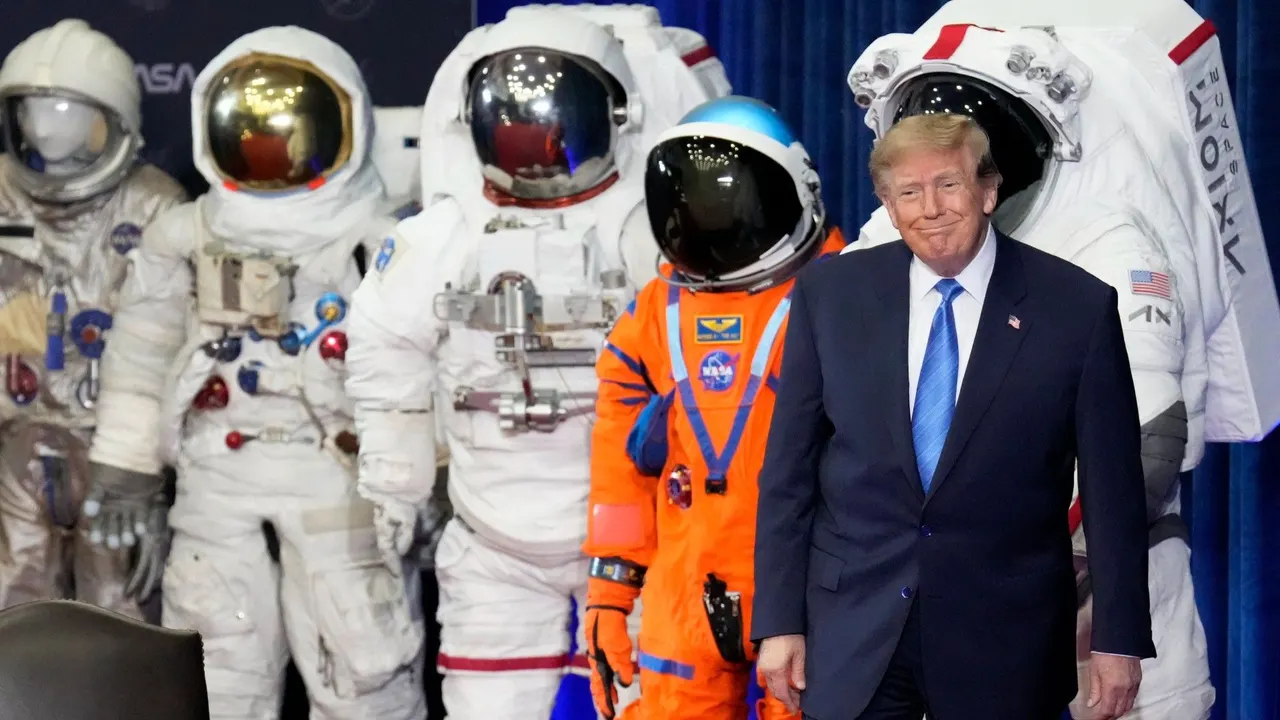
President Trump issued a proclamation on Nov. 3 declaring space open to all humanity for exploration and affirming the right of American citizens to develop and settle the solar system under United States law.
Titled "The American Declaration of Freedom in Space," the document describes space as the "province of all humans" and says the United States will lead humanity's expansion into the cosmos. It introduces no new funding, programs or policy directives.
"Our Nation will lead the way in the exploration, development, use, and settlement of these new frontiers — forging an interplanetary civilization founded on the enduring and inalienable rights of freedom and individual liberty," the text says. It adds that "the nation that leads in space will shape the future of humanity."
Frontier spirit and Artemis
The proclamation invokes America's "frontier spirit," citing the Apollo 11 astronauts as the first people to walk on the moon and robotic rovers on Mars as examples of U.S. leadership. It also points to the thriving commercial space sector as a way to secure "American space superiority for all eternity."
It highlights the success of NASA's Artemis II mission in April, which carried four astronauts on a 10-day journey around the moon and set a record for the farthest humans have traveled from Earth. Artemis III is scheduled to launch next summer, in 2027. It will test rendezvous and docking between the Orion spacecraft and the program's two commercial lunar landers in low Earth orbit.
Artemis IV, the first landing mission, is targeted for 2028. A December 2025 executive order from the President reaffirmed that timeline, along with the goal of deploying the initial elements of a permanent lunar outpost by 2030.
Echoes of the Outer Space Treaty
The declaration does not create NASA programs, allocate money or instruct federal agencies. Its broad language does echo principles of the 1967 Outer Space Treaty, which guarantees freedom of exploration while prohibiting national sovereignty claims on other planets.
Apps worth a look
SUMO: the number puzzleTap the right tiles, add them up, hit the target. Easy to learn, hard to master. Free, for all ages.
Dialo: learn languages by speakingTalk to an AI conversation partner; every sentence comes back corrected and explained in your language. 9 languages, A1 to C2.
ediviewer: read EDI files like documentsOpen EDIFACT and X12 messages, see every segment explained, convert to JSON/XML, export PDF and Excel. Runs locally, no upload.
giftdetect: the right gift in minutesPick who it is for, the occasion and their personality. The search engine reads product descriptions from local shops and ranks what fits. Free, no sign-up.
More from this day
See all →
OpenAI Acquires Pierre Computer, Eyeing GitHub's Turf
Artcraft: Open-Source AI Suite Aims to Rival Adobe Photoshop

Nykaa profit jumps 206% in Q2FY27, buys 82% of Simply Nam

Bariflo raises Rs 2 crore to cut factory wastewater costs with AI
More in: Space
See all →
SyLEx Rocket Completes First Operational Flight for M51.4 Missile

Amazon Closes In on Starlink as Satellite Phone Links Advance
China Unveils Crewed Moon Landing Plan With Two Long March-10 Rockets