SyLEx Rocket Completes First Operational Flight for M51.4 Missile
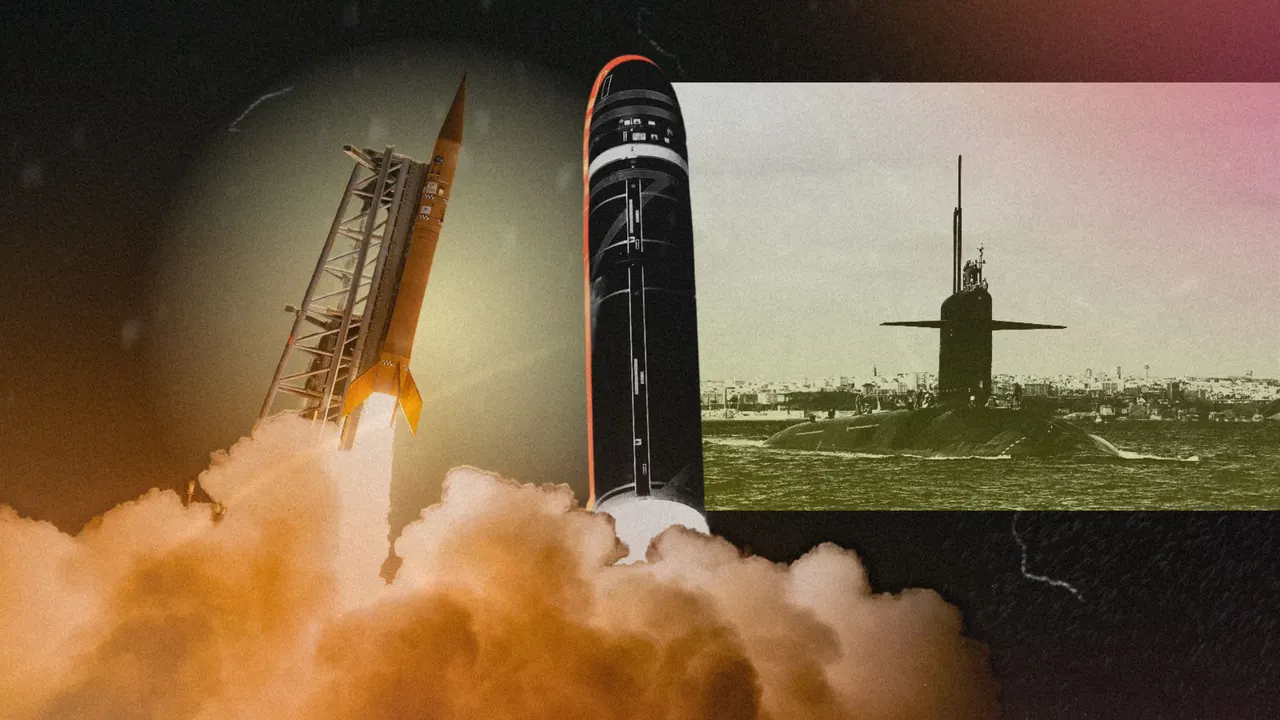
ArianeGroup's SyLEx sounding rocket flew its first operational mission from Biscarrosse, carrying experiments for France's future M51.4 nuclear missile.
 SUMO· the number puzzle
 Dialo· learn languages by speaking
 ediviewer· read EDI files like documents
 giftdetect· the right gift in minutes
ArianeGroup's SyLEx sounding rocket has completed its second launch from Biscarrosse, in the Landes region of France, and its first operational flight. The DGA, France's defence procurement agency, oversaw the suborbital shot overnight from 3 to 4 November 2026, while most attention was on the US midterm elections.
According to ArianeGroup, SyLEx carried a "major experimental payload" for the DGA and the Ministry of the Armed Forces. Its nature was not disclosed. Neither the DGA, ArianeGroup nor the military has released details of the flight. All that is known is that the rocket crossed the conventional 100 km boundary of space and stayed suborbital, meaning it lacked the speed to enter orbit. The first flight, a successful demonstration, took place on 28 November 2025.
A flying test bench for the M51.4
The experiments support development of the M51.4, a future nuclear missile entrusted to ArianeGroup in September 2025. It is meant to gain range, accuracy and the ability to penetrate enemy defences, and is expected to enter service during the next decade. The DGA used radars and measurement assets at Biscarrosse and Hourtin, plus the test and measurement ship Monge, to track the flight. Armed Forces Minister Catherine Vautrin said the launch allowed "new experiments essential to the development of the M51.4".
The flight came less than a month after the 6 October firing of an M51.3 missile from the submarine Le Vigilant.
Civil uses and sovereignty
SyLEx, short for Système de Lancement d'Expériences, flew in its single-stage version. A two-stage version is in preparation, with a first flight planned by 2027. ArianeGroup quotes altitudes of 140 to 400 km depending on the version, and payloads of up to 300 kg with one stage or 600 kg with two.
The rocket is also aimed at civil, notably European, customers for microgravity experiments, with 4 to 5 minutes with one stage and more than 6 with two, as well as atmospheric reentry tests. Developed in under three years, it restores a French suborbital capability the country had lacked for decades. France even relied on an American rocket for the June 2023 first flight of its V-MaX hypersonic glider.
Apps worth a look
SUMO: the number puzzleTap the right tiles, add them up, hit the target. Easy to learn, hard to master. Free, for all ages.
Dialo: learn languages by speakingTalk to an AI conversation partner; every sentence comes back corrected and explained in your language. 9 languages, A1 to C2.
ediviewer: read EDI files like documentsOpen EDIFACT and X12 messages, see every segment explained, convert to JSON/XML, export PDF and Excel. Runs locally, no upload.
giftdetect: the right gift in minutesPick who it is for, the occasion and their personality. The search engine reads product descriptions from local shops and ranks what fits. Free, no sign-up.
More from this day
See all →Titan OS raises €40 million to challenge Roku in smart TVs
Return secures €835 million to expand battery storage in Germany

Traversal raises $120M at a $1B valuation for AI reliability agent

fal raises $1.3 billion at a $16 billion valuation
More in: Space
See all →
Amazon Closes In on Starlink as Satellite Phone Links Advance

China Unveils Crewed Moon Landing Plan With Two Long March-10 Rockets
Google's Suncatcher Satellite Sends First AI Output From Orbit