Space Shuttle Endeavour's fuel tank was rebuilt by a sculptor
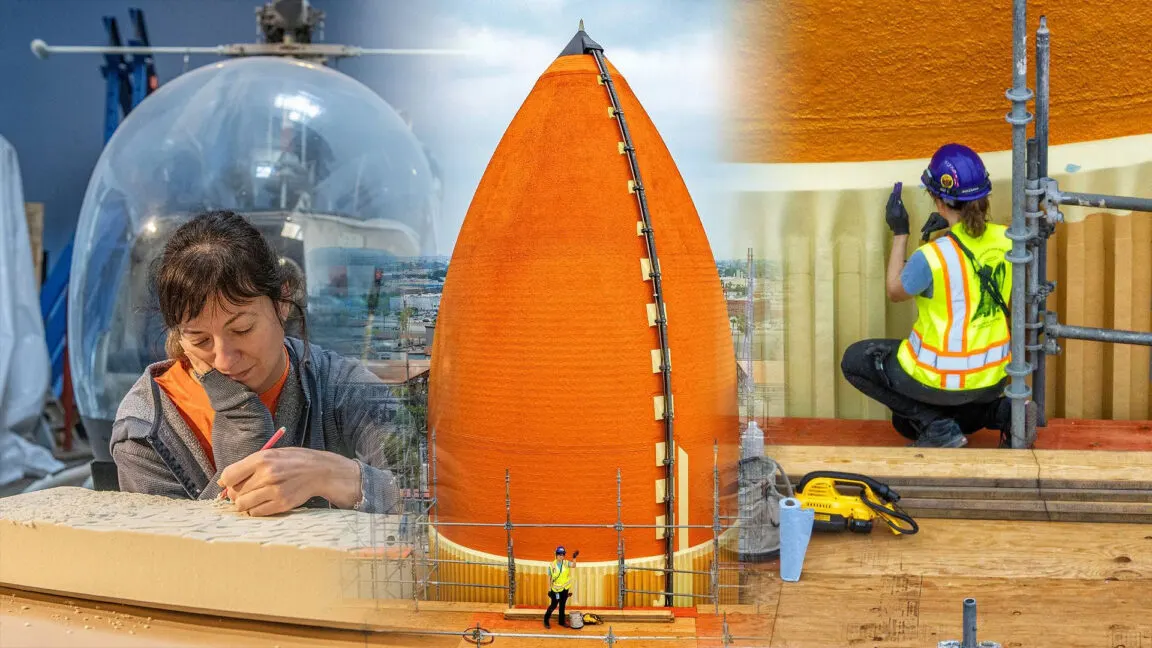
Natalie Rosen had never worked on a spacecraft. Then she hand-sculpted foam on ET-94, the huge external tank now standing with Endeavour in Los Angeles.
 SUMO· the number puzzle
 Dialo· learn languages by speaking
 ediviewer· read EDI files like documents
 giftdetect· the right gift in minutes
Natalie Rosen is not a former NASA engineer. She is a sculptor, and she hand-shaped much of the foam on the space shuttle Endeavour's external tank, which now stands upright in Los Angeles.
The tank is part of the new Samuel Oschin Air and Space Center, an extension of the California Science Center that opened on November 13. Rosen has fine arts degrees from Cal State Long Beach and had no previous experience with aircraft or spacecraft. The museum needed someone who could sculpt foam, and it had plenty of foam to fix.
What is ET-94, the Endeavour external tank?
The shuttle stack had three main parts: the orbiter, two solid rocket boosters and a 154-foot (47-meter) external tank. Only the tank was thrown away on every launch. It was covered in insulating foam to keep the super-cold liquid oxygen and hydrogen inside from boiling off too fast.
ET-94 was the last flight-worthy tank left when the program ended. It was originally meant for a Columbia science mission. After the 2003 Columbia accident it became a testbed, and much of its foam was stripped off and studied. NASA later donated it to the California Science Center, and it sat at Exposition Park for nearly a decade.
Making new foam look like the old foam
The original aerospace foam could not be used, so the team needed a commercial substitute. Casting molds from the real foam did not work. Rosen suggested dense urethane foam, which she sculpted by hand to copy the bumpy "orange peel" texture and the faint overlapping stripes left by the original spraying.
Color was its own puzzle. Rosen says the tank can look cream, orange or burnt sienna depending on the foam's age and sun exposure. Project leader Dennis Jenkins mixed a paint called "ET Orange" for the main surface, while the newest-looking hardware got a custom pale shade the team called ice cream.
Jenkins called her "pretty much a one-woman show for most of it." Once the tank went vertical she worked from scaffolding, and a few weeks ago used a scissor lift to install a last piece on the hydrogen tank's aft dome. She touched "every inch of it," she said, and now she is staying on at the museum, working on other artifacts including satellites and probes.
Apps worth a look
SUMO: the number puzzleTap the right tiles, add them up, hit the target. Easy to learn, hard to master. Free, for all ages.
Dialo: learn languages by speakingTalk to an AI conversation partner; every sentence comes back corrected and explained in your language. 9 languages, A1 to C2.
ediviewer: read EDI files like documentsOpen EDIFACT and X12 messages, see every segment explained, convert to JSON/XML, export PDF and Excel. Runs locally, no upload.
giftdetect: the right gift in minutesPick who it is for, the occasion and their personality. The search engine reads product descriptions from local shops and ranks what fits. Free, no sign-up.
More from this day
See all →
Disney Plus and Hulu become one app in December
Uber Eats drone delivery with Zipline starts in Spring, Texas

Archive of Our Own is back online after two weeks offline

Bank outage today: JPMorganChase blames a bug in its own hardware
More in: Space
See all →
NASA PROMISE moon rover runs on nuclear power, not sunlight
Curiosity rover finds hints of liquid water films on Mars
2026 QQ8: Earth has a temporary mini-moon until January 2027