South Korea Hits 99% Two-Qubit Gate Accuracy in Quantum Push
South Korean researchers report superconducting qubit coherence above 100 microseconds and about 99% accuracy in two-qubit entangling operations.
 SUMO· the number puzzle
 Dialo· learn languages by speaking
 ediviewer· read EDI files like documents
 giftdetect· the right gift in minutes
South Korea's national quantum programme has produced superconducting qubits that hold their information for more than 100 microseconds, twice the 50-microsecond target set for 2027. Researchers also reached roughly 99% accuracy in entangling operations between two qubits, according to the Ministry of Science and ICT.
The results were due to be presented on 10 November at the annual meeting of the Quantum Science and Technology Flagship Project in Daejeon, attended by researchers from 26 projects and 150 officials. In the first phase (2025–2029), the government is investing about 360.4 billion won across seven quantum computing, six quantum communication and 13 quantum sensing projects.
Why the 99% figure matters
The ministry calls entangling-gate accuracy a key indicator of a quantum computer's error rate and says the groundwork is now in place for its goal of a 100-qubit error-corrected superconducting processor by 2029. Outside experts offered a more cautious reading: 99% is roughly the error-correction threshold, and accuracy must eventually reach 99.99% to 99.9999% or higher. They also noted that the overhead of logical qubits grows exponentially as qubit counts rise.
Communication and sensing
In quantum communication, teams reported a solid-state quantum repeater that creates entanglement on demand, an all-photonic repeater that links entanglement using light alone, and patent filings for quantum-light converters. Repeaters are seen as essential for long-distance quantum networks, distributed quantum computing and quantum cryptography.
In sensing, researchers unveiled a compact magnetic field sensor based on nitrogen-vacancy (NV) centres in diamond that can perform magnetocardiography. Unlike conventional equipment, it works at room temperature and can be miniaturised. In medicine, it could detect tiny magnetic changes in the heart without electrodes, helping diagnose conditions such as myocardial ischaemia and arrhythmia.
The government is reportedly preparing to announce a 50-qubit superconducting quantum computer demonstration this month or next.
Apps worth a look
SUMO: the number puzzleTap the right tiles, add them up, hit the target. Easy to learn, hard to master. Free, for all ages.
Dialo: learn languages by speakingTalk to an AI conversation partner; every sentence comes back corrected and explained in your language. 9 languages, A1 to C2.
ediviewer: read EDI files like documentsOpen EDIFACT and X12 messages, see every segment explained, convert to JSON/XML, export PDF and Excel. Runs locally, no upload.
giftdetect: the right gift in minutesPick who it is for, the occasion and their personality. The search engine reads product descriptions from local shops and ranks what fits. Free, no sign-up.
More from this day
See all →



More in: Science
See all →
Magenta Solar Panels in Sweden Grow Broccoli, but 25 Days Slower
TU Wien's Invisible QR Code Could Store 2 TB on One A4 Sheet
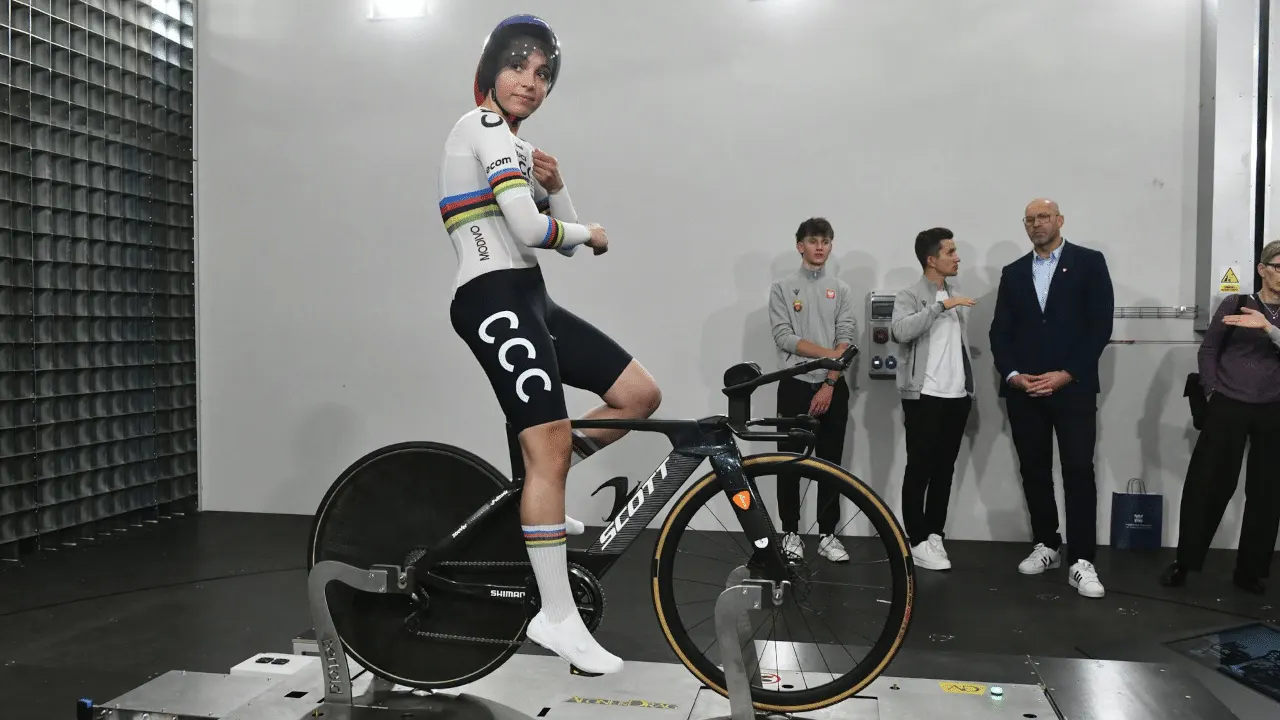
Kraków University of Technology Opens Wind Tunnel to Polish Athletes