Magenta Solar Panels in Sweden Grow Broccoli, but 25 Days Slower
A Swedish trial found broccoli under semi-transparent magenta solar panels reached the same final size as in full sun, though it needed 25 more days to mature.
 SUMO· the number puzzle
 Dialo· learn languages by speaking
 ediviewer· read EDI files like documents
 giftdetect· the right gift in minutes
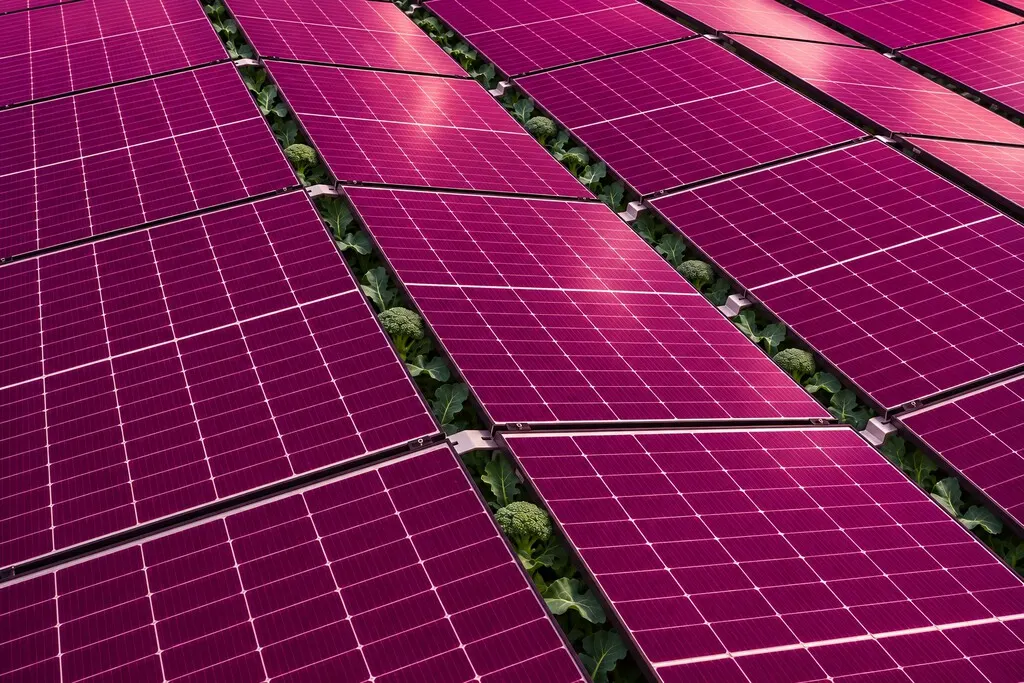
Broccoli grown under semi-transparent magenta solar panels reached about the same final size as broccoli in full sun, but it took 25 more days to mature. That is the result of a trial in Sweden carried out by Mälardalen University.
The panels let some light through to the crops and use part of the rest to generate electricity. They are designed to pass red and blue wavelengths, the ones absorbed by chlorophyll pigments, in an attempt to reduce the shading problem that can limit the light available to plants.
Two transparency levels tested
Researchers compared broccoli in an uncovered plot with two groups grown under modules with nominal transparency of 50% and 70%. They measured environmental variables, yield, nutritional composition and even photosynthetic response.
Radiation use efficiency, the ratio of aboveground dry biomass to photosynthetically active radiation received, was 4.5 times higher than in full sun for the 50% panels and 2.8 times higher for the 70% panels. In other words, a similar harvest was obtained with less light, though with the 25-day delay. According to Ma Lu, quoted in the researchers' statement, the plants behave similarly in both cases. The results are limited to the test conditions and need validating over more seasons and in other settings.
The electricity trade-off
The panels use cadmium telluride cells, which form opaque bands on the glass. The denser the bands, the more light they capture for electricity, but the less reaches the plants.
Ramesh Rayudu, an electrical systems expert at Victoria University of Wellington, says the growing period yields an estimated 224.7 megawatt-hours per hectare. That is about 100 MWh per hectare less than the conventional reference. To offset the gap, an extra 1.2 to 3.2 tonnes of broccoli per hectare would be needed, depending on electricity and crop prices.
Ma Lu sees nearer-term uses in community gardens or greenhouse roofs. The team is already testing magenta, red and blue panels under controlled conditions, so it can separate the effect of the light's spectral characteristics from other variables.
Apps worth a look
SUMO: the number puzzleTap the right tiles, add them up, hit the target. Easy to learn, hard to master. Free, for all ages.
Dialo: learn languages by speakingTalk to an AI conversation partner; every sentence comes back corrected and explained in your language. 9 languages, A1 to C2.
ediviewer: read EDI files like documentsOpen EDIFACT and X12 messages, see every segment explained, convert to JSON/XML, export PDF and Excel. Runs locally, no upload.
giftdetect: the right gift in minutesPick who it is for, the occasion and their personality. The search engine reads product descriptions from local shops and ranks what fits. Free, no sign-up.
More from this day
See all →
Samsung to Start Test Runs at Its Taylor, Texas Chip Fab in December

ByteDance Seedream 5.5 Handles Up to 100 Consecutive Image Edits

Uber: Only 4 Rides and 500 Orders Came From AI Agents at Halloween

Windows Update Certificates Expire in 2027: Old PCs at Risk
More in: Science
See all →
TU Wien's Invisible QR Code Could Store 2 TB on One A4 Sheet
Kraków University of Technology Opens Wind Tunnel to Polish Athletes

South Korea to Launch Brain-Link BCI Project Group in 2027