Sheffield Researchers Recreate Roman Color-Changing Dichroic Glass
Scientists at the University of Sheffield have reproduced Roman dichroic glass for the first time, a material that shifts color depending on how light hits it.
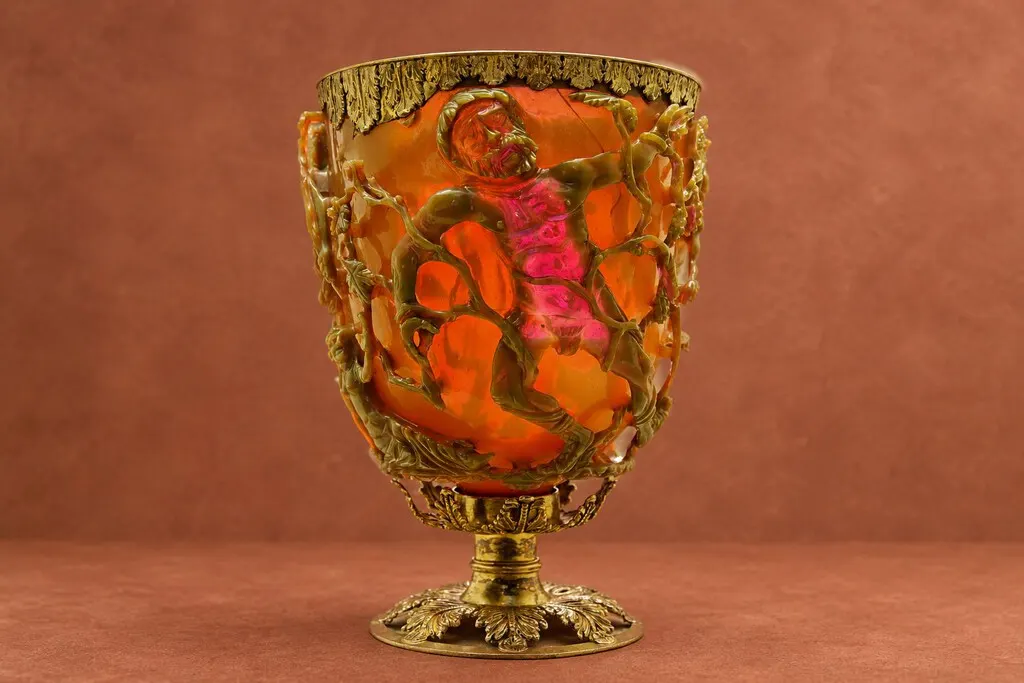
A team at the University of Sheffield has reproduced Roman dichroic glass for the first time, a material that changes color depending on how it is lit. The only complete surviving example is the Lycurgus Cup, dating from the 4th century AD.
Clues to the glass's recipe emerged in the 1990s, but a definitive method had remained out of reach until now. Several experts studied the cup during the 20th century and concluded that the effect probably came from mixing gold and silver particles. Earlier attempts to reproduce it did not work.
How the glass was made
The Sheffield team used the same basic idea with modifications. They started from a reproduction of classic Roman glass and added gold and silver nanoparticles. They then tested different compositions, varying oxygen levels and baking times. The result matches the cup: green under direct light on its surface and reddish when lit from behind.
A cup with a mysterious past
The cup's whereabouts between antiquity and the 19th century remain a mystery. It first appears again in 1845, when a French writer said he had seen it in the hands of a man named M. Dubois. Its first documented owner, in 1857, was Baron Lionel de Rothschild, who lent it to the Victoria and Albert Museum for an exhibition in 1867. His great-grandson, Lord Victor Rothschild, sold it to the British Museum in 1958 for £20,000.
The metal mount is probably 19th-century, but the glass itself was likely made in Alexandria or Rome around the 4th century. It was so well preserved when it began appearing in museums that it is thought never to have been buried. It may have been kept in a church and seized during the French Revolution.
A sculpture to mark the result
The researchers have partnered with glass artist Elliot Walker, who has made a sculpture from the new dichroic glass. Inspired by the Farnese Atlas, it shows a figure bearing a cup similar to the Lycurgus Cup instead of a celestial globe.
The piece will be shown at Sheffield's Millennium Gallery from 6 to 15 November 2026 as part of the Festival of the Mind. It will then move to the university's Turner Museum of Glass as a permanent display.
More from this day
See all →


More in: Science
See all →
German Physicists Film Electrons Moving in Graphene in Real Time

Korean Team Turns Sawdust Into Plastic Feedstock, Tripling Output
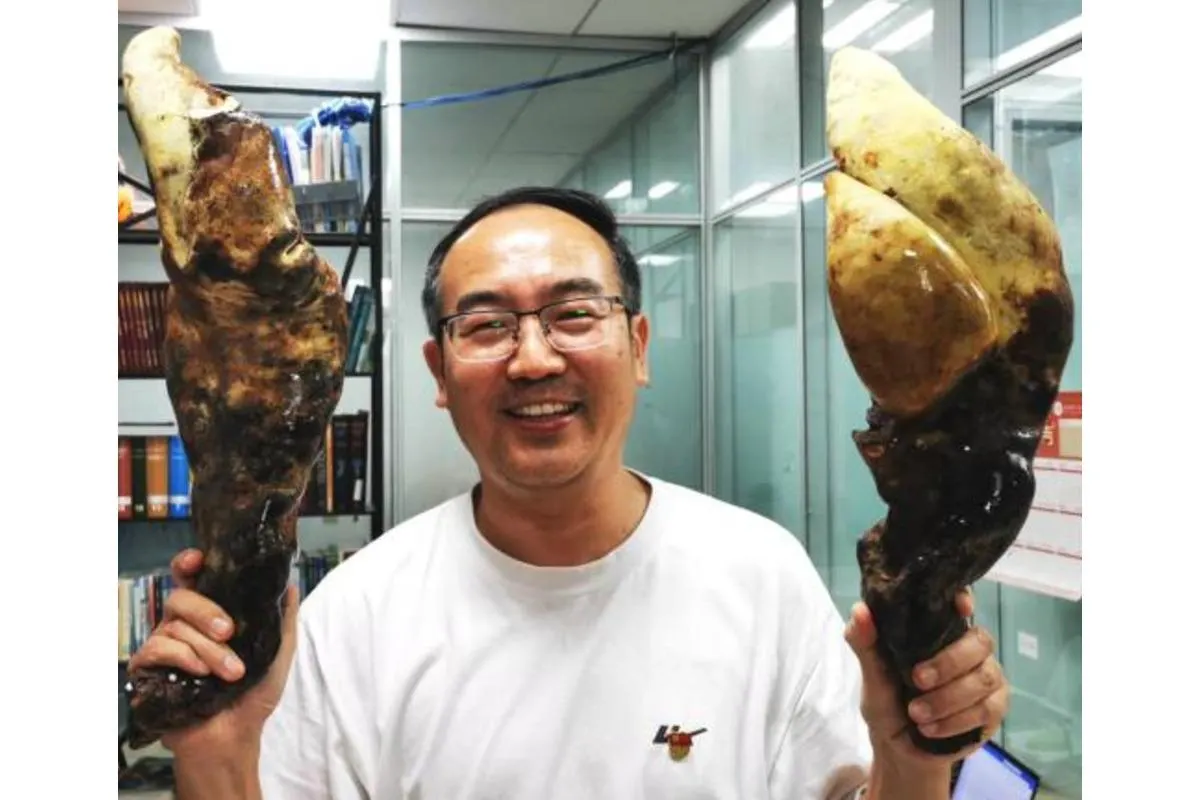
Giant Fungus Dianjunus rex Found in China Gets Its Own Family