Korean Team Turns Sawdust Into Plastic Feedstock, Tripling Output
Korean researchers have developed a three-step process that converts sawdust cellulose into FDCA, a bio-based plastic feedstock, with productivity more than three times higher than before.
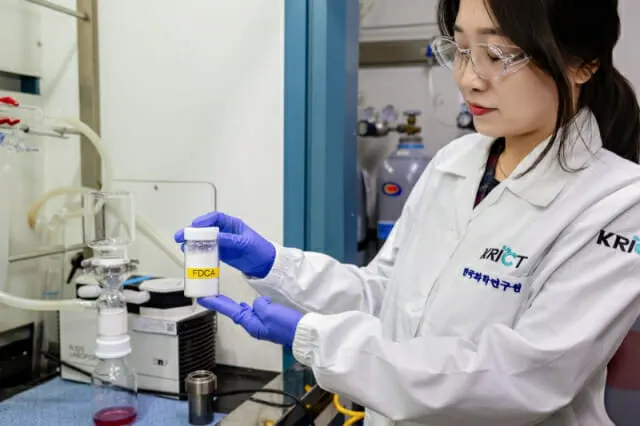
Researchers in South Korea have developed a new process that turns cellulose, the main component of sawdust, into a raw material for plastics, and say it raises productivity more than threefold compared with existing methods.
The Korea Research Institute of Chemical Technology said a team led by senior researcher Hwang Dong-won, working with Professor Han Ji-hoon's group at POSTECH, built a linked three-step route known as BMF-AMF-FDCA. BMF is an intermediate made by chemically processing cellulose. AMF is a comparatively stable precursor derived from BMF, and FDCA is a bio-based chemical used to make plastics.
Lower pressure, fewer purification steps
The team cut high-pressure reactions and minimized the separate isolation, purification and solvent-swapping steps that usually follow. Using sulfuric acid and bromide salts, they converted cellulose into BMF at atmospheric pressure. According to Hwang, the process exploits the fact that water and oil do not mix: unstable intermediates are quickly moved into an oil layer and filtered out.
BMF yield reached up to 82%, and yields of 73–79% were confirmed in a 10-liter reactor. Halogen-based material use fell to one-thirtieth of that in a conventional hydrochloric acid-based intermediate (CMF) process. The team produced FDCA with purity above 99%.
Overall mass yield reached up to 56.8% based on cellulose and 45.5% based on wood sawdust. By comparison, a 2022 study by the University of Groningen and others reported a total mass yield of 32.7% from cellulose.
Next step: a demonstration plant
The results appear in the November issue of Chemical Engineering Journal (impact factor 12.5). The team is now preparing, together with the industry ministry, a demonstration plant able to produce more than 1,000 tons a year. The researchers expect practical use after the project is completed in 2030.
More from this day
See all →
Ather Energy Surges 26.8% as CarTrade Drops 22% in Tech Stocks

TVS Capital Launches TVS Alts, a Rs 750 Crore Private-Credit Platform

Desible.ai founders on selling voice AI to Indian banks and insurers

Google Gemini Lets Friends Appear Together in AI Avatar Videos
More in: Science
See all →
German Physicists Film Electrons Moving in Graphene in Real Time
Giant Fungus Dianjunus rex Found in China Gets Its Own Family

Philip, the invented ghost that 1970s Toronto researchers made talk