German Physicists Film Electrons Moving in Graphene in Real Time
Researchers in Regensburg and Marburg captured electron motion in graphene within a single light-wave cycle, imaging Landau-Zener-Majorana tunneling directly.
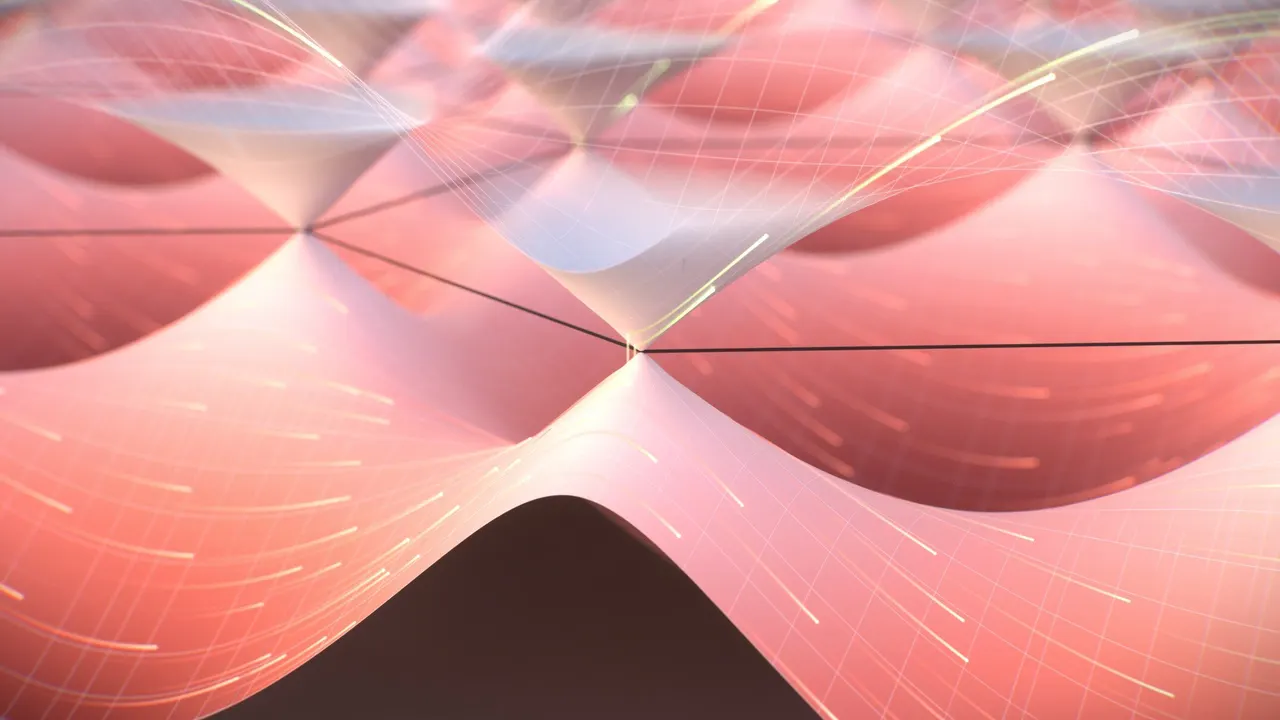
A team of physicists from the University of Regensburg and Philipps University of Marburg has imaged how electrons move in graphene during a single cycle of a light wave. The work, published in Nature, gives a direct look at a quantum process that was hard to observe in real time until now.
How the experiment worked
Graphene is a single layer of carbon atoms arranged in a honeycomb pattern, prized for its electrical, optical and mechanical properties. Under certain conditions its electrons behave as if they were relativistic particles, which makes the material a good testing ground for effects that are difficult to see elsewhere.
The researchers used intense infrared pulses at a frequency of 30 THz to set the electrons in controlled motion. They then probed the material with ultrashort pulses of extreme ultraviolet radiation, producing a series of snapshots of the changing electronic structure. The method tracks not only the displacement of electrons but also changes in their energy and momentum distribution under a strong electromagnetic field.
Landau-Zener-Majorana tunneling made visible
The team's main result is the direct imaging of Landau-Zener-Majorana (LZM) tunneling. In this quantum phenomenon, electrons pass between energy bands under a strong electric field. A sufficiently strong light wave can therefore influence an electron's energy state or even push it into another band.
In the data, the electron distribution first shifts in a particular direction, then deforms into an elongated, elliptical shape. Over time, scattering effects appear and change how electrons are spread through the material. The technique covers the entire first Brillouin zone, the region of momentum space that describes electron behavior in a crystal, and extends the observable range more than a hundredfold compared with earlier capabilities.
Why it matters
A better understanding of how light drives electrons could help in designing new electronic and optoelectronic devices. One of the most promising directions is lightwave electronics, in which signals and electronic processes are controlled by precisely shaped light pulses. In the future, that could enable circuits operating at speeds far beyond those of conventional technology.
More from this day
See all →
Best City E-Bikes 2026: Mapfour Roam Wins Test, Engwe P275 SE Value Pick

Smart Thermostats: Local Heating Control Without Cloud or Subscriptions

Command & Conquer: Red Alert Turns 30 and Remains a Cult Classic

Ather Energy Surges 26.8% as CarTrade Drops 22% in Tech Stocks
More in: Science
See all →
Korean Team Turns Sawdust Into Plastic Feedstock, Tripling Output

Giant Fungus Dianjunus rex Found in China Gets Its Own Family

Philip, the invented ghost that 1970s Toronto researchers made talk