Scythian leather study: 2,400-year-old quivers used human skin
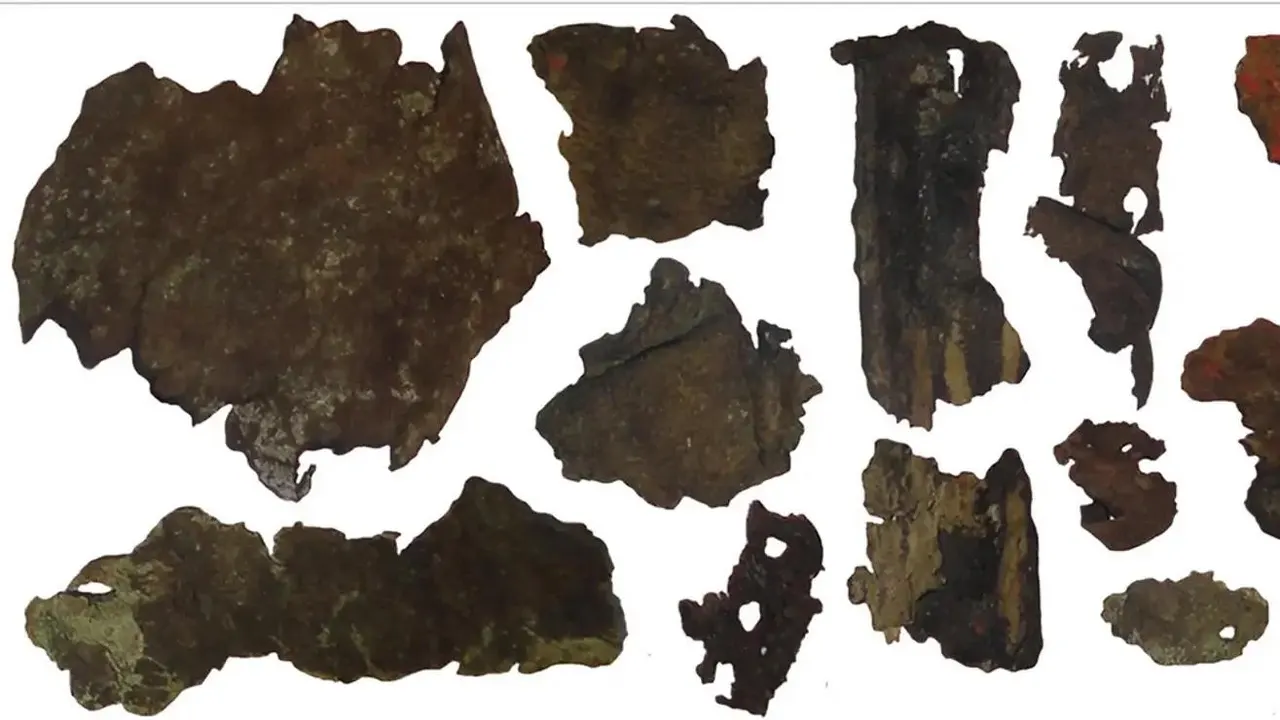
Protein tests on leather from Scythian burial mounds found human skin on some quiver tops, backing up a claim Herodotus made around 2,400 years ago.
 SUMO· the number puzzle
 Dialo· learn languages by speaking
 ediviewer· read EDI files like documents
 giftdetect· the right gift in minutes
Researchers who tested leather from Scythian burial mounds expected animal hide. In some of the pieces, they found human skin instead. The results were published in PLOS One.
The team analysed the proteins in 45 leather samples and two fur samples recovered from Scythian sites. The Scythians were horse-riding nomads of the Eurasian steppe, and what survives of them is mostly the grave goods in ancient burial mounds called kurgans, which are spread across eastern Europe. The first evidence of domesticated horses also came from kurgans in Romania, Bulgaria and Hungary.
The human leather turned up on the tops of quivers, the cases archers use to carry arrows. The researchers concluded that those fragments were made specifically for the quiver tops, while the rest of the quivers were animal skin.
What did Herodotus say about the Scythians?
The Greek historian Herodotus wrote about the Scythians around the fifth century BC, working from rumours that travelled along trade routes rather than first-hand experience. He described scalps sewn into clothing and, in his words, the skin of a dead enemy's right hand, nails included, taken off and used as a quiver cover. The new study mentions those accounts, and the findings fit them.
What else was in the samples?
The furs belonged to an Arctic fox type of fox, a feline and a member of the squirrel family. Among the leathers, 26% could not be identified. Most of the rest was probably goat, followed by sheep at about 19%.
Even the animal-skin quivers varied in their mix of hides. The team suggests each archer may have made his own quiver from whatever material he had at the time.
The work adds to a changing picture of the Scythians. A 2021 study used isotopes in tooth enamel from across Ukraine to reconstruct ancient diets, and other research has concluded that only a small share of people in the Scythian era lived a fully nomadic life. Even if only a few warriors used human skin, the study backs Herodotus on this point. The clothes he described may turn up someday too.
Apps worth a look
SUMO: the number puzzleTap the right tiles, add them up, hit the target. Easy to learn, hard to master. Free, for all ages.
Dialo: learn languages by speakingTalk to an AI conversation partner; every sentence comes back corrected and explained in your language. 9 languages, A1 to C2.
ediviewer: read EDI files like documentsOpen EDIFACT and X12 messages, see every segment explained, convert to JSON/XML, export PDF and Excel. Runs locally, no upload.
giftdetect: the right gift in minutesPick who it is for, the occasion and their personality. The search engine reads product descriptions from local shops and ranks what fits. Free, no sign-up.
More from this day
See all →
TOEIC bans AI glasses cheating with frame checks and radio scanners

PayPay Money Lite cash-out services: PayPay warns of bans
OpenAI bugging case: a $14 microphone hidden behind a TV

Tim Sweeney says Claude blocked his set theory work as "distillation"
More in: Science
See all →
Chernobyl fungus pigment inspires fabric that breaks down nerve agents
Project Vayu: a $1.60 fan filter that cut PM2.5 by over 90%

Mars boulder rows look like a giant fingerprint, and no one knows why