Smart ring measures stress with infrared light, not electrodes
A USC team built a smart ring that tracks stress by shining near-infrared light at sweat under the skin. In a short test it beat a standard gel sensor, 92.3% to 77.95%.
 SUMO· the number puzzle
 Dialo· learn languages by speaking
 ediviewer· read EDI files like documents
 giftdetect· the right gift in minutes
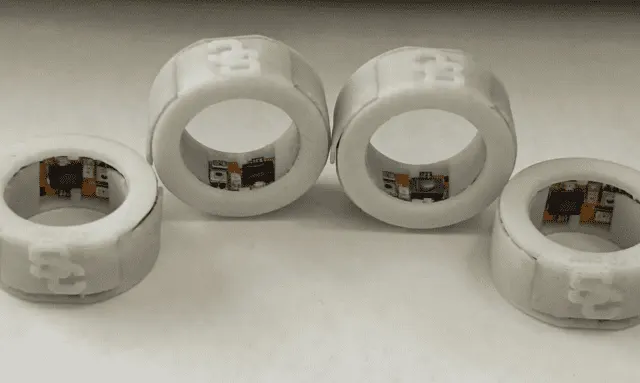
A smart ring that measures stress with light instead of skin electrodes has been built by researchers at the University of Southern California. You just wear it. No resting your hand on a gadget, no sitting still for minutes.
Most wearables that estimate stress use electrodermal activity (EDA) sensors. They read changes in skin conductivity caused by sweat glands, which means electrodes have to stay in contact with the skin, and you often have to pause and hold a pose to get a reading.
The USC team, led by assistant professor Yasser Khan and PhD student Farhad Hasan, took a different route. Stress activates sweat glands before any visible sweat appears, and the ring watches for that with two near-infrared LEDs. One emits at 960 nanometres and picks up changes in skin moisture linked to sweat. The other works at 1250 nanometres and provides a steady reference signal. The team calls the method optodermal activity (ODA). The work appeared in Science Advances.
How accurate is the stress ring?
In tests with four people, the optical signal matched a commercial gel-based EDA sensor 86% of the time on average. In a short trial with six participants, the ring told stress from relaxation with 92.3% accuracy, against 77.95% for the EDA sensor.
The ring also measures heart rate and heart rate variability, and adds a temperature sensor and accelerometer so it can separate stress sweat from sweat caused by exercise or heat. In a four-way test covering relaxation, stress, physical activity and heat, it scored 100%, while the EDA sensor managed 74.58%. Over 12 hours of wear with two participants, the ring kept 79.55% accuracy. The gel sensor fell to 57.35%.
These are very small groups, so treat the numbers as early.
Does the data leave the ring?
No. The machine learning model runs on the ring itself, so biometric data doesn't need to go to an outside server, according to the researchers.
Khan plans a one-year follow-up with 40 office workers. The team also wants to reduce interference from sweat on the skin surface. The technology is patent-pending and could be licensed to companies through USC's Stevens Center for Innovation. Most sensors are the same parts used in current smart rings, though the light source uses different wavelengths. The researchers say it could also work in watches and patches.
Apps worth a look
SUMO: the number puzzleTap the right tiles, add them up, hit the target. Easy to learn, hard to master. Free, for all ages.
Dialo: learn languages by speakingTalk to an AI conversation partner; every sentence comes back corrected and explained in your language. 9 languages, A1 to C2.
ediviewer: read EDI files like documentsOpen EDIFACT and X12 messages, see every segment explained, convert to JSON/XML, export PDF and Excel. Runs locally, no upload.
giftdetect: the right gift in minutesPick who it is for, the occasion and their personality. The search engine reads product descriptions from local shops and ranks what fits. Free, no sign-up.
More from this day
See all →
Free Mobile disappears on 1 December: what changes for 15.8M users

Pakistan's Zeeshan Ali is the first foreign astronaut on Tiangong

Xpeng NGP test drive in Paris: 30 minutes of self-driving, free

Apple Intelligence ad case: Korea's FTC weighs fine over Siri
More in: Science
See all →
IRAS 06530-0213: astronomers see a dying star's last heartbeat

Atom-sized black holes could blow up stars from the inside

Zadzim meteorite: iron rock hit air at 47,000 km/h and survived